

Best for: All skill levels What you need: Ultralight spinning rod, 4 lb monofilament, small hooks, bobber, live bait or tiny jigs DO THIS FIRST: Find shallow water near shoreline cover, thread a piece of worm on a size 8 hook under a small bobber and drop it next to any visible structure. You will catch a bluegill.
Bluegill are the fish that started it all for most of us. They live in almost every pond, lake and slow river in the country. They bite hard. They fight harder than fish three times their size. On ultralight tackle, a hand-sized bluegill will put a grin on your face that no bass ever could.
Quick Answer
- Best bait: Live worms, crickets and small jigs tipped with wax worms
- Where to fish: Shallow water near docks, fallen trees, weed edges and spawning beds
- Best time: Early morning and late afternoon, especially during the spring and summer spawn
- Gear: Ultralight spinning rod, 2 to 6 lb monofilament, size 6 to 10 hooks
- Technique: Small bobber suspended 1 to 3 feet deep over structure or near beds
Get Personalized Fishing Advice
Want real-time conditions for your exact location? Tackle provides live tide data, wind forecasts, and AI-powered fishing advice tailored to where you fish.
✓ Real-time tide charts • ✓ Wind & weather forecasts • ✓ AI fish identification
Finding Bedding Bluegill
Bluegill are homebodies. They stick tight to cover in water less than 10 feet deep.
During the spawn (water temps of 70 to 80 degrees, usually May through July), look for circular depressions in sandy or gravel bottoms in 1 to 4 feet of water. These spawning beds look like dinner plates swept clean on the bottom. Males fan out these nests and guard them aggressively, biting anything that comes close.
Outside of the spawn, bluegill relate to shade and structure. Docks, fallen trees, lily pads, cattail edges and submerged brush piles all hold fish. If you can see cover from the bank, there are bluegill nearby.
For help reading shorelines, check out our guide on how to read water for fishing.
Best Baits: Worms, Crickets, Small Jigs and Tiny Soft Plastics
Bluegill have small mouths, so your baits need to be small. This is the number one mistake people make. A full nightcrawler is too big. Think thumbnail-sized pieces.
Worms: The all-time best bluegill bait. Use a piece of nightcrawler about the size of your thumbnail on a size 8 hook with the point exposed.
Crickets: Hook a cricket through the back behind the head on a size 8 light wire hook. They kick their legs on the surface and drive bluegill crazy. If your bait shop sells crickets, buy a dozen.
Wax worms: Perfect for tipping tiny jigs. A 1/64-ounce jig tipped with a wax worm is deadly under a bobber.
Small jigs: A 1/64 or 1/32-ounce jig head with a tiny soft plastic body is the most effective artificial. Trout Magnet, Bobby Garland Baby Shad and Berkley PowerBait Micro Power Grubs all produce. Chartreuse, white and pink are top colors.
Tiny soft plastics: Miniature grubs and tubes in 1 to 2 inch sizes work when fished slowly on small jigheads. If you are used to bass-sized soft plastic lures, scale way down.
Inline spinners: A size 0 Mepps Aglia or Panther Martin retrieved slowly through shallow water catches active bluegill near the surface.
For more on bait selection, read our freshwater fishing baits guide.
Ultralight Gear Setup
The right gear makes bluegill fishing ten times more fun. You want to feel every head shake.
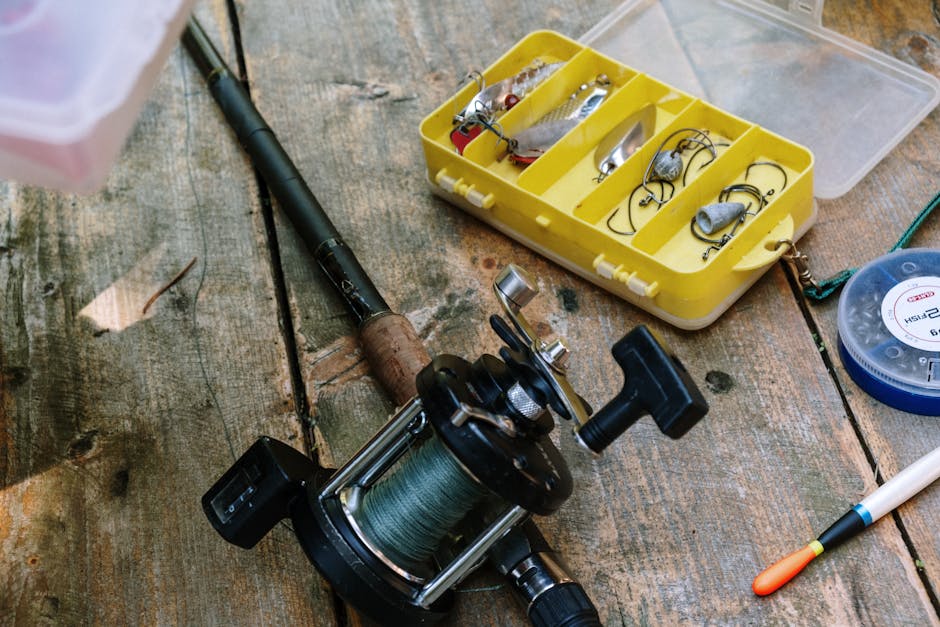
Rod: A 5 to 6 foot ultralight spinning rod rated for 1 to 6 lb line. The Ugly Stik GX2 Ultralight is a solid budget pick. The St. Croix Panfish Series is the gold standard.
Reel: A 1000-size spinning reel. The Pflueger President in size 20 or 25 is the best value ultralight reel on the market.
Line: 2 to 6 lb monofilament. Mono floats, stretches (helping with small hooks in soft mouths) and is cheap. Berkley Trilene XL in 4 lb test is a classic choice. Skip braid and fluorocarbon for bluegill.
Hooks: Size 6 to 10 light wire Aberdeen hooks. They hook bluegill cleanly and bend straight on snags. Eagle Claw Aberdeens cost about $2 for 50.
Bobber: A small round bobber or pencil-style slip bobber. Set depth at 1 to 3 feet. The bobber should be just big enough to support your bait. Too big and bluegill feel the resistance and drop the bait.
Bobber Fishing Techniques
Bobber fishing is the most reliable and relaxing way to catch bluegill.
-
Rig up: Clip a small bobber 18 to 30 inches above the hook. Pinch one split shot 6 inches above the hook. Thread a piece of worm or a cricket onto a size 8 Aberdeen hook.
-
Find your spot: Look for shade, cover or visible beds. Docks, overhanging trees and fallen timber are prime.
-
Cast and wait: Lob your rig gently 2 to 3 feet from the edge of cover. Do not cast on top of it.
-
Watch the bobber: Bluegill bites are subtle. The bobber will twitch, dip slightly or move sideways. When it dips and stays under, set the hook with a gentle upward lift. Do not yank. Their mouths are soft and a hard hookset tears the hook free.
-
Work the area: Where you catch one, there are more. Bluegill school up. Cast to slightly different spots around the same cover.
-
Adjust depth: Move your bobber up or down 6 inches at a time until you find where they are holding.
If you are new to fishing, our fishing tips for beginners guide covers all the basics.
Fly Fishing for Bluegill
Bluegill are one of the best fly rod fish in fresh water. A bluegill on a 3-weight rod is pure joy.
Setup: A 3 or 4-weight fly rod, 7.5 to 8.5 feet, with a weight-forward floating line and a 7.5-foot tapered leader in 4X or 5X tippet.
Top flies:
- Betts Pop N Bug (size 10): A small foam popper. Bluegill crush surface poppers over spawning beds.
- Woolly Bugger (size 10 to 12): Olive or black. Strip slowly near structure.
- Rubber-legged nymph (size 12 to 14): Fish under an indicator 2 feet deep near weed edges.
- Foam spider (size 10): Fish it dead on the surface. Let it sit. Twitch once. Wait.
Technique: For poppers, let the rings dissipate, give one short strip, then pause 5 to 10 seconds. Most strikes come during the pause. For nymphs, use a slow hand-twist retrieve and watch the line for any hesitation.
Spawning Season Tactics
The spawn is the most productive time to target bluegill. In Florida and the Deep South it starts as early as April. Up north, late May through June is prime.
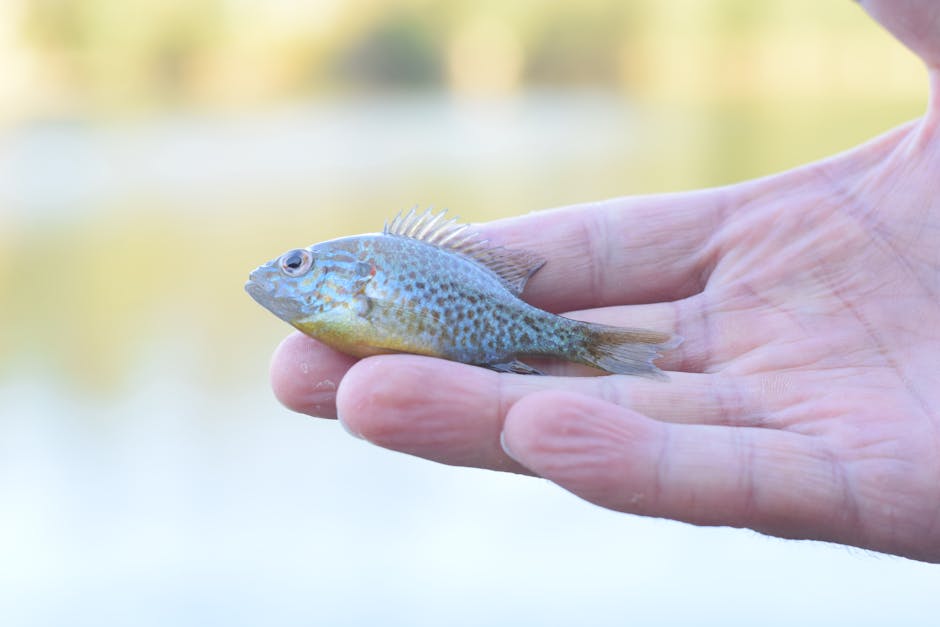
Spotting beds: Polarized sunglasses are a must. Walk the shallows and look for round, light-colored spots on firm bottoms. Beds cluster together. Where you find one, you will find a dozen.
Approach: Stay back and cast from a distance. Your shadow falling across a bed will shut the bite down for several minutes.
Bait placement: Drop your bait on the edge of the bed. The guarding male will rush over and grab it. If you miss the hookset, wait 30 seconds. Males return to the bed fast because they cannot leave eggs unguarded.
Be ethical: Consider releasing most large males during the spawn. They are guarding eggs. Removing too many breeding males from a small pond can hurt the population.
Dock and Structure Fishing
Docks are the single best bluegill spot outside of spawning season. They provide shade, attract insects and offer overhead protection from birds. Algae on pilings draws invertebrates, which draws bluegill.
Skip your bobber rig or jig under the dock as far back as you can. A gentle sidearm cast that skips the bobber under like a stone on water puts your bait where the big ones live.
Other productive structure includes fallen trees (fish the shady side), lily pad edges, cattail lines, submerged brush piles and riprap seawalls.
Kids and Bluegill
If you want to get a kid hooked on fishing, take them bluegill fishing. Bluegill bite often, and kids lose interest fast when nothing happens.
Set them up with a short rod (4 to 5 feet). Zebco makes push-button spincast combos that are perfect for kids under 8. The Zebco Dock Demon or Zebco 202 combo both work. Pre-rig the rod at home with a bobber, split shot and size 8 hook. Bring red worms and let them bait the hook.
Do not worry about technique. Do not correct their casting too much. Let them reel in the fish and feel proud. The goal is to create a memory that makes them want to come back. Every angler started somewhere, and for most of us it started with a bluegill on a worm under a bobber.
Common Mistakes
Hooks too big. Size 2 or 1/0 hooks are way too big. Go down to size 6 to 10.
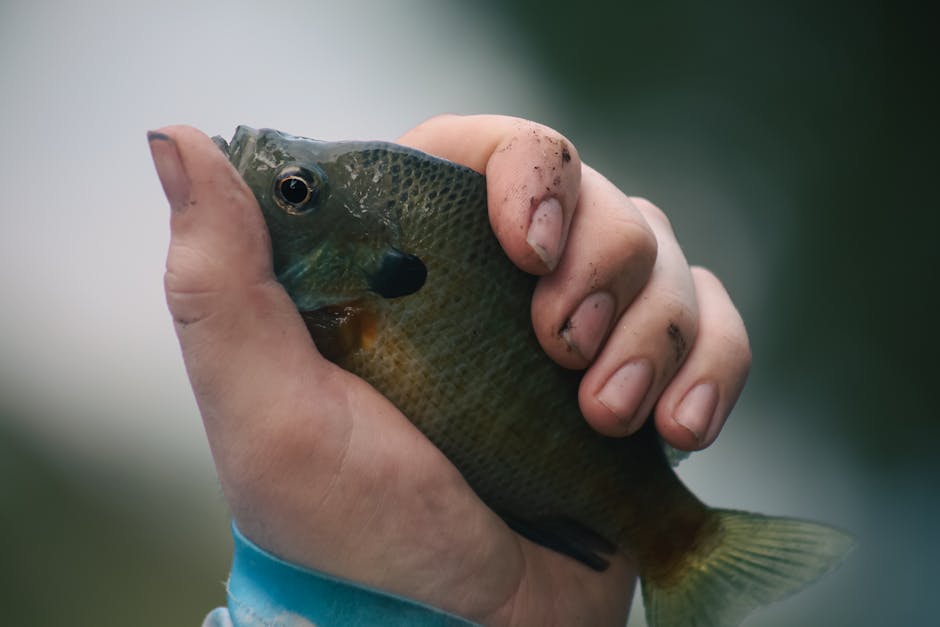
Too much bait. A whole nightcrawler is a bass bait. Use a thumbnail-sized piece. Bluegill nibble, and too much worm lets them steal it.
Setting the hook too hard. Their mouths are soft. Lift the rod with a steady pull, not a sharp snap.
Fishing too deep. Bluegill live shallower than 8 feet most of the year. Do not cast far out into deep water.
Too heavy a rod and line. A bass rod with 12 lb line catches bluegill but you will not feel the bites or the fight. Ultralight with 4 lb line turns every fish into a battle.
Ignoring the bobber. Bluegill bites are subtle. The bobber might just quiver or drift sideways. Watch it like a hawk.
Standing on top of the fish. Stay back from the edge. Shadows and vibrations spook shallow bluegill.
Frequently Asked Questions
What is the best bait for bluegill?
Live worms are the best all-around bluegill bait. Use a small piece of nightcrawler or a whole red worm on a size 8 hook. Crickets are a close second. For artificials, a 1/64-ounce jig tipped with a wax worm is hard to beat.
What size hook should I use for bluegill?
Size 6 to 10 light wire Aberdeen hooks. The thin wire hooks bluegill cleanly and bends straight on snags. Avoid anything bigger than a size 4.
When is the best time to catch bluegill?
Spawning season (May through July in most regions) is the most productive. Bluegill are shallow, aggressive and concentrated on beds. Outside the spawn, early morning and late afternoon are prime.
Can you catch bluegill on artificial lures?
Yes. Small jigs (1/64 to 1/32 ounce) with tiny soft plastic grubs work well. Inline spinners like a size 0 Mepps, small fly rod poppers and micro crankbaits all catch bluegill. Keep everything small.
Are bluegill good to eat?
Bluegill are excellent table fare. The white, flaky meat is mild and sweet. Pan fry in butter with seasoned cornmeal. Plan on 8 to 10 per person for a meal. Check your local bag limits before keeping fish.
Your Bluegill Game Plan
You do not need a boat or fancy electronics. You need a cheap ultralight setup, some worms and a pond with a dock.
Thread a piece of worm on a light wire hook, clip on a small bobber, cast next to structure and watch. When the bobber dips, lift the rod. You are a bluegill angler.
Want to log your spots and track what works? The Tackle app lets you mark productive locations, record which baits caught fish and build a pattern over time. Download Tackle free and start building your personal bluegill playbook.
Sources
- In-Fisherman - Bluegill Fishing
- Wired2Fish - Panfish Techniques
- Bass Resource - Bluegill Fishing Guide
Regulations change. Always check local rules before fishing.

Tackle Team
The Tackle Fishing Team is a collective of anglers, data scientists, and fishing enthusiasts dedicated to making fishing more accessible and successful for everyone.
View profileSources Consulted
The following sources were consulted in creating this guide:
- In-Fisherman – www.in-fisherman.com (retrieved Mar 2026)
- Wired2Fish – www.wired2fish.com (retrieved Mar 2026)
- Bass Resource – www.bassresource.com (retrieved Mar 2026)
Note: Information is summarized and explained in our own words. Always verify current regulations with official sources.
Frequently Asked Questions
What is the best bait for bluegill?
Live worms are the best all-around bluegill bait. Use a small piece of nightcrawler or a whole red worm on a size 8 hook. Crickets are a close second. For artificials, a 1/64-ounce jig tipped with a wax worm is hard to beat.
What size hook should I use for bluegill?
Size 6 to 10 light wire Aberdeen hooks. The thin wire hooks bluegill cleanly and bends straight on snags. Avoid anything bigger than a size 4.
When is the best time to catch bluegill?
Spawning season (May through July in most regions) is the most productive. Bluegill are shallow, aggressive and concentrated on beds. Outside the spawn, early morning and late afternoon are prime.
Can you catch bluegill on artificial lures?
Yes. Small jigs (1/64 to 1/32 ounce) with tiny soft plastic grubs work well. Inline spinners like a size 0 Mepps, small fly rod poppers and micro crankbaits all catch bluegill. Keep everything small.
Are bluegill good to eat?
Bluegill are excellent table fare. The white, flaky meat is mild and sweet. Pan fry in butter with seasoned cornmeal. Plan on 8 to 10 per person for a meal. Check your local bag limits before keeping fish.
Plan Your Next Fishing Trip
Download Tackle to compare tide charts, wind conditions, and practical fishing guidance for your location before you go.
✓ Real-time tide charts • ✓ Wind & weather forecasts • ✓ AI fish identification
See local regulations — Find regulations for your area
Want weekly fishing windows delivered to your inbox?
Get personalized fishing forecasts based on weather, tides, and moon phases.
RELATED CONTENT
KEEP READING