

Catfish fight hard, grow big and eat just about anything. Whether you want a mess of channel cats for the fryer or a 60-pound blue from a river ledge, the approach changes by species and season.
Best for: All skill levels What you need: Medium-heavy to heavy rod, circle hooks, sinkers, cut bait or stink bait, a good rod holder Do this first: Rig a slip sinker setup with a 5/0 circle hook and a chunk of fresh-cut shad. Find a deep hole or channel edge and let it soak on the bottom. That one rig catches more catfish than everything else combined.
Quick Answer: How to Catch Catfish
- Best baits: Cut shad, chicken liver, punch bait for channels. Live bait and fresh cut shad for blues and flatheads.
- Where to fish: Deep holes, channel edges, current breaks, dam tailraces and creek mouths.
- Rig to use: Slip sinker rig (Carolina style) with a circle hook is the go-to for almost every situation.
- Best time: Night fishing produces bigger fish. Early morning and late evening are prime feeding windows.
- Seasonal pattern: Catfish move shallow in spring and fall. They hold deep in summer and winter.
Get Personalized Fishing Advice
Want real-time conditions for your exact location? Tackle provides live tide data, wind forecasts, and AI-powered fishing advice tailored to where you fish.
✓ Real-time tide charts • ✓ Wind & weather forecasts • ✓ AI fish identification
Tackle Box Snapshot (Copy This Setup)
- Rod: 7-foot medium-heavy to heavy power, moderate action. Abu Garcia Catfish Pro or Ugly Stik Tiger.
- Reel: Baitcaster or heavy spinning reel. Abu Garcia Ambassadeur 6500 is a classic.
- Line: 20 to 30 pound mono or 50 pound braid with a mono leader.
- Hooks: 5/0 to 8/0 circle hooks. Gamakatsu Octopus Circle or Team Catfish Double Action.
- Sinkers: 1 to 3 ounce egg sinkers or no-roll sinkers for current.
- Bait options: Fresh-cut shad, chicken liver, Sonny's Super Sticky punch bait, nightcrawlers, live bluegill (where legal).
- Extras: Rod holders, a landing net or lip grips, pliers for hook removal.
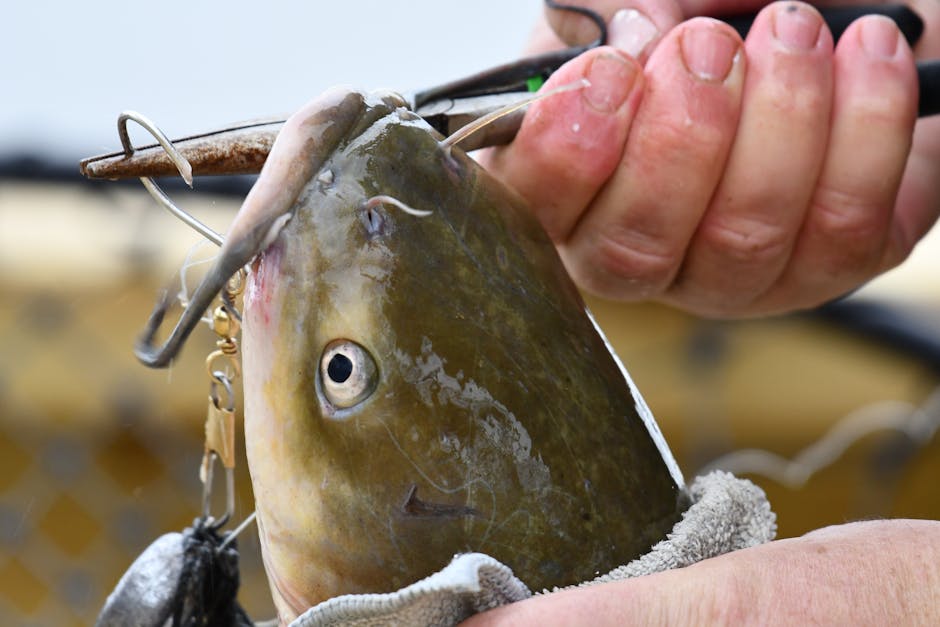 Circle hooks, egg sinkers and fresh-cut shad. This setup covers channel cats, blues and flatheads in rivers and lakes.
Know Your Catfish: Channels vs Blues vs Flatheads
The three main species behave differently. Knowing which one you are after saves time on the water.
Channel Catfish
The most common catfish in North America. Stocked in farm ponds and city lakes everywhere. They eat anything and average 2 to 8 pounds. Channels are scavengers that feed by smell, so strong-scented baits like punch bait and chicken liver work best. For a species-specific breakdown including rigging and bait options, see our how to catch channel catfish guide.
Blue Catfish
The big ones. Blues commonly reach 30 to 50 pounds and records top 140. They are predators that chase shad schools through river channels and reservoirs. Fresh-cut shad is the number one bait. Blues relate to current and stack up below dams and along channel ledges.
Flathead Catfish
Flatheads are loners and ambush feeders. They want live bait. A live bluegill on a slip sinker rig near a logjam at night is the classic setup. They are territorial and push other catfish out of the best holes.
Step-by-Step: How to Rig and Fish for Catfish
-
Set up the slip sinker rig. Thread a 1 to 2 ounce egg sinker onto your main line. Add a bead to protect your knot. Tie a barrel swivel to the end. Same concept as a Carolina rig, just scaled up.
-
Tie the leader. Attach 12 to 24 inches of 20 to 30 pound mono to the other end of the swivel. Tie a 5/0 to 8/0 circle hook to the leader.
-
Bait up. Channels: chicken liver or punch bait. Blues: fresh shad cut into 1-inch steaks. Flatheads: live bluegill hooked through the back.
-
Find the right spot. Deep holes, channel bends, current seams and submerged wood. Catfish hold where current slows and food collects. If you can read the water, you will find catfish.
-
Cast, set the rod and wait. Let the bait settle on the bottom and put the rod in a holder. With circle hooks, do not swing hard. When the rod loads up, just reel down and the hook sets itself.
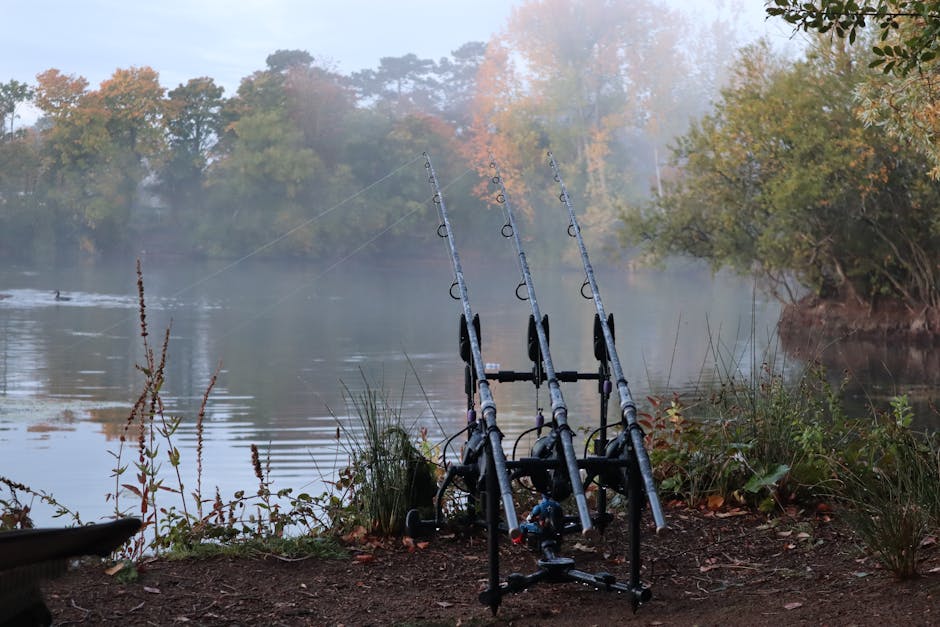 Multiple rods in holders covering a channel edge at dusk. Catfish move shallow to feed as light drops, so the hour before dark is prime.
Best Catfish Baits: What Actually Works
Cut shad: The top all-around bait. Fresh is better than frozen. Cut into 1-inch chunks or butterfly the sides for more scent. Works for channels and blues.
Chicken liver: Cheap and effective for channel cats. Keep it on the hook with a treble hook wrapped in mesh or thread.
Punch bait: Sonny's Super Sticky and CJ's Catfish Punch Bait are top picks. Dip a bare treble hook into the jar. Deadly for channels in warm water above 65 degrees.
Nightcrawlers: Simple and effective for smaller channels. Good starter bait for beginners who want their first catfish. For a complete breakdown on using worms as bait, see our fishing with worms guide.
Live bait: Flatheads want live fish. Bluegill and creek chubs are the top choices. Hook through the back so they stay alive. Check local regulations on live bait species.
Skipjack herring: The trophy blue cat bait. A whole skipjack below a dam tailrace is how most 50-plus-pound blues get caught.
Rigging Methods Beyond the Basics
Slip Sinker Rig (Bottom Fishing)
The standard setup. Egg sinker slides on the main line, swivel stops it, leader runs to a circle hook. The catfish picks up the bait and moves off without feeling the weight. Bread and butter for 90 percent of catfishing.
Slip Float Rig
When catfish suspend off the bottom or hold in timber where bottom rigs snag, switch to a slip float. Set the depth so your bait hangs just above structure. Good for brush piles and standing timber.
Drift Fishing
Drifting works when fish scatter across flats or long channel stretches. Three-way rigs work well here. Tie a three-way swivel to the main line, a short dropper with a sinker off one eye and an 18 to 24 inch leader with the hook off the third. The sinker ticks bottom while the bait trails behind.
Jug Lines
Jug lines are legal in many states and cover wide areas. Tie a leader with a circle hook and sinker to a pool noodle or sealed 2-liter bottle. Bait with cut shad, set them along channel edges at dark and check a few hours later.
Decision Tree: Adjust to Conditions
- If water is muddy: Use strong-scented baits. Punch bait and fresh-cut shad put out heavy scent trails.
- If water is clear: Downsize to 15 to 20 pound fluorocarbon leader. Use natural cut bait over processed baits.
- If current is strong: Switch to no-roll sinkers that grip the bottom. Go to 3 ounces or more.
- If no current (lake fishing): Drift fish to cover water or fan multiple rods from an anchored position.
- If fish ignore bottom baits: Try a slip float to present bait 1 to 3 feet off the bottom.
- If you are missing fish: Downsize the hook. Make sure you are not setting too early on circle hooks.
Spot Playbook: Where Catfish Live
Catfish are bottom-oriented fish that relate to structure and current. Finding the right spots is more than half the battle.
Deep holes: The water scours depressions on outside bends and below riffles. Catfish stack in these holes because depth gives security and current delivers food. Look for where the water color turns darker.
Channel edges: Where a flat drops into deeper channel. Catfish cruise these edges picking up dead shad and crawfish. Put your baits right on the break, not the deepest part.
Current breaks: Bridge pilings, wing dams, rock piles, fallen trees. Catfish sit behind anything that slows the current and wait for food to drift past. Cast upstream and let your bait wash into the slack water.
Dam tailraces: The best big catfish spots on any river. Turbines push out chopped baitfish and current concentrates fish below the dam. Fish the washout holes 50 to 200 yards downstream.
Creek mouths: Where a creek enters a river or reservoir, the inflow creates a current seam and deposits food. Catfish park here during rain events.
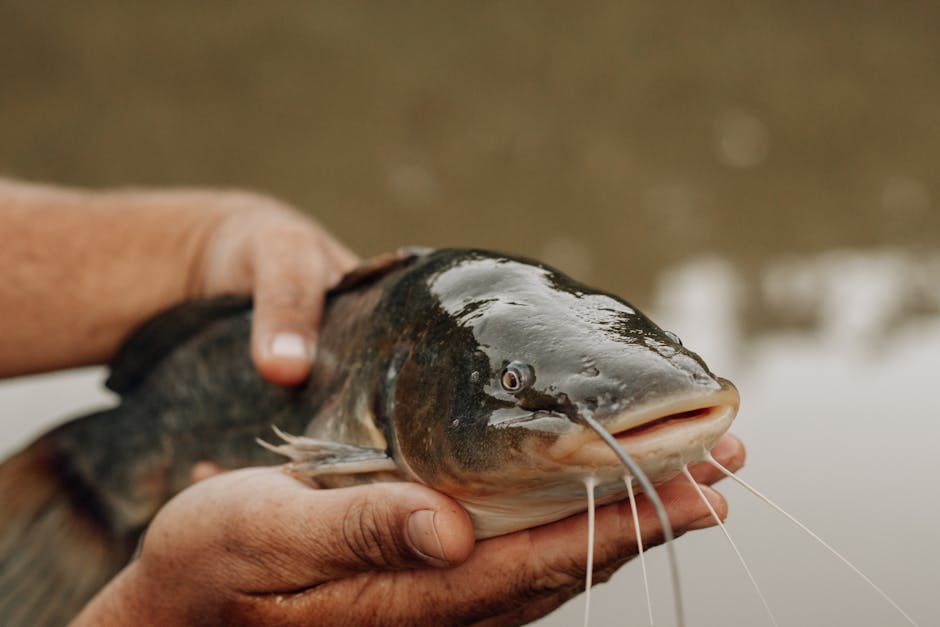 A river bend with deeper water on the outside. Catfish hold in the depression where current slows and food settles. Target the seam between fast and slow water.
Seasonal Patterns: When and Where Catfish Move
Spring (50 to 65 degrees): Catfish move shallow into creek arms and flats. Pre-spawn feeding is heavy. Fish creek mouths and riprap banks for numbers.
Summer (above 70 degrees): After spawning, catfish move to deeper channels and ledges. Night fishing picks up as water temps peak. Fish deep during the day and shallow flats at night.
Fall (55 to 70 degrees): Catfish binge-feed before winter, following shad into creek arms. October and November produce some of the best fishing of the year.
Winter (below 50 degrees): They hold in the deepest holes and feed in short bursts. Fish slow, fish deep. Bites come in midday windows when water warms a degree or two.
Night Fishing for Catfish
Catfish move from deep holding areas into shallower water after dark. Their barbels are packed with scent receptors so they do not need light to find food. Flats that are empty during the day get loaded with fish at night.
Tips for night fishing:
- Set up before dark so you know your surroundings.
- Use rod holders with bells or bite alarms.
- Bring a headlamp with red light mode. White light spooks shallow fish.
- Fish shallower than daytime. Many catfish feed in 3 to 8 feet at night.
- Strong-smelling baits work best because catfish hunt by scent after dark.
Gear Setup: Matching Your Rod and Reel
You do not need expensive gear but you need the right weight class. A rod that is too light means lost fish and broken tackle.
Rod: 7 to 7.5 feet, medium-heavy to heavy power, moderate action. Moderate action lets circle hooks set themselves. Ugly Stik Tiger and Abu Garcia Catfish Pro are solid picks.
Reel: A baitcaster with a good drag handles bigger fish. The Abu Garcia Ambassadeur 6500C3 is a proven workhorse. For bank fishing, a heavy spinning reel works fine.
Line: 20 to 30 pound mono is the standard. Mono stretch helps with circle hook sets. Braided line (50 to 65 pound) is better in heavy cover but needs a mono leader.
Hooks: Circle hooks are not optional. They catch in the corner of the mouth, making unhooking easy and keeping fish healthy for release. Sizes 5/0 to 8/0 cover channels through big blues.
Mistakes That Kill Your Catfish Bite
- Fishing too deep in warm months. Catfish move shallow to feed at night. Stop sitting in the deepest hole in July.
- Using old bait. Fresh bait outfishes frozen every time. Three-month-old freezer shad puts out almost no scent.
- Setting the hook on circle hooks. Circle hooks set themselves. Reel down and let the rod load. Swinging hard pulls the hook out.
- Ignoring current. Catfish face upstream and wait for food. Cast upstream so your bait drifts to the fish.
- Sitting in one spot too long. No bite in 30 minutes? Move. Catfish are either there or they are not.
- Using too-light tackle. A 20-pound blue will spool a light spinning reel. Match your gear to the fish.
- Not re-baiting. Swap your bait every 20 to 30 minutes. Once the scent washes out, the bite dies.
- Fishing midday only. Catfish feed in low-light conditions. Dawn, dusk and night are the real windows.
Track what baits and spots work best each trip. The Tackle app logs your catches with bait type, location and conditions so you spot patterns over time. Download Tackle free.
FAQs
What is the best bait for catfish?
Fresh-cut shad is the top all-around catfish bait. It works for channels, blues and flatheads in rivers and lakes. For channels specifically, punch bait and chicken liver are cheap and effective. For flatheads, live bluegill or sunfish is the standard. The key is freshness. Cut your bait the same day you fish it.
What time of day is best for catching catfish?
Catfish are most active from dusk through dawn. The hour before dark and the first two hours of darkness are the peak feeding windows. You can catch catfish during the day, especially in deeper water and below dams, but night fishing almost always produces bigger fish and more of them.
Do you need a boat to catch catfish?
No. Bank fishing for catfish is productive and in some situations better than fishing from a boat. River bends, dam tailraces, bridge pilings and creek mouths are all fishable from shore. Use rod holders so you can spread multiple rods along a bank and cover more water.
What pound test line should I use for catfish?
Start with 20 pound monofilament for general catfishing. That handles channel cats and smaller blues without trouble. If you are targeting big blues or flatheads over 20 pounds, step up to 30 pound mono or 50 to 65 pound braided line with a mono leader.
Are circle hooks really better for catfish?
Yes. Circle hooks catch more fish and cause less damage than J-hooks when used correctly. They rotate into the corner of the mouth as the fish moves away with the bait. The catch rate is higher because you do not have to time the hookset. Just reel down when the rod loads and the hook does the work.
1-Minute Action Plan
- Rig to tie on: Slip sinker rig with a 1-ounce egg sinker, barrel swivel, 18-inch mono leader and 6/0 circle hook.
- Bait: Fresh-cut shad chunks or chicken liver. Pick up bait on the way to the water.
- 2 spots to try first: A deep hole on an outside river bend and the mouth of a feeder creek.
- Retrieve: Cast, let it sink, put the rod in a holder. Re-bait every 20 to 30 minutes.
- If no bites in 30 minutes: Move 50 yards along the channel edge. The fish are somewhere on that break.
Log every catfish trip in the Tackle app. After a few trips the data tells you exactly where to go next. Download Tackle free.
Read Next
- New to fishing? Start with the fishing tips for beginners guide to get the basics down.
- Want to learn more about bait selection? Check out the best freshwater fishing baits breakdown.
- Need help picking the right rod for catfishing? Read the fishing rod selection guide to match power and action to your target species.
- Already know the Carolina rig for bass? See how it translates to catfish in the Carolina rig guide.
Sources
- In-Fisherman - Catfish Fishing Guides
- Catfish and Carp - Catfishing Techniques
- Wired2Fish - How to Catch Catfish
- Game and Fish Magazine - Catfish Tips
Regulations vary by state and body of water. Always check local fishing regulations for limits and legal methods before heading out.

Tackle Team
The Tackle Fishing Team is a collective of anglers, data scientists, and fishing enthusiasts dedicated to making fishing more accessible and successful for everyone.
View profileSources Consulted
The following sources were consulted in creating this guide:
- In-Fisherman – www.in-fisherman.com (retrieved Mar 2026)
- Catfish and Carp – www.catfishandcarp.com (retrieved Mar 2026)
- Wired2Fish – www.wired2fish.com (retrieved Mar 2026)
- Game and Fish Magazine – www.gameandfishmag.com (retrieved Mar 2026)
Note: Information is summarized and explained in our own words. Always verify current regulations with official sources.
Frequently Asked Questions
What is the best bait for catfish?
Fresh-cut shad is the top all-around catfish bait. It works for channels, blues and flatheads in rivers and lakes. For channels specifically, punch bait and chicken liver are cheap and effective. For flatheads, live bluegill or sunfish is the standard. The key is freshness. Cut your bait the same day you fish it.
What time of day is best for catching catfish?
Catfish are most active from dusk through dawn. The hour before dark and the first two hours of darkness are the peak feeding windows. You can catch catfish during the day, especially in deeper water and below dams, but night fishing almost always produces bigger fish and more of them.
Do you need a boat to catch catfish?
No. Bank fishing for catfish is productive and in some situations better than fishing from a boat. River bends, dam tailraces, bridge pilings and creek mouths are all fishable from shore. Use rod holders so you can spread multiple rods along a bank and cover more water.
What pound test line should I use for catfish?
Start with 20 pound monofilament for general catfishing. That handles channel cats and smaller blues without trouble. If you are targeting big blues or flatheads over 20 pounds, step up to 30 pound mono or 50 to 65 pound braided line with a mono leader.
Are circle hooks really better for catfish?
Yes. Circle hooks catch more fish and cause less damage than J-hooks when used correctly. They rotate into the corner of the mouth as the fish moves away with the bait. The catch rate is higher because you do not have to time the hookset. Just reel down when the rod loads and the hook does the work.
Plan Your Next Fishing Trip
Download Tackle to compare tide charts, wind conditions, and practical fishing guidance for your location before you go.
✓ Real-time tide charts • ✓ Wind & weather forecasts • ✓ AI fish identification
See local regulations — Find regulations for your area
Want weekly fishing windows delivered to your inbox?
Get personalized fishing forecasts based on weather, tides, and moon phases.
RELATED CONTENT
KEEP READING