

Best for: All skill levels What you need: Live nightcrawlers or a bag of soft plastic worms, hooks, a spinning rod DO THIS FIRST: Thread a nightcrawler onto a #6 hook under a bobber and cast near visible structure. If nothing bites in 20 minutes, switch to a soft plastic worm on a Texas rig and work the bottom.
Worms catch more fish than any other bait on the planet. Whether you are threading a nightcrawler for the first time or dragging a 10-inch ribbon tail across a brush pile, worms produce.
This guide covers live bait and artificial. You will learn which worms work for which species, how to rig them and the mistakes that cost anglers fish every day.
Quick Answer: Why Worms Work So Well
- Live worms produce natural scent, movement and texture that trigger feeding in nearly every freshwater species.
- Plastic worms mimic live prey while letting you fish weedless through heavy cover.
- Best species: Bass, trout, catfish, panfish, walleye and perch.
- Best conditions: Early morning and late afternoon. Overcast days are prime.
- Retrieve pattern: Slow. Worms catch more fish when you slow down.
Get Personalized Fishing Advice
Want real-time conditions for your exact location? Tackle provides live tide data, wind forecasts, and AI-powered fishing advice tailored to where you fish.
✓ Real-time tide charts • ✓ Wind & weather forecasts • ✓ AI fish identification
Tackle Box Snapshot (Copy This Setup)
Live Worm Setup
- Bait: Canadian nightcrawlers (whole or halved) or red wigglers for panfish
- Hook: #6 to #2 Aberdeen or bait holder hook (long shank keeps worms secure)
- Weight: Split shot, 1 to 3 BB-sized, pinched 12 inches above the hook
- Float: Small clip-on bobber set 2 to 4 feet deep
- Line: 6 to 8 lb monofilament
- Rod: 6 to 7 foot light or medium-light spinning rod
Plastic Worm Setup
- Bait: 7-inch ribbon tail (Zoom Trick Worm or Berkley PowerBait MaxScent The General)
- Hook: 3/0 EWG for Texas rig, #1 wacky hook for wacky rig
- Weight: 1/4 oz bullet sinker (Texas) or weightless (wacky)
- Line: 10 to 15 lb fluorocarbon
- Rod: 7 foot medium-heavy spinning or baitcaster
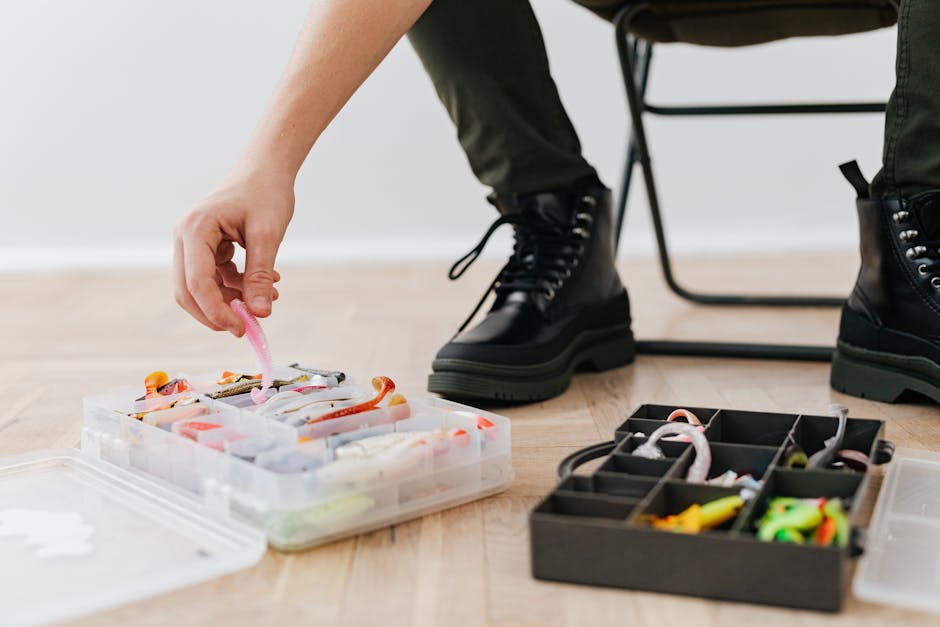 A simple worm setup like this catches fish in every lake, pond and river in the country.
Types of Worms: Live Bait vs Plastic
Both have a place. The real question is which one fits the situation in front of you.
Live Worms
Live worms are the original fish catcher. They wiggle, they smell and they taste real. A fish that bites a live worm holds on longer, giving you more time to set the hook.
Canadian nightcrawlers are the workhorse. Big, tough and available at every bait shop. Use whole crawlers for bass and catfish, half for trout and panfish.
Red wigglers are smaller and thinner. Perfect for bluegill, crappie and perch.
European nightcrawlers (Euros) are tougher than Canadians in warm water. Great for summer.
Wax worms and mealworms fill a similar role. Wax worms are deadly for panfish through the ice.
Plastic Worms
Plastic worms exist because live worms cannot fish through heavy cover without getting ripped off the hook. A soft plastic worm rigged Texas style slides through grass, wood and rock without snagging.
Top plastic worm brands:
- Zoom: Trick Worm, Ol Monster. Consistent quality at a fair price.
- Yamamoto: Senko (the GOAT of stick baits), Kut Tail Worm. Dense salt-impregnated plastic.
- Berkley PowerBait: MaxScent The General, PowerWorm. Scent-infused formulas.
- Strike King: KVD Perfect Plastics. Durable with good action.
How to Rig Worms: 6 Methods That Catch Fish
The right rig depends on your target species and how much cover sits between you and the fish.
1. Bobber and Worm (Live Bait)
The most universal fishing rig ever invented. Clip a small bobber 2 to 4 feet above a #6 bait holder hook. Pinch a split shot 12 inches above the hook. Thread the nightcrawler onto the hook so the tail hangs free and wiggles.
Cast near structure, let it sit and watch the bobber. When it dips or moves sideways, wait one second, then set the hook.
Best for: Trout, bluegill, crappie, perch.
2. Carolina Rig Bottom Setup (Live Bait)
Slide a 1/2 oz egg sinker onto your line, tie on a barrel swivel, then attach a 2-foot fluorocarbon leader to a #4 hook with a nightcrawler. The sinker holds bottom while the worm drifts. Full setup in our Carolina rig guide.
Best for: Catfish, walleye, trout in moving water.
3. Texas Rig (Plastic Worm)
The king of bass fishing rigs. Slide a bullet weight onto your line, tie on a 3/0 EWG hook and thread the plastic worm Texas rig style so the hook point is buried into the body. Completely weedless.
Drag it slowly along the bottom and hop it over rocks. Most bites feel like a slight heaviness or a "tick" on the line. Reel down, feel the fish, then set the hook hard to the side.
Best for: Largemouth and smallmouth bass in cover-heavy water.
4. Wacky Rig (Plastic Worm)
Hook a 5-inch Senko through the middle with a #1 or 1/0 wacky hook. Cast it out and let it fall on a slack line. Both ends flap on the way down. The wacky rig is one of the most effective techniques around docks, seawalls and open shorelines. Most bites come on the initial fall.
Best for: Bass, especially pressured fish in clear water.
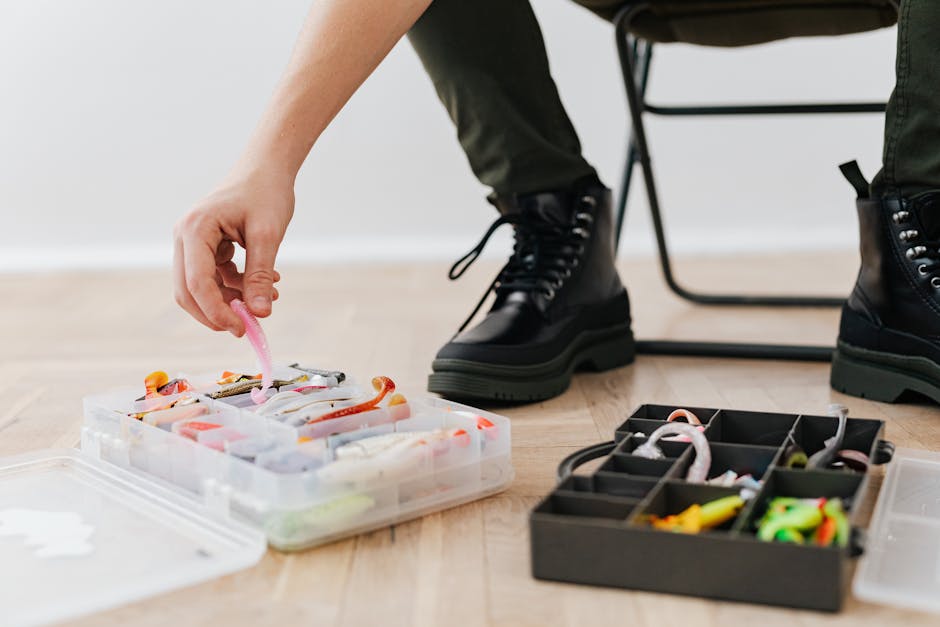 Put the bait where fish already live. Laydowns, docks and overhanging trees are where worm fishing pays off.
5. Ned Rig (Plastic Worm)
Cut a stick bait in half and thread it onto a mushroom-head jighead (1/16 to 1/4 oz). The stubby profile sits upright on the bottom like a worm poking out of the mud. The Ned rig catches bass when everything else fails. Z-Man ElaZtech is the gold standard because the buoyant material makes the bait stand up tall.
Best for: Smallmouth and largemouth bass in tough conditions.
6. Drop Shot (Plastic Worm)
Tie your hook with a Palomar knot, leaving a long tag end. Attach a drop shot weight 12 to 24 inches below the hook. Nose-hook a small finesse worm (Roboworm or Berkley PowerBait) so it sits horizontally above the bottom. The weight holds bottom while the worm hovers and shakes in place.
Best for: Bass, walleye. Deadly in deep water and on spotted bass.
Species That Eat Worms (and How to Target Each One)
Here is how to match your worm approach to the species you want.
Largemouth bass: Texas rig a 7 to 10 inch ribbon tail in green pumpkin through grass, brush and laydowns. In open water, wacky rig a Senko around docks.
Smallmouth bass: Ned rigs and drop shots with 4 to 5 inch finesse worms. Drag along gravel points and bluff walls.
Trout: Live nightcrawlers (halved) under a bobber or drifted through current. Hooks #8 to #6, line 4 to 6 lb.
Catfish: Whole nightcrawlers on the bottom using a Carolina rig. Catfish find food by smell, so live worms draw them from a distance. More in our catfish guide.
Carp: Nightcrawlers are one of the best baits for carp. Fish them on the bottom near muddy flats and shallow bays. For a full breakdown, see our guide on carp fishing with worms.
Bluegill and panfish: Red wigglers on a #8 hook under a tiny bobber, 1 to 3 feet deep near weeds and docks.
Walleye: Live nightcrawler on a slow-trolled spinner harness at 1 to 1.5 mph along weed edges.
Perch: Small worms on a #8 hook dropped near the bottom. Perch school up, so once you find them the action is fast.
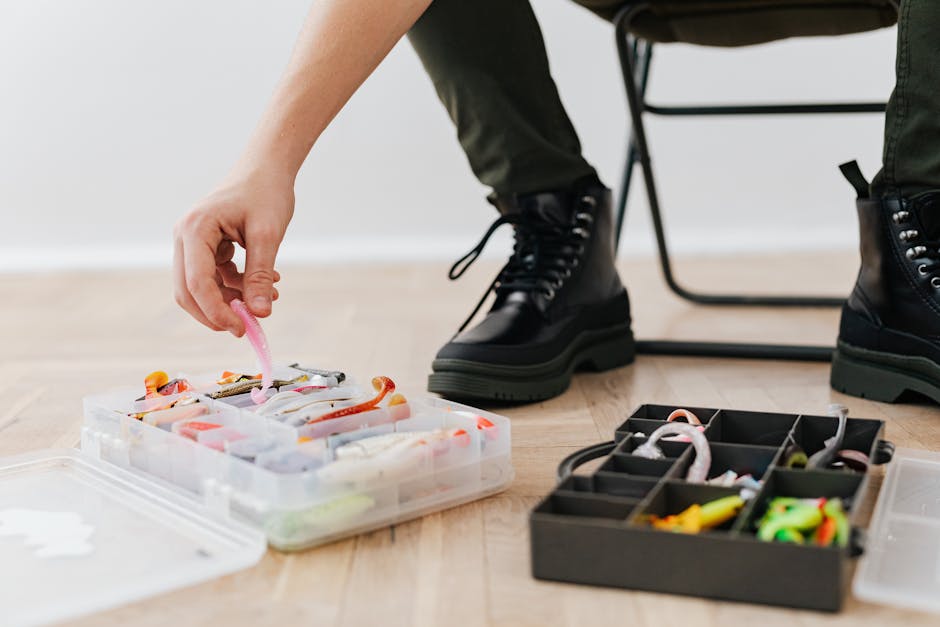 Worms do not discriminate. Match your rig to the species and you are in business.
Worm Fishing Techniques: How to Work Your Bait
Live Worm Techniques
Still fishing under a bobber. Cast near structure, let the bobber sit and let the worm work. Give it 5 to 10 minutes per spot. Wait for a full pull-down before setting the hook.
Bottom fishing. Let the worm sink on a sinker rig and wait. Check bait every 15 minutes because panfish and crawfish steal it. Best for catfish.
Drift fishing. In rivers, let a worm drift through current with just enough split shot to keep it near the bottom. No bobber. Trout and smallmouth respond to a drifted worm better than a stationary one.
Plastic Worm Techniques
Slow drag. Cast, let it sink, drag with your rod tip, reel up slack, drag again. Pause 3 to 5 seconds between drags. Most bites happen during the pause.
Hop and drop. Two short pops followed by a long pause. The worm hops off bottom and settles back. Bass hit on the fall.
Swim it. Reel steadily so the worm swims through the water column above grass tops or along bluff walls.
Dead stick. Cast a Senko on a wacky rig and do nothing. Sometimes the laziest approach catches the most fish.
Keeping Live Worms Alive: Storage Tips
Dead worms still catch fish, but live worms catch more.
- Keep them cool. A cooler or refrigerator keeps them alive for days. Ideal range is 40 to 55 degrees.
- Use the right bedding. Peat moss or shredded newspaper. Avoid potting soil with fertilizer.
- Do not seal the container. Worms breathe through their skin. Punch holes in the lid.
- Avoid direct sunlight. Ten minutes in direct sun on a hot day will kill a full container.
- Add moisture, not water. Spray the bedding lightly if it dries out. Soggy bedding suffocates worms.
Decision Tree: Choosing the Right Worm Setup
- Fishing for panfish or trout from shore? Live nightcrawler (halved) under a bobber with a #6 hook.
- Targeting catfish on the bottom? Whole live nightcrawler on a Carolina rig with a 1/2 oz sinker.
- Bass in grass and wood? 7-inch plastic worm on a Texas rig with a 1/4 oz bullet weight.
- Bass in clear open water? 5-inch Senko on a wacky rig. Weightless.
- Tough bite, pressured fish? Ned rig with a cut-down stick bait on a 1/8 oz mushroom head.
- Deep water, fish on electronics? Drop shot with a 4-inch finesse worm 18 inches above the weight.
- River fishing for trout or smallmouth? Live worm drifted through current with split shot, no bobber.
- Muddy or stained water? Darker worm colors (junebug, black and blue) and add scent.
7 Mistakes That Kill Your Worm Fishing
-
Using too big a hook for live bait. A massive hook spooks fish. A #6 is plenty for a nightcrawler targeting bass and trout.
-
Reeling too fast with plastic worms. If you are fishing them at crankbait speed, you are doing it wrong. Drag, pause, slow down more.
-
Not watching your line on the fall. Most bites happen as the bait sinks. If your line jumps or moves sideways before hitting bottom, set the hook.
-
Balling the worm up on the hook. A balled-up worm does not look like food. Thread it so the tail hangs free and wiggles.
-
Fishing in the wrong depth zone. In hot weather, fish move deeper. In cool weather, they come shallow. Adjust depth with the conditions.
-
Ignoring scent on plastic worms. A dab of Berkley Gulp! Alive spray or Pro-Cure on a plastic worm makes fish hold on longer. Not cheating. Just smart.
-
Setting the hook too early with live bait. When a bobber goes down, count to one before you swing. Panfish nibble first. Give them a second to take it fully.
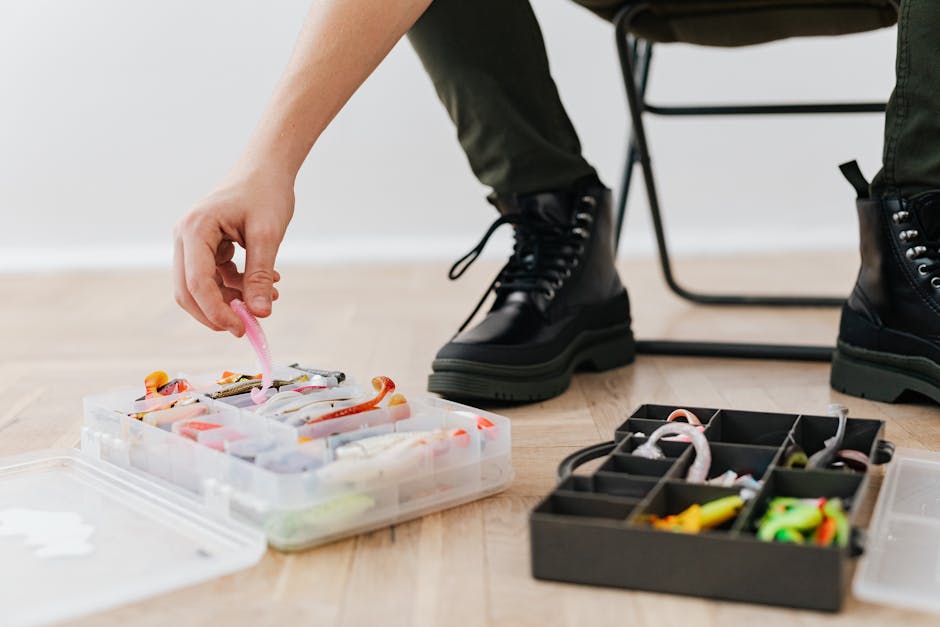 Thread the worm so the tail hangs free and wiggles. A balled-up worm looks like nothing a fish wants to eat.
Track Your Worm Fishing Patterns
The difference between catching a few fish and catching fish consistently is knowing what worked last time. Which worm color produced? Was it a live worm morning or a plastic worm afternoon?
The Tackle app lets you log those details after every trip so you build patterns instead of guessing.
FAQs
What is the best worm for fishing?
For live bait, Canadian nightcrawlers are the most versatile. They catch bass, trout, catfish, walleye and panfish. For artificial, a 7-inch Zoom Trick Worm or 5-inch Yamamoto Senko in green pumpkin covers 90% of bass fishing situations.
Do plastic worms work as well as live worms?
For bass, plastic worms often work better because you can fish them weedless through cover where big fish live. For trout, catfish and panfish, live worms usually outperform plastics because those species rely heavily on scent to find food.
What color plastic worm catches the most bass?
Green pumpkin in clear to lightly stained water. Junebug (dark purple with green flake) in stained water. Black and blue in muddy water. When in doubt, green pumpkin works everywhere.
How do you keep worms on the hook?
Use a bait holder hook with small barbs on the shank. Thread the worm starting at the head, pushing it up the shank so it bunches slightly but the tail hangs free. For plastic worms, make sure the bait hangs straight on the hook with no twists. A crooked plastic worm spins instead of falling naturally.
When is the best time to fish with worms?
Early morning and late afternoon are prime because fish feed more actively in low light. Overcast and rainy days are excellent for worm fishing because real worms wash into the water during rain, triggering a natural feeding response. Night fishing with worms is also productive for catfish and walleye.
1-Minute Action Plan
- Rig to tie on: Live nightcrawler under a bobber (panfish/trout) or a 7-inch Trick Worm Texas rigged in green pumpkin (bass).
- 2 places to try first: Any dock or laydown tree visible from shore. Fallen timber and shade are magnets for fish.
- First retrieve cadence: Cast near structure, let it sit 10 seconds, then drag slowly with 5-second pauses.
- One adjustment if no bites: Downsize. Cut the worm in half, drop to a smaller hook and slow down even more.
Next Steps: Keep Learning
- If you want to master the most versatile bass rig, read our Texas rig guide.
- If you are fishing clear water with pressured bass, learn the wacky rig.
- If you want to see all your soft plastic options beyond worms, we cover every type.
- If the bite is tough and nothing else is working, the Ned rig saves the day.
- If you want to find the right bait for your water, check our best freshwater baits guide.
Ready to catch more fish on worms and build your personal playbook? Download Tackle free.
Sources
- Wired2Fish - Worm Fishing Tips and Techniques
- Bassmaster - Soft Plastic Worm Fishing
- In-Fisherman - Live Bait Fishing Tactics
Regulations change. Always check local rules before fishing.

Tackle Team
The Tackle Fishing Team is a collective of anglers, data scientists, and fishing enthusiasts dedicated to making fishing more accessible and successful for everyone.
View profileSources Consulted
The following sources were consulted in creating this guide:
- Wired2Fish – www.wired2fish.com (retrieved Mar 2026)
- Bassmaster – www.bassmaster.com (retrieved Mar 2026)
- In-Fisherman – www.in-fisherman.com (retrieved Mar 2026)
Note: Information is summarized and explained in our own words. Always verify current regulations with official sources.
Frequently Asked Questions
What is the best worm for fishing?
For live bait, Canadian nightcrawlers are the most versatile option. They catch bass, trout, catfish, walleye and panfish. For artificial, a 7-inch Zoom Trick Worm or 5-inch Yamamoto Senko in green pumpkin covers 90% of bass fishing situations.
Do plastic worms work as well as live worms?
For bass, plastic worms often work better because you can fish them weedless through heavy cover where big fish live. For trout, catfish and panfish, live worms usually outperform plastics because those species rely heavily on scent to find food.
What color plastic worm catches the most bass?
Green pumpkin in clear to lightly stained water. Junebug (dark purple with green flake) in stained water. Black and blue in muddy water. When in doubt, green pumpkin works everywhere.
How do you keep worms on the hook?
Use a bait holder hook with small barbs on the shank. Thread the worm starting at the head, pushing it up the shank so it bunches slightly but the tail hangs free. For plastic worms, make sure the bait hangs straight with no twists.
When is the best time to fish with worms?
Early morning and late afternoon are prime because fish feed more actively in low light. Overcast and rainy days are excellent because real worms wash into the water during rain, triggering a natural feeding response. Night fishing with worms is also productive for catfish and walleye.
Plan Your Next Fishing Trip
Download Tackle to compare tide charts, wind conditions, and practical fishing guidance for your location before you go.
✓ Real-time tide charts • ✓ Wind & weather forecasts • ✓ AI fish identification
See local regulations — Find regulations for your area
Want weekly fishing windows delivered to your inbox?
Get personalized fishing forecasts based on weather, tides, and moon phases.
RELATED CONTENT
KEEP READING