

Nothing in bass fishing matches the violence of a frog bite. A four-pound largemouth launches through a mat of lily pads and clamps down on your hollow body frog. Pads rip. Water erupts. If you have been throwing topwater lures on open water but never pitched a frog into heavy cover, you are leaving the biggest bass in the lake completely alone.
Frog fishing for bass is not complicated. But it punishes mistakes harder than any other topwater technique. The gear has to be right and the hookset has to be late. This guide covers every frog style, where to throw them and the timing mistake that costs anglers more fish than anything else.
Best for: Intermediate to Advanced | What you need: Heavy baitcasting setup, hollow body frog, lily pads or matted vegetation
Do this first: Tie on a Booyah Pad Crasher in black. Find the thickest pad field on your lake. Cast into the middle and walk it back to open water with short twitches. When a bass blows up, count to two before you swing.
Quick Answer: Frog Fishing Basics
- When: Late spring through early fall. Best above 65F. Peak months are June through September.
- Where: Lily pads, matted grass, hydrilla mats, duckweed and any cover too thick for treble hooks.
- Line: 50 to 65-pound braid. No exceptions.
- Rod: 7 to 7'3" heavy power, fast tip.
- Retrieve: Walk it. Pop it. Pause it. Let the fish tell you the cadence.
- The rule: Do NOT set the hook on the explosion. Wait until you feel the weight of the fish.
Get Personalized Fishing Advice
Want real-time conditions for your exact location? Tackle provides live tide data, wind forecasts, and AI-powered fishing advice tailored to where you fish.
✓ Real-time tide charts • ✓ Wind & weather forecasts • ✓ AI fish identification
Tackle Box Snapshot
- Hollow body frog: Booyah Pad Crasher or LIVETARGET Hollow Body Frog (best all-around)
- Walking frog: Spro Bronzeye Frog 65 (best walk-the-dog action over pads)
- Popping frog: River2Sea Bully Wa 2 (best for open pockets between mats)
- Line: 50 to 65-pound braid (PowerPro or Sufix 832)
- Rod: 7' to 7'3" heavy power, fast action
- Reel: 7.1:1 or faster baitcaster
- Colors: Black for all conditions. White for clear water. Brown or green for natural presentations.
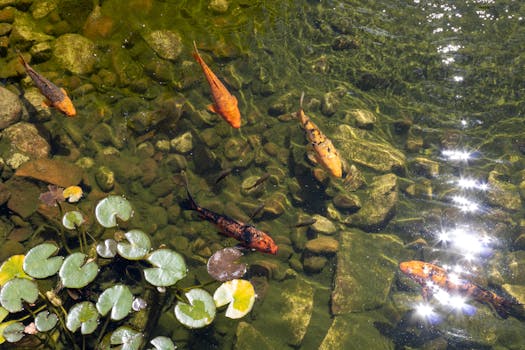 Keep at least two frog styles rigged. A walking frog covers pads while a popping frog works the open pockets between mats.
Types of Frog Lures
Each style has a specific job. Understanding the difference puts more fish in the boat.
Hollow Body Frogs (Booyah Pad Crasher, LIVETARGET Hollow Body Frog)
The standard. A soft hollow plastic body with two upturned hooks that sit flush against the body. Completely weedless. You can drag this through the worst cover on the lake and it comes through clean.
The Booyah Pad Crasher is the workhorse. It walks well, sits low in the water and collapses on the hookset. The LIVETARGET Hollow Body Frog has the most realistic finish on the market.
Best for: Walking across pad fields, working through matted grass and anywhere you need a weedless topwater.
Popping Frogs (River2Sea Bully Wa 2)
Same weedless design as a hollow body but with a cupped face that spits water on every twitch. The pop creates noise that draws bass from a distance.
The River2Sea Bully Wa 2 is the gold standard. The pop is loud and the body collapses easily on the set. Fish it in open pockets between mats and along pad edges.
Best for: Open pockets in vegetation, pad edges and calm water where the pop carries.
Walking Frogs (Spro Bronzeye Frog 65)
Designed for the walk-the-dog action across heavy cover. The weight distribution makes it glide side to side with minimal effort. The Spro Bronzeye has been a tournament staple for over a decade because it walks perfectly over pads.
Best for: Covering water over large pad fields and triggering strikes from bass holding under canopy cover.
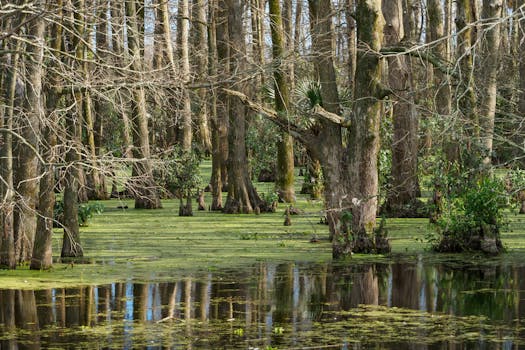 Cast past your target and walk the frog back through the pads. Bass track the bait from below and strike when it passes over their ambush point.
When and Where to Fish Frogs
Frog fishing for bass is a warm-water game. The bite turns on at 65F and peaks through summer.
Lily Pad Fields
The classic frog water. Bass sit under pads waiting for prey to cross overhead. Cast to the far edge and walk your frog across the top, pausing in gaps between pads. Strikes come where pads meet open water or in openings between clusters.
Matted Vegetation
Hydrilla, milfoil and other grass species form thick surface mats in summer. Bass push up under these mats to ambush anything that moves on top. No other lure can fish this water. Walk the frog across the mat until it drops into a hole. Let it sit. That pause over an opening is money.
Shoreline Grass and Reeds
Cattails, bulrush and shoreline grass hold bass in spring when they move shallow to spawn. Pop a frog along the outer edge of the grass line. Try a soft plastic like a weightless Senko as a follow-up when bass miss the frog.
Frog Retrieval Techniques
How you work a frog determines whether bass react or ignore it.
Walk the Dog
The bread and butter. Point your rod tip down toward the water. Twitch the slack line with short rhythmic snaps. The frog kicks left-right-left across the surface in a zigzag. Same walk-the-dog technique you use with a Zara Spook but adapted for heavy cover.
Vary the speed. Some days they want it fast. Some days they want it painfully slow with long pauses between twitches.
Pop and Pause
For popping frogs like the Bully Wa 2. Give the rod a sharp downward twitch to make the cupped face spit water. Pause for two to four seconds. Pop again. The noise draws fish and the pause gives them time to commit.
Fish it almost like a popper. Pop. Wait. Pop. Pop. Wait. Let the fish tell you the rhythm.
Dead Stick (The Patience Play)
Cast the frog into a hole in the mats. Let it sit completely still. Wait five seconds. Ten seconds. Then give it one tiny twitch. Bass studying the bait from below will crush it the moment it moves.
This technique tests your patience but it catches the biggest fish. When you see a wake pushing toward your frog, resist the urge to move it. Let the fish find it.
Buzz Retrieve
Reel the frog fast and steady so the legs kick and churn. This creates a surface disturbance similar to a buzzbait but completely weedless. Use this when bass are aggressive and you need to cover water quickly.
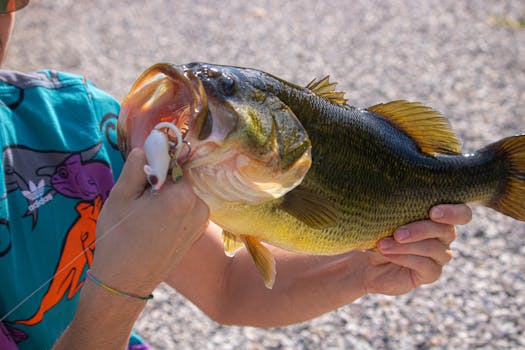 Target the gaps between pad clusters. Bass hold in these open pockets waiting for prey to swim across. A well-placed frog in a gap often draws an instant strike.
If This, Do That
- Thick matted vegetation -- Walk a hollow body frog across the mat. Pause over every gap.
- Scattered pads with open pockets -- Popping frog. Pop it in the openings and let it sit.
- Covering water on large pad fields -- Walking frog at medium speed. Fan cast the field.
- Bass blowing up but missing -- Slow down. Add longer pauses. Switch to a smaller profile.
- Calm morning, flat water -- Popping frog. The sound carries and draws fish from a distance.
- Windy conditions -- Walking frog with a faster retrieve. Bass feed more aggressively in wind.
- Bass swirling but not eating -- Dead stick. Let the frog sit motionless for 10 seconds.
- Post-frontal bluebird sky -- Fish the densest cover you can find.
Gear Setup: Why Heavy Tackle Is Not Optional
Frog fishing for bass demands specialized gear. You cannot fish a frog on medium-power tackle or monofilament line.
Line: 50 to 65-Pound Braided Line
Braid is mandatory. Zero stretch means you can drive the hooks through the soft frog body on the set. It also cuts through vegetation when you haul a fish out of the pads. Mono stretches too much for a solid hookset. Fluorocarbon sinks and drags the frog under.
Run 65-pound braid for heavy mats. Drop to 50-pound for lighter pad fields where thinner line helps the frog walk better.
Rod: 7' to 7'3" Heavy Power, Fast Action
You need backbone to horse a bass out of thick cover before it wraps you around every stem in the pad field. When a five-pounder buries in the hydrilla, you need the power to pull it straight to the boat. Check our guide to catching largemouth bass for a breakdown of how rod power matches different techniques.
Reel: High-Speed Baitcaster (7.1:1 or Higher)
A fast reel picks up slack quickly after the hookset. When a bass eats a frog in the pads, you have two seconds to set the hook and start cranking before the fish buries in the thickest cover available.
Hookset Timing: The Hardest Part of Frog Fishing
This is where frog fishing for bass separates from every other technique. When a bass explodes on your frog, every instinct screams to swing. Do not swing on the explosion.
The bass rockets upward and engulfs the frog in an open mouth. The splash you see is the fish closing its jaws and turning back down. If you set the hook on the splash, you rip the frog out of the strike zone before the bass has a grip on it.
The process:
- Bass blows up on the frog.
- Resist. Do not move.
- Wait until you feel the weight pulling the rod down.
- Reel down to take up slack.
- Set the hook hard with a full-body sweep.
Say "got it" out loud before you swing. That delay is all you need. Even tournament pros miss 30 to 40 percent of their frog bites. A late hookset misses less often than an early one.
Common Mistakes That Kill the Frog Bite
-
Setting the hook on the splash. This is mistake number one and it accounts for most missed frog fish. The explosion is not the eat. Wait for the weight.
-
Using too light of tackle. Medium-power rods and monofilament line turn frog fishing into a frustrating exercise. You cannot set the hook through a soft body with stretchy line. Go heavy.
-
Not trimming the legs. Stock frog legs are often too long. Trim them to 3 to 4 inches. Shorter legs improve the walking action and boost hookup rates.
-
Fishing frogs in open water. Frogs are designed for cover. On open water, bass get a clear look and often refuse it. In cover, bass have a split-second decision to commit. Stick to the thick stuff. For open water topwater, throw a walking bait or popper instead.
-
Ignoring the wind. Wind positions baitfish and activates bass. A breeze blowing into a pad field pushes bait against the vegetation. Always fish the windblown side first.
-
Moving too fast. Beginners reel the frog quickly across pads without pausing. Slow down. Pause over gaps and openings. The pause is where the magic happens.
-
Throwing frogs in cold water. Below 60F, bass are not looking up. Save frog fishing for warm water. In cooler conditions, try a spinnerbait slow-rolled near the bottom instead.
-
Not bending the hooks out. Frog hooks sit tight against the body to stay weedless. Bend them out slightly so the hook points are barely exposed. This improves your hookup percentage without sacrificing weedlessness.
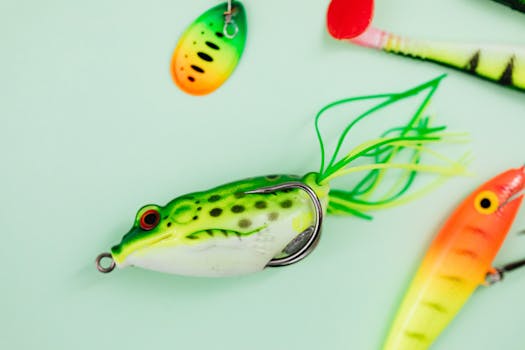 Bend the hook points slightly outward and trim the legs to 3-4 inches. These two modifications improve hookup rates without adding snag risk.
Track Your Frog Patterns
Frog bites cluster around specific conditions. Water temp, wind direction, time of day and cover type all matter. Tackle lets you log every detail so you know exactly when the frog bite is about to fire on your home water.
Download Tackle and start building your frog fishing playbook.
FAQs
What is the best frog color for bass?
Black. It works in every water color and light condition. Black creates the strongest silhouette against the sky when bass look up from below. White is a strong second choice for clear water.
What time of day is best for frog fishing?
Early morning and late evening. Bass move shallow during low light and feed aggressively under cover. Overcast days extend the frog bite all day. Midday sun pushes bass under thick mats where a frog is the only bait that reaches them.
How do I stop missing fish on frog lures?
Wait longer before setting the hook. Most misses happen because anglers swing on the splash instead of waiting for the weight. Count to two after the blowup. Reel down. Then set the hook. Bend the hook points slightly outward and trim the legs shorter.
Can you fish a frog in the rain?
Yes. Rain breaks up the surface, masks your line and gives bass confidence to feed shallow. A steady warm rain over a pad field is one of the best frog fishing scenarios you will find.
What is the difference between a hollow body frog and a popping frog?
A hollow body frog has a pointed nose designed for walking across cover. A popping frog has a cupped face that spits water when you twitch it. Use hollow body frogs over pads and mats. Use popping frogs in open pockets where the sound draws fish from a distance.
1-Minute Action Plan
- Rig: Booyah Pad Crasher (black) on 65-pound braid with a 7' heavy rod.
- Where: Thickest lily pad field or grass mat on your lake.
- When: First light or last light. Water above 65F.
- Retrieve: Walk the frog across the pads with short rod twitches. Pause over every gap.
- Hookset: Wait for the weight. Count to two after the blowup before you swing.
- No bites after 15 minutes? Switch to a popping frog and work the edges where pads meet open water.
Next Steps
- Want the full breakdown on surface fishing? See how to use topwater lures for every category.
- Targeting largemouth specifically? Our how to catch largemouth bass guide covers seasonal patterns and structure.
- Need a search bait for stained water? Read how to use spinnerbaits for the best subsurface option.
- Fishing soft cover with finesse? See how to use soft plastic lures for lighter presentations.
Sources
- Wired2Fish - Frog Fishing Tips
- Bassmaster - Frog Fishing Techniques
- In-Fisherman - Topwater Frogs
- Bass Resource - Hollow Body Frog Guide
Regulations change. Always check local rules before fishing.

Tackle Team
The Tackle Fishing Team is a collective of anglers, data scientists, and fishing enthusiasts dedicated to making fishing more accessible and successful for everyone.
View profileSources Consulted
The following sources were consulted in creating this guide:
- Wired2Fish – www.wired2fish.com (retrieved Mar 2026)
- Bassmaster – www.bassmaster.com (retrieved Mar 2026)
- In-Fisherman – www.in-fisherman.com (retrieved Mar 2026)
- Bass Resource – www.bassresource.com (retrieved Mar 2026)
Note: Information is summarized and explained in our own words. Always verify current regulations with official sources.
Frequently Asked Questions
What is the best frog color for bass?
Black. It works in every water color and every light condition. Black creates the strongest silhouette against the sky when bass look up from below. White is a strong second choice for clear water on sunny days.
What time of day is best for frog fishing?
Early morning and late evening produce the most blowups. Bass move shallow during low light and feed aggressively under cover. Overcast days can extend the frog bite all day. Midday sun pushes bass under the thickest mats where a frog is often the only bait that reaches them.
How do I stop missing fish on frog lures?
Wait longer before setting the hook. Most missed frog fish happen because the angler swings on the splash instead of waiting for the weight. Count to two after the blowup. Reel down. Then set the hook. Also bend the hook points slightly outward and trim the legs shorter.
Can you fish a frog in the rain?
Yes. Rain is excellent for frog fishing. It breaks up the surface, masks your line and gives bass confidence to feed shallow. A steady warm rain over a pad field is one of the best frog fishing scenarios you will find all year.
What is the difference between a hollow body frog and a popping frog?
A hollow body frog has a pointed or rounded nose designed for walking across cover. A popping frog has a cupped face that spits water when you twitch it. Use hollow body frogs for covering water over pads and mats. Use popping frogs for working open pockets where the pop sound can draw fish from a distance.
Plan Your Next Fishing Trip
Download Tackle to compare tide charts, wind conditions, and practical fishing guidance for your location before you go.
✓ Real-time tide charts • ✓ Wind & weather forecasts • ✓ AI fish identification
See local regulations — Find regulations for your area
Want weekly fishing windows delivered to your inbox?
Get personalized fishing forecasts based on weather, tides, and moon phases.
RELATED CONTENT
KEEP READING