

The first time a smallmouth bass hits your line, you think you hooked something twice its size. These fish do not act right. A three-pounder fights like a five-pound largemouth. A five-pounder makes you question your drag settings. Pound for pound, smallmouth bass are the strongest fighting freshwater fish in North America. That is not opinion. Ask anyone who has caught both species back to back on the same rod.
Smallmouth live in cleaner, cooler and rockier water than their largemouth cousins. They eat different food and relate to different structure. They punish you for mistakes that a largemouth would forgive. This guide covers everything you need to find them, fool them and hang on when they try to shake you off.
Best for: Beginner to Intermediate anglers
What you need: Medium-light spinning rod, 6-8 lb fluorocarbon, tube jigs or Ned rigs
Do this first: Find rocky points or current breaks with a gravel or chunk rock bottom. Smallmouth live where the rocks are.
Quick Answer: How to Catch Smallmouth Bass
- Target rocky structure: points, bluffs, gravel bars, boulder fields and current seams
- Best lures: Ned rigs, tube jigs, drop shots, small crankbaits and jerkbaits
- Best live bait: crayfish, hellgrammites and leeches
- Use medium-light spinning gear with 6-8 lb fluorocarbon
- Work baits slow along the bottom in cold water. Speed up in summer
- Smallmouth prefer water temps between 60 and 75 degrees
Get Personalized Fishing Advice
Want real-time conditions for your exact location? Tackle provides live tide data, wind forecasts, and AI-powered fishing advice tailored to where you fish.
✓ Real-time tide charts • ✓ Wind & weather forecasts • ✓ AI fish identification
Smallmouth vs Largemouth: Know What You're After
Smallmouth and largemouth bass share a name but that is about where the similarities end. Knowing the differences keeps you from fishing the wrong water with the wrong approach.
Jaw size. A largemouth's jaw extends past its eye. A smallmouth's jaw stops below the eye. That is how you tell them apart.
Color. Smallmouth are bronze to brown with dark vertical bars. Largemouth are green with a horizontal stripe.
Habitat. Largemouth love weeds, wood and murky water. Smallmouth want rocks, gravel and clear water.
Forage. Largemouth eat whatever fits in their mouth. Smallmouth are crayfish specialists. In rivers, they also eat hellgrammites, sculpins and darters.
Fight. Largemouth pull hard and jump once or twice. Smallmouth go ballistic. Repeated jumps, headshakes, long runs and bulldogging dives.
Temperature. Largemouth tolerate warm, shallow water. Smallmouth prefer cooler temps and go deep when surface temps climb past 75 degrees.
Tackle Box Snapshot: Copy This Setup
- Rod: 6 foot 10 inch to 7 foot medium-light spinning rod, fast action
- Reel: 2500-size spinning reel (Shimano Stradic, Daiwa Ballistic, Pflueger President)
- Line: 8-10 lb braid mainline to 6-8 lb fluorocarbon leader (4-6 feet)
- Lure 1: Z-Man Finesse TRD on a 1/5 oz Ned rig jighead (green pumpkin)
- Lure 2: Strike King Half Shell tube on a 1/4 oz tube jighead
- Lure 3: 3-inch Roboworm on a drop shot rig with 1/4 oz tungsten
- Lure 4: Rapala DT6 or Strike King KVD 1.5 crankbait in crayfish pattern
- Lure 5: Megabass Vision 110 jerkbait in ghost minnow
- Terminal: Size 1 drop shot hooks, 1/4 oz tube heads, 1/5 oz Ned heads
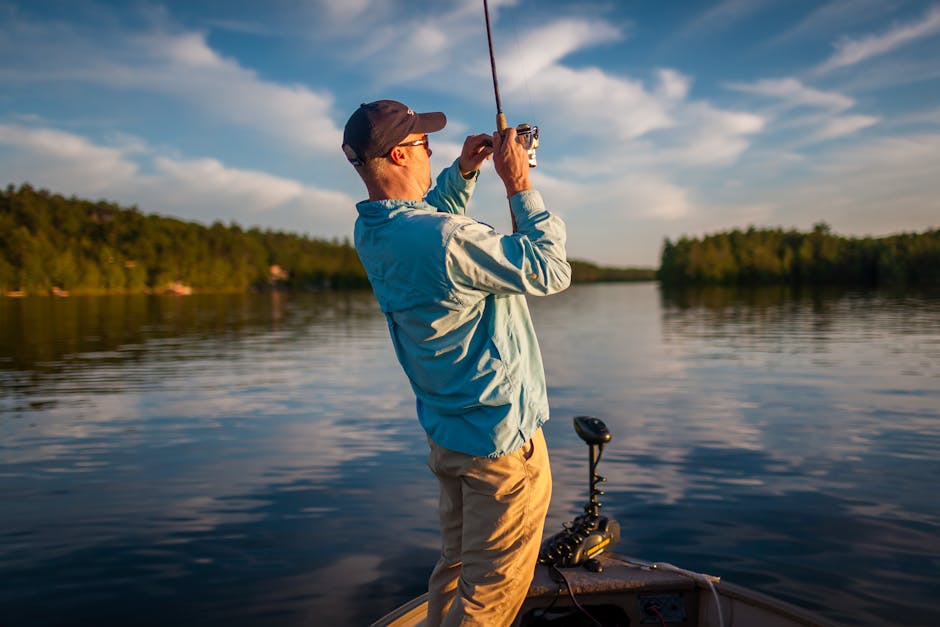 This spread covers 90% of smallmouth situations. Tubes and Ned rigs for rocks. Drop shot for finesse. Crankbaits and jerkbaits when they want a reaction bite.
Step by Step: How to Catch Smallmouth Bass
-
Find the rocks. Smallmouth relate to hard bottom. Look for gravel points, riprap banks, boulder fields and bluff walls. In rivers, find where current meets slack water. If you can see or feel rock on the bottom, you are in the right neighborhood.
-
Position your first casts. In a lake, start deep on a rocky point and cast shallow, working the bait back down the slope. In a river, position upstream and cast across, letting the current sweep your bait into eddies behind boulders.
-
Work the bottom slowly. Drag a tube jig or Ned rig across the rocks with short hops and pauses. Keep bottom contact. Smallmouth often hit on the fall or during a pause.
-
Set the hook with authority. When you feel weight, reel down until the line is tight and sweep the rod upward. Do not jerk. A steady sweep drives the hook and keeps the fish pinned.
-
Adjust after 15 minutes of nothing. Try three things before moving. Slow down. Downsize your bait. Go deeper. If all three fail, move to the next rocky spot.
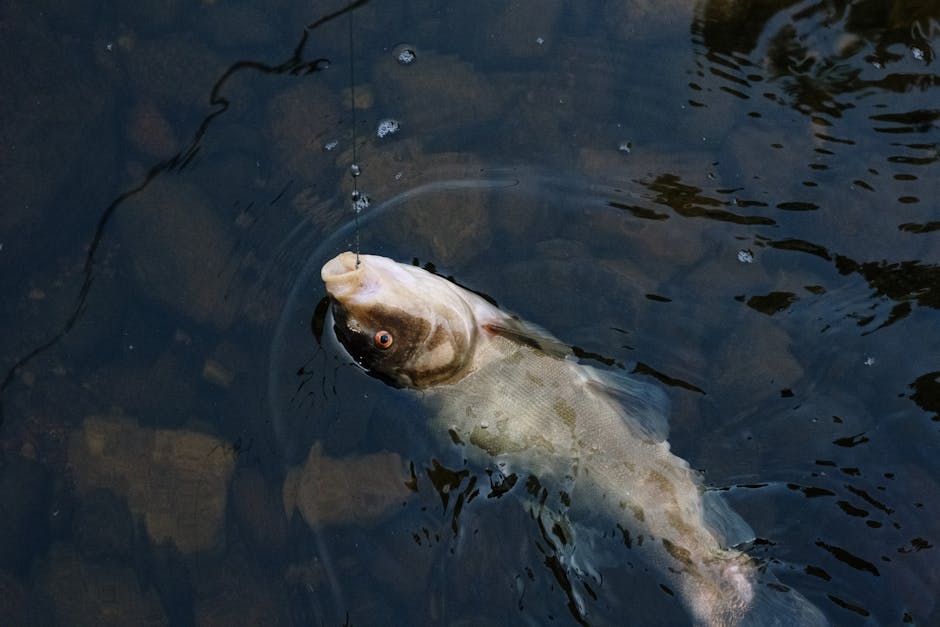 Position upstream and cast across the current. Let your bait swing into the slack water behind boulders where smallmouth sit and wait for food.
Best Lures for Smallmouth Bass
Ned Rig
The Ned rig might be the single best smallmouth bait ever made. A small mushroom-head jig with a 2.5 to 3 inch stick bait. Cast it to rocks and let it sit. The buoyant ElaZtech plastic on a Z-Man Finesse TRD stands the bait upright on the bottom. Smallmouth cannot leave it alone. Drag it slowly, let it rest and hang on.
Tube Jigs
Tubes have been catching smallmouth for 40 years. The tentacles flutter as the bait falls and sit flat on the bottom looking like a crayfish. Use a 3 to 3.5 inch tube on a 1/4 oz internal tube jighead. Green pumpkin, brown and smoke are the go-to colors. Hop it along rocky bottom and let it fall into crevices.
Drop Shot
The drop shot rig is lethal on smallmouth. Set the leader at 18 to 24 inches (smallmouth often suspend higher off bottom than largemouth). Use a 3-inch Roboworm or a small minnow-shaped plastic. Shake it in place over rock piles and ledges.
Crankbaits
Small, square-bill and medium-diving crankbaits in crayfish patterns trigger reaction strikes. The Rapala DT series, Strike King KVD 1.5 and Rebel Wee Crawfish are proven. Crank them into rocks and let them deflect. That erratic direction change triggers bites from fish that were not planning to eat.
Jerkbaits
Jerkbaits shine for smallmouth in cold, clear water. The jerk-jerk-pause cadence imitates a dying baitfish. Smallmouth will track a jerkbait for several feet before crushing it on the pause. Best from late fall through early spring when water temps sit between 42 and 58 degrees.
Topwater
Summer mornings and evenings, smallmouth will blow up on topwater. A Heddon Zara Spook Jr walked across a rocky flat at dawn is one of fishing's great experiences. Whopper Ploppers, Pop-R's and small buzzbaits all work. The strikes are violent and the fish go airborne instantly.
Best Live Bait for Smallmouth Bass
Crayfish. The number one natural forage for smallmouth. Hook a live crayfish through the tail and let it crawl across rocky bottom. Nothing looks more natural because nothing is more natural.
Hellgrammites. The larval form of the dobsonfly. They live under rocks in rivers and smallmouth eat them like candy. Hook them under the collar behind the head. The best river bait that exists if you can find them.
Leeches. A classic smallmouth technique across the upper Midwest and Canada. Drift a 3 to 4 inch leech on a jig head through rocky areas. Hook it through the sucker end.
Reading Rocky Structure and Current
Smallmouth bass live where rocks meet current or where rocks create depth changes. Learning to read this structure is the single biggest factor in catching them consistently.
Lake Structure
Rocky points. The number one smallmouth structure. Points extending into deep water concentrate fish at the transitions where rock changes to gravel or the point drops off sharply.
Bluff walls. Vertical rock faces dropping into deep water. Smallmouth cruise these walls feeding on crayfish in the cracks. Fish parallel, keeping your bait tight to the rock face.
Humps and reefs. Underwater rock piles topping out at 8 to 15 feet are smallmouth magnets. Boulders on a gravel base is the ideal combination.
Riprap. Man-made rock banks along bridges and dams. Holds crayfish and creates ambush points. Overlooked but consistently productive.
River Structure
Current seams. Where fast water meets slow water. Smallmouth sit on the slow side and dart into the current to grab food. Cast across the seam and let your bait swing into the slack.
Eddies. Circular current behind boulders and points. Food collects here. Work the edges thoroughly.
Tail-outs. The smooth water at the bottom of a pool before it drops into the next riffle. Smallmouth feed here in low-light conditions.
Bridge pilings. Current breaks with rocky bottom. Cast upstream and drift your bait past the piling naturally.
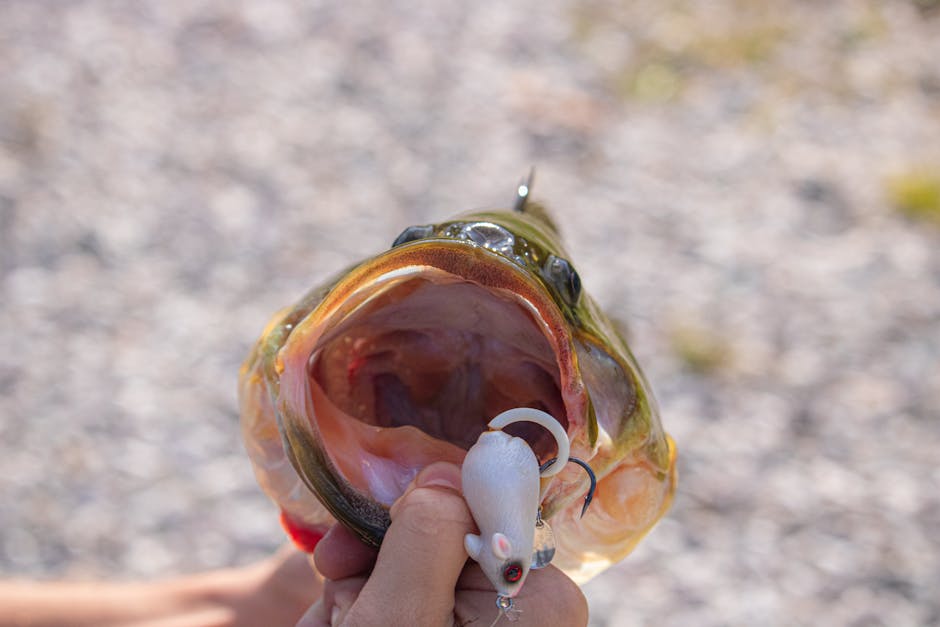 See those boulders breaking the current? Smallmouth sit in the slack water behind every one of them. Work the seam where fast water meets slow water.
Conditions and Adjustments: When to Change Your Approach
- If water is clear (4+ feet visibility): Use natural colors (green pumpkin, watermelon, smoke). Downsize baits. Use lighter line and longer leaders.
- If water is stained (1-3 feet visibility): Go to darker colors (black/blue, junebug) or brighter patterns (chartreuse). Upsize lures slightly. Add rattles or blades.
- If water is cold (below 50 degrees): Slow way down. Drag jigs and tubes on bottom. Use jerkbaits with long pauses. Drop shot with minimal movement.
- If water is warm (above 70 degrees): Speed up. Crankbaits, topwater and swimbaits. Smallmouth will chase in warm water. Fish early and late in the day.
- If current is strong: Use heavier jig heads (3/8 oz) to maintain bottom contact. Position upstream and fish downstream. Drift baits naturally with the flow.
- If the bite is tough after a cold front: Drop to the smallest bait you have. A 2.5-inch Ned rig on 6 lb fluorocarbon dragged dead slow on a rocky point. Patience wins post-front smallmouth.
Seasonal Patterns for Smallmouth Bass
Spring (50-65 degrees). Prespawn smallmouth move to shallow gravel flats. Target 4 to 8 feet near deeper water. Tubes, jerkbaits and Ned rigs. This is trophy season.
Summer (65-80 degrees). Smallmouth go deep in lakes (15-30 feet) or hold in current in rivers. Topwater on shallow rock early. Drop shots and football jigs on offshore humps midday.
Fall (50-65 degrees). Smallmouth feed aggressively as water cools. They follow baitfish into creek arms and onto main lake points. Crankbaits and jerkbaits cover water fast. Best numbers and size.
Winter (35-50 degrees). Deepest structure in the lake. Slow presentations mandatory. Drop shot, hair jigs and blade baits worked vertically. In rivers, find the deepest pools with slow current.
The Smallmouth Fight: What Makes Them Special
Smallmouth bass earned the nickname "bronze back" for their coloring, but they earned their reputation through fighting. A hooked smallmouth jumps three, four, five times. Full-body, line-clearing jumps with headshakes that throw lures back at you. They make long runs toward structure that test your drag and your knot strength. In rivers, they turn broadside to the current and double their effective weight.
That first run from a big smallmouth will make you check your rod. It pulls too hard for a bass. Then it jumps and you see the bronze flash and realize this three-pound fish just gave you a five-pound fight. That is why people travel to the Great Lakes, the Susquehanna River, Dale Hollow Lake and the St. Lawrence River just to target them.
Mistakes That Kill Your Smallmouth Bite
- Fishing too heavy. A 7-foot heavy rod with 20 lb line is largemouth gear. Smallmouth in clear water spook from thick line and heavy presentations. Light line and finesse baits catch more fish.
- Ignoring the rocks. If you are casting to weeds and wood, you are targeting largemouth habitat. Find the rock and gravel. That is where smallmouth live.
- Moving too fast. Smallmouth reward patience. Work a rocky point from every angle before leaving. They sit tight to specific boulders.
- Setting the hook too hard. With light line and small hooks, a hard hookset snaps you off. A firm sweep is all you need. Let the rod load and keep steady pressure.
- Fighting them on a tight drag. Smallmouth run hard. A locked drag on 6 lb line means a broken line. Set your drag so a firm pull strips line. Let them tire out.
- Skipping crayfish colors. Green pumpkin, brown and orange match the primary forage. If you only own shad-colored baits, you are missing the menu.
- Not adjusting depth. Smallmouth move vertically through the day and seasons. Use your electronics or fan-cast different depths until you find them.
The Tackle app helps you track what worked. Log the depth, water temp, lure color and structure type for every catch. After a few trips, your own data tells you exactly where to start. Download Tackle free and build your smallmouth playbook.
FAQs
What is the best lure for smallmouth bass?
A tube jig in green pumpkin on a 1/4 oz jighead is the most consistent producer across all seasons and water types. If you can only carry one smallmouth bait, make it a tube. The Ned rig is a close second and is easier for beginners to fish effectively.
What pound test line should I use for smallmouth?
Use 6-8 lb fluorocarbon for most situations. If you are fishing around heavy rock or current, bump up to 8-10 lb. Braid-to-fluoro leader setups (10 lb braid to 6-8 lb fluoro) give you the best of both worlds: casting distance and low visibility.
What is the best time of year to catch smallmouth bass?
Late spring (May-June) during the prespawn is trophy season. Fall (September-October) produces the best numbers as smallmouth feed aggressively before winter. But smallmouth bite year-round if you adjust your approach to the season.
Can you catch smallmouth bass from shore?
Absolutely. Wade fishing rivers is one of the best ways to target smallmouth. In lakes, look for bank access near rocky points, riprap and bridges. If you are new to fishing, check out our beginner's guide for shore fishing fundamentals.
Where do smallmouth bass live?
Smallmouth bass live across the northern and central United States and southern Canada. Premier waters include the Great Lakes, the Tennessee River system, the Ozarks, the Susquehanna and the St. Lawrence. They prefer cool, clear water with rock and gravel bottom.
1-Minute Action Plan
- Tie on a green pumpkin tube jig (1/4 oz head) or a Ned rig
- Find a rocky point, riprap bank or boulder-strewn river stretch
- Cast to the rocks and drag your bait slowly along the bottom with short hops
- Pause 3-5 seconds between hops. Most bites come on the pause or the fall
- No bites after 15 minutes? Downsize the bait and slow down before moving
What to Read Next
- Want to master the rig that smallmouth cannot resist? Read how to use a drop shot rig
- Looking to cover more water? Check out how to use crankbaits for reaction strikes on rocky structure
- New to fishing and want to start from the basics? Our fishing tips for beginners has you covered
- Ready to read the water like a local? Learn how to read water for finding fish on any body of water
Sources
- Wired2Fish - Smallmouth Bass Fishing
- Bass Resource - Smallmouth Techniques
- In-Fisherman - Smallmouth Bass Strategies
Regulations vary by state and body of water. Always check current local rules before fishing.

Tackle Team
The Tackle Fishing Team is a collective of anglers, data scientists, and fishing enthusiasts dedicated to making fishing more accessible and successful for everyone.
View profileSources Consulted
The following sources were consulted in creating this guide:
- Wired2Fish – www.wired2fish.com (retrieved Mar 2026)
- Bass Resource – www.bassresource.com (retrieved Mar 2026)
- In-Fisherman – www.in-fisherman.com (retrieved Mar 2026)
Note: Information is summarized and explained in our own words. Always verify current regulations with official sources.
Frequently Asked Questions
What is the best lure for smallmouth bass?
A tube jig in green pumpkin on a 1/4 oz jighead is the most consistent producer across all seasons and water types. If you can only carry one smallmouth bait, make it a tube. The Ned rig is a close second and is easier for beginners to fish effectively.
What pound test line should I use for smallmouth?
Use 6-8 lb fluorocarbon for most situations. If you are fishing around heavy rock or current, bump up to 8-10 lb. Braid-to-fluoro leader setups (10 lb braid to 6-8 lb fluoro) give you the best of both worlds: casting distance and low visibility.
What is the best time of year to catch smallmouth bass?
Late spring (May-June) during the prespawn is trophy season. Fall (September-October) produces the best numbers as smallmouth feed aggressively before winter. But smallmouth bite year-round if you adjust your approach to the season.
Can you catch smallmouth bass from shore?
Absolutely. Wade fishing rivers is one of the best ways to target smallmouth. In lakes, look for bank access near rocky points, riprap and bridges. Shore anglers can cover plenty of prime smallmouth water with light spinning gear and a handful of tube jigs.
Where do smallmouth bass live?
Smallmouth bass live across the northern and central United States and southern Canada. Premier waters include the Great Lakes, the Tennessee River system, the Ozarks, the Susquehanna and the St. Lawrence. They prefer cool, clear water with rock and gravel bottom.
Plan Your Next Fishing Trip
Download Tackle to compare tide charts, wind conditions, and practical fishing guidance for your location before you go.
✓ Real-time tide charts • ✓ Wind & weather forecasts • ✓ AI fish identification
See local regulations — Find regulations for your area
Want weekly fishing windows delivered to your inbox?
Get personalized fishing forecasts based on weather, tides, and moon phases.
RELATED CONTENT
KEEP READING