

Plastic worm fishing has caught more bass than every hard bait category combined. A $4 bag of worms will outfish a $20 crankbait on most days because bass hold soft plastics longer, giving you more time to set the hook.
Best for: All skill levels. Beginners catch fish on day one. Experienced anglers refine their approach for decades.
What you need: A medium or medium-heavy rod, fluorocarbon line and a bag of plastic worms in green pumpkin.
Do this first: Tie on a 1/4 oz Texas rig with a 7-inch Zoom Trick Worm in green pumpkin. Cast it next to any visible cover and drag it back slowly. That setup catches bass in every lake.
Quick Answer: Why Plastic Worms Work
- Bass eat worms because the slow fall and subtle action look like an easy meal that requires no chase
- A plastic worm fished on the bottom stays in the strike zone longer than any moving bait
- Worms rig weedless on a Texas rig, letting you fish heavy cover without snagging
- Five rigging options (Texas, Carolina, wacky, weightless and shaky head) cover every situation from shallow docks to deep ledges
- Color selection is simple: green pumpkin for clear water, junebug for stained and black/blue for muddy
- Plastic worm fishing produces year-round because bass eat from the bottom in every season
Get Personalized Fishing Advice
Want real-time conditions for your exact location? Tackle provides live tide data, wind forecasts, and AI-powered fishing advice tailored to where you fish.
✓ Real-time tide charts • ✓ Wind & weather forecasts • ✓ AI fish identification
Tackle Box Snapshot (Copy This Setup)
- Rod: 7-foot medium-heavy, fast action (baitcaster for Texas/Carolina rigs; spinning for wacky/shaky head)
- Line: 12 to 17 lb fluorocarbon for baitcaster setups; 8 to 10 lb fluorocarbon for spinning
- Hooks: 3/0 EWG for Texas rig, size 1 wacky hook for stick baits, 1/4 oz shaky head jig
- Weights: 1/4 oz bullet sinker (all-purpose Texas rig), 1/2 oz egg sinker (Carolina rig), no weight for wacky and weightless
- Must-have worms: Zoom Trick Worm (6.5 inch), Yamamoto Senko (5 inch), Berkley PowerBait MaxScent The General (5 inch), Roboworm Straight Tail (6 inch)
- Starting colors: Green pumpkin, watermelon red flake, junebug
- Target depth: 2 to 20 feet depending on season and rig choice
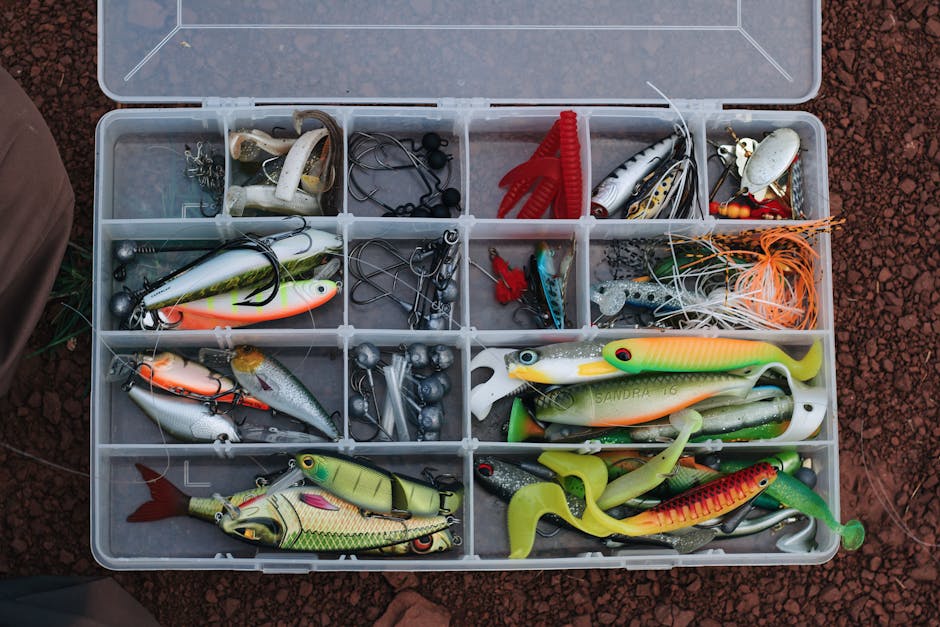
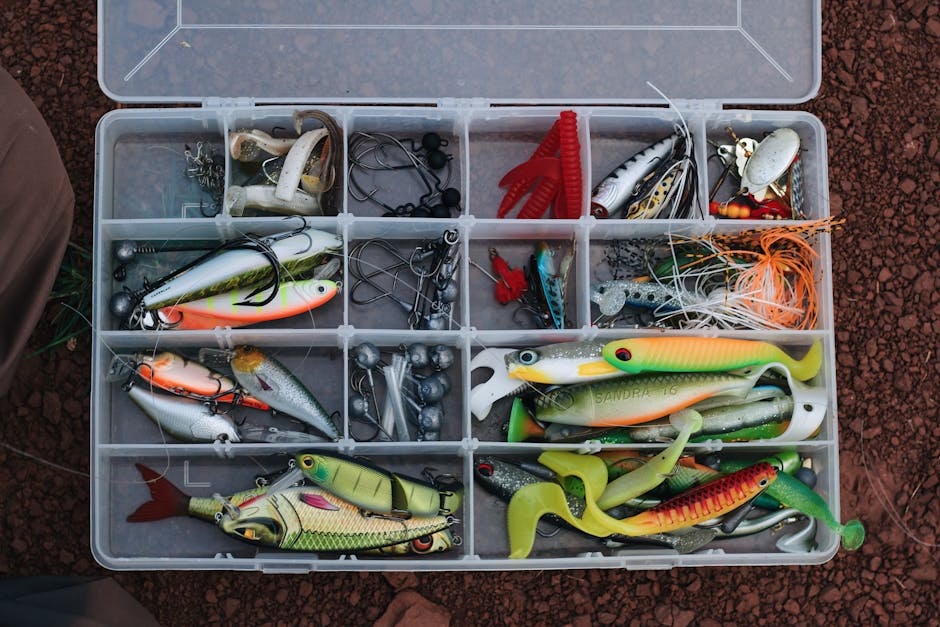 These three colors and two hook styles cover 90% of plastic worm fishing situations. Start here before expanding your tackle box.
Plastic Worm Types and Sizes
Each style has a different action that triggers bites under specific conditions.
Ribbon tail worms (6 to 10 inches): The original bass worm. The flat ribbon tail kicks and undulates during a slow drag, creating vibration bass detect through their lateral line. The Zoom Trick Worm at 6.5 inches is the most versatile size. Step up to a 10-inch worm when targeting trophy largemouth bass in heavy cover.
Straight tail worms (4 to 7 inches): A subtle profile with minimal action. Roboworm Straight Tail worms are the benchmark. These shine on a drop shot or shaky head when bass are pressured and ignoring flashier baits.
Stick baits (4 to 6 inches): The Yamamoto Senko changed bass fishing. Its dense salt-impregnated body sinks on a horizontal shimmy with zero rod input. Fish it on a wacky rig and let gravity do the work. Most bites happen before it hits bottom.
Finesse worms (4 to 5 inches): Smaller profile for clear water and pressured fish. Berkley PowerBait MaxScent The General is the current standard. The scent formula makes bass hold on longer. Fish these on a Ned rig or shaky head.
Magnum worms (10 to 13 inches): Big worms catch big bass. A 12-inch curly tail on a 1/2 oz Texas rig dragged across a deep ledge targets 5-plus-pound largemouth. Small bass leave them alone.
Five Rigging Methods Step by Step
Learn all five and you can fish a plastic worm in any situation on any lake.
1. Texas Rig (The Foundation)
Slide a bullet weight onto your line, tie on a 3/0 EWG hook and thread the worm onto the hook with the point buried back into the body. The buried hook makes it weedless. The first rig every bass angler should master.
When to use it: Anytime you fish around cover. The Texas rig guide covers weight selection and advanced techniques in detail.
2. Carolina Rig (Cover Water Fast)
Thread a 1/2 to 3/4 oz egg sinker onto your main line, add a glass bead and tie on a barrel swivel. Attach a 2 to 3 foot fluorocarbon leader with a 1/0 to 3/0 hook. The heavy weight drags on bottom while the worm floats behind it on the leader.
A Carolina rig covers water three times faster than a Texas rig. Use it on long points and ledges where you need to find scattered bass.
3. Wacky Rig (Finesse Killer)
Hook a Senko through the middle with a size 1 wacky hook. Cast it on spinning gear with 8 lb fluorocarbon and let it sink. Both ends flap on the fall, creating an action no other rig can match.
The wacky rig is the best presentation for clear water and pressured bass.
4. Weightless Texas Rig (Slow and Natural)
Rig exactly like a Texas rig but skip the bullet weight. The worm sinks on its own at a painfully slow pace. Deadly around shallow docks and submerged grass where bass want a bait that drifts naturally into the strike zone.
5. Shaky Head (Bottom Finesse)
Thread a finesse worm onto a shaky head jighead with a flat bottom. The jig stands upright on the bottom with the worm tail waving in the current. Shake it in place with subtle rod twitches, then hop it forward.
Shaky heads work on rocky bottoms and gravel transitions where you can make bottom contact.
 Slow drag retrieves along laydowns produce the most consistent bites. Keep your rod tip low and feel for any change in weight.
Color Selection by Water Clarity
Plastic worm fishing color selection follows one rule: match color darkness to water clarity.
Clear water (5+ feet of visibility): Green pumpkin and watermelon red flake. Natural translucent colors that look like real forage. Roboworm excels here because their color blends are more lifelike than mass-produced baits.
Stained water (2 to 4 feet of visibility): Junebug (dark purple with green flake). It sounds unnatural but junebug is one of the most consistent colors in stained water across the country. Plum also produces.
Muddy water (under 2 feet of visibility): Black and blue or all black. Maximum silhouette contrast. Bass find these by profile and vibration alone. Use a larger worm (7 to 10 inches) to increase detection.
When shad are present: Albino or pearl white. Match the baitfish color when bass are feeding on threadfin or gizzard shad. A white Senko on a wacky rig over schooling bass is devastating.
Night fishing: Black. Always black. Bass hunt by silhouette against the surface at night and a solid black worm stands out better than any other color after dark.
Retrieval Techniques That Catch Bass
The plastic worm is a slow bait. Bass pick up worms because they look like an easy meal sitting on the bottom. Make it look helpless.
Slow drag: The most productive plastic worm retrieve. Let the bait sink to bottom. Drag the worm 1 to 2 feet with a smooth pull of the rod. Reel up slack. Pause 3 to 5 seconds. Repeat. Most bites feel like a slight heaviness or a subtle tick during the drag.
Hop and pause: Two short pops of the rod tip followed by a 5 to 10 second pause. The worm hops off bottom and settles back down. Bass often hit during the pause or on the next hop. Works well around stumps and brush piles.
Dead stick: Cast the worm and do nothing. Let it sink on a semi-slack line and sit on the bottom for 30 seconds before moving it. A Senko on a wacky rig catches fish without any input from you. The hardest part is waiting.
Shake in place: Point your rod tip at the bait and shake it with tiny wrist movements. The worm vibrates on the bottom without moving forward. Do this for 10 to 15 seconds between drags.
Swimming: Reel a ribbon tail worm steadily through the mid-water column. The tail kicks and pulses as it moves. This works over grass tops and along bluff walls where bass suspend. The one exception to the "slow is better" rule.
Seasonal Patterns for Plastic Worm Fishing
The key is adjusting your rig choice and speed to match what bass are doing each season.
Spring (water temps 50 to 65 degrees): Bass move shallow to spawn. Fish a weightless Senko or light Texas rig (1/8 oz) around docks and laydowns in 2 to 6 feet. Slow your retrieve to a crawl. Green pumpkin and watermelon red flake are top colors.
Summer (water temps 70 to 85 degrees): Bass move deep during the heat. Fish a Carolina rig or heavy Texas rig (3/8 to 1/2 oz) on points and ledges in 10 to 20 feet. Switch to a weightless worm around shallow cover during low-light hours.
Fall (water temps 55 to 70 degrees): Bass follow shad into creeks and shallow flats. Fish creek channels with a Texas rig or wacky rig. Pick up your retrieve speed slightly.
Winter (water temps below 50 degrees): Bass stack on deep structure and barely move. Downsize to a 4 to 5 inch finesse worm on a shaky head or Ned rig. Fish steep bluffs and deep points in 15 to 30 feet. Drag it so slowly that it feels like you are barely fishing. Patience wins in cold water.
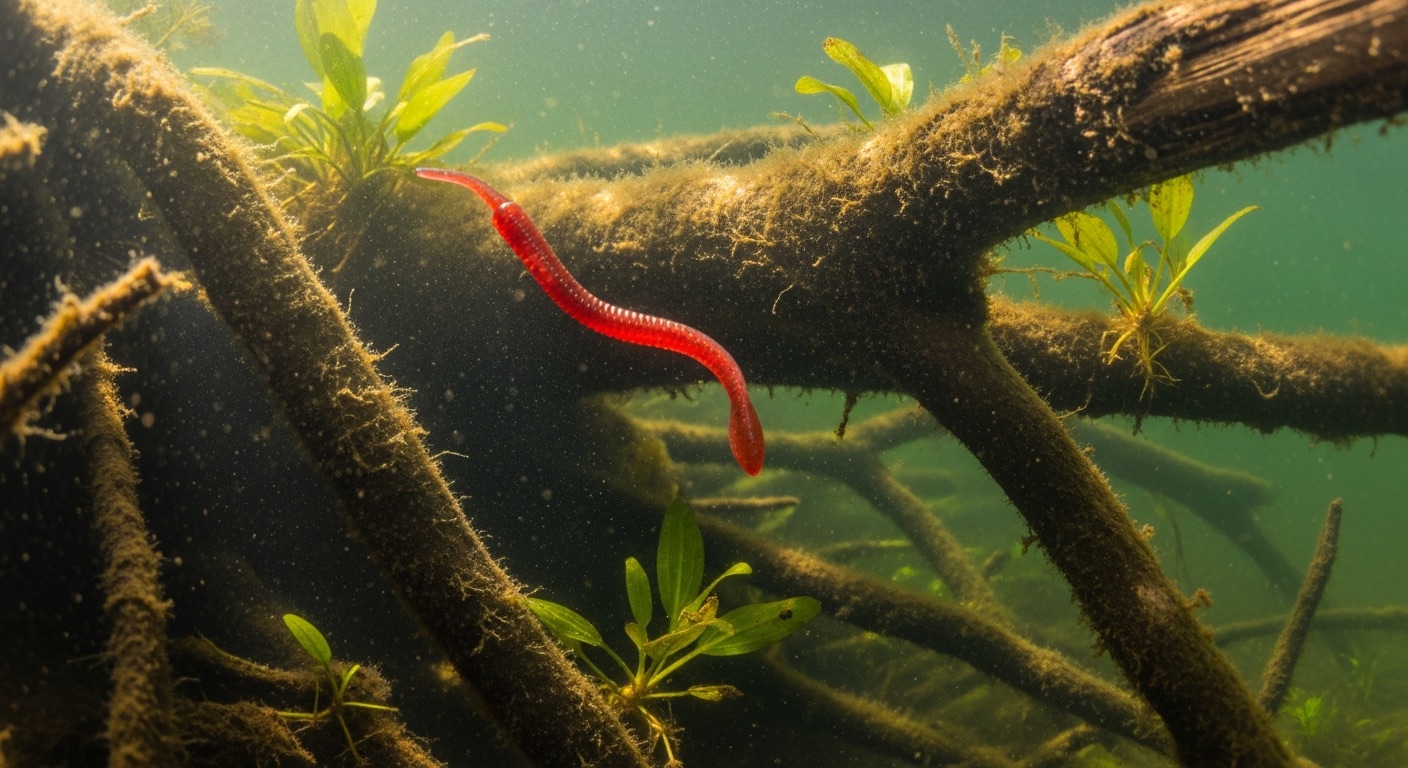 Deep brush piles and rock transitions are prime plastic worm territory in summer. Drag your worm through these zones and pause at every contact point.
Spot Playbook: Where Bass Eat Worms
Understanding where bass stage near structure tells you where to put your worm.
Laydowns and fallen trees: Bass sit on the shady side facing outward. Cast past the tree and drag your Texas-rigged worm through the branches.
Docks: Fish the shady back corners and along pilings. A weightless worm skipped under a dock lands quietly and sinks naturally.
Grass edges: Drag a Texas rig along the inside grass line where grass meets open bottom. When you feel the worm contact grass, pop it free and let it fall. That falling action triggers reaction strikes.
Points and ledges: Cast to the tip and drag your Carolina rig downhill along the drop. The bait swings on the leader over the depth transition.
Rock transitions: Where chunk rock meets gravel or mud, bass feed on crawfish. A shaky head bounced along these transitions imitates a crawfish scooting across the bottom.
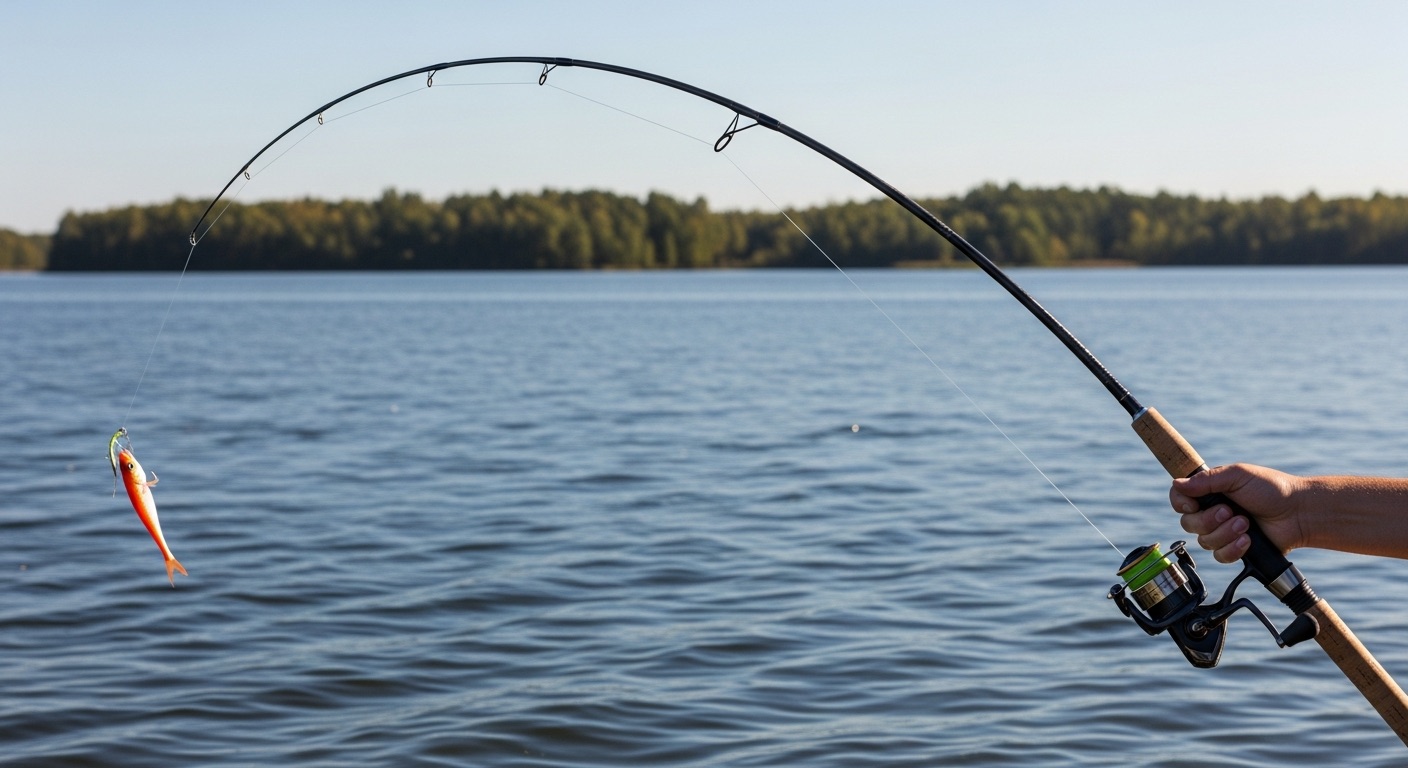 Notice the hook placement in the corner of the jaw. Let the bass fully commit before setting the hook for a solid connection every time.
7 Mistakes That Kill Your Plastic Worm Bite
-
Fishing too fast. Slow down by half from what feels natural. Then slow down again. Bass want an easy meal, not a bait that looks like it is escaping.
-
Ignoring the fall. Most plastic worm bites happen while the bait sinks. Watch your line for any twitch or sideways movement on the fall. If it does anything unexpected, set the hook.
-
Rigging the worm crooked. A twisted worm spirals instead of falling naturally. Pull it off and start over if it hangs crooked.
-
Using the wrong weight for the depth. A 1/2 oz sinker crashing into 3 feet of water spooks fish. A 1/8 oz sinker in 15 feet never reaches bottom. Match weight to depth.
-
Setting the hook too early. Reel down until you feel solid weight, then drive the rod up and to the side. Swinging the moment you feel a tick pulls the bait away.
-
Throwing away torn worms too quickly. A worm with a torn tail still catches fish. A worm with the head ripped off is done. Save torn baits for days when fish are hitting short.
-
Only fishing one rig. If the Texas rig is not getting bit, switch to a wacky rig or shaky head before changing spots. Rotate through at least two rigs before abandoning a piece of cover.
FAQs
What is the best plastic worm for bass fishing?
The Zoom Trick Worm in 6.5 inches is the most versatile plastic worm made. It works on a Texas rig, Carolina rig, wacky rig and shaky head. Green pumpkin is the go-to color. The Yamamoto Senko dominates wacky rig fishing.
What size plastic worm should I use?
Start with a 6 to 7 inch worm for all-purpose use. Downsize to 4 to 5 inches in clear or cold water. Upsize to 10 to 12 inches when targeting trophy largemouth bass on deep structure. Bigger worms filter out small fish and attract bigger bites.
Do plastic worms work in cold water?
Yes. Plastic worms are one of the best cold water bass baits because you can fish them extremely slowly. A 4-inch finesse worm on a shaky head or Ned rig dragged at a snail's pace along deep structure catches bass when water temperatures drop below 50 degrees. Downsize the bait and slow your retrieve.
What color plastic worm works best?
Green pumpkin works in almost every condition. Use watermelon red flake in clear water on sunny days. Use junebug in stained water. Use black and blue in muddy water. Clearer water gets lighter colors. Dirtier water gets darker colors.
Should I use scented plastic worms?
Scented worms like Berkley PowerBait MaxScent catch more fish in tough conditions because bass hold on longer. The trade-off is durability. Scented baits tear up faster and cost more per fish. Use them when fishing is tough and switch to standard plastics when bass are active.
Your 1-Minute Plastic Worm Action Plan
- Tie on a 1/4 oz Texas rig with a 7-inch Zoom Trick Worm in green pumpkin
- Target the nearest visible cover: a dock, laydown tree or grass edge
- Cast past the cover and drag the worm back with slow 1-foot pulls and 5-second pauses
- Watch your line on every cast. If it jumps or moves sideways on the fall, set the hook
- No bites after 15 minutes? Switch to a Senko on a wacky rig and fish the same cover with a slower fall
What to Read Next
- Fishing docks and laydowns? Master the Texas rig setup for heavy cover
- Want to cover more water? Learn the Carolina rig technique for deep structure
- Pressured bass? Try the wacky rig for clear water finesse
- New to soft plastic lures? Start with the complete rigging guide
- Targeting largemouth? Read how to catch largemouth bass
Build Your Plastic Worm Playbook
Every lake has patterns. Which worm catches fish on that rocky point, which color produces in stained water, which rig works when the bite slows down. The Tackle app helps you log those details so your fishing improves based on real catches.
Download Tackle free and start building your playbook.
Sources
- Wired2Fish - Plastic Worm Fishing Guide
- Bass Resource - Worm Fishing Techniques
- Bassmaster - Soft Plastic Tips
Regulations change. Always check local rules before fishing.

Tackle Team
The Tackle Fishing Team is a collective of anglers, data scientists, and fishing enthusiasts dedicated to making fishing more accessible and successful for everyone.
View profileSources Consulted
The following sources were consulted in creating this guide:
- Wired2Fish – www.wired2fish.com (retrieved Mar 2026)
- Bass Resource – www.bassresource.com (retrieved Mar 2026)
- Bassmaster – www.bassmaster.com (retrieved Mar 2026)
Note: Information is summarized and explained in our own words. Always verify current regulations with official sources.
Frequently Asked Questions
What is the best plastic worm for bass fishing?
The Zoom Trick Worm in 6.5 inches is the most versatile plastic worm made. It works on a Texas rig, Carolina rig, wacky rig and shaky head. Green pumpkin is the go-to color. The Yamamoto Senko dominates wacky rig fishing.
What size plastic worm should I use?
Start with a 6 to 7 inch worm for all-purpose use. Downsize to 4 to 5 inches in clear or cold water. Upsize to 10 to 12 inches when targeting trophy largemouth bass on deep structure. Bigger worms filter out small fish and attract bigger bites.
Do plastic worms work in cold water?
Yes. Plastic worms are one of the best cold water bass baits because you can fish them extremely slowly. A 4-inch finesse worm on a shaky head or Ned rig dragged along deep structure catches bass when water temperatures drop below 50 degrees. Downsize the bait and slow your retrieve.
What color plastic worm works best?
Green pumpkin works in almost every condition. Use watermelon red flake in clear water on sunny days. Use junebug in stained water. Use black and blue in muddy water. Clearer water gets lighter colors. Dirtier water gets darker colors.
Should I use scented plastic worms?
Scented worms like Berkley PowerBait MaxScent catch more fish in tough conditions because bass hold on longer. The trade-off is durability. Scented baits tear up faster and cost more per fish. Use them when fishing is tough and switch to standard plastics when bass are active.
Plan Your Next Fishing Trip
Download Tackle to compare tide charts, wind conditions, and practical fishing guidance for your location before you go.
✓ Real-time tide charts • ✓ Wind & weather forecasts • ✓ AI fish identification
See local regulations — Find regulations for your area
Want weekly fishing windows delivered to your inbox?
Get personalized fishing forecasts based on weather, tides, and moon phases.
RELATED CONTENT
KEEP READING