

Salmon fishing is as good as it gets. Whether you are standing knee-deep in an Alaskan river watching chrome kings roll through a tailout or trolling cut-plug herring in Puget Sound fog, hooking a salmon rewires your brain. These fish fight hard and run hot. The methods for catching them range from dead simple to obsessively technical depending on where you fish.
This guide covers every major salmon species and the techniques that put them in the net across rivers, the Great Lakes and the open ocean.
Best for: Beginner to Advanced | What you need: A medium-heavy rod (8'6" to 10'6" depending on method), quality reel with smooth drag, 15-30 lb mainline and terminal tackle matched to your technique | Do this first: Find out what species is running in your area right now and match your setup to the method locals are using.
Quick Answer: Why Salmon Fishing Rewards Preparation
- Salmon are creatures of timing. If the run hasn't started or has already peaked, the best technique won't help you
- Matching your presentation to water conditions matters more than brand loyalty. Clear water demands lighter leaders. Stained water opens the door for bright colors and hardware
- River salmon hold in predictable spots. Learn to read seams, tailouts and walking-speed current and you will find fish every time
- Great Lakes and ocean salmon require covering water with trolling setups. Speed control and depth precision are everything
- Fresh fish bite better than dark fish. Target the first push of every run
Get Personalized Fishing Advice
Want real-time conditions for your exact location? Tackle provides live tide data, wind forecasts, and AI-powered fishing advice tailored to where you fish.
✓ Real-time tide charts • ✓ Wind & weather forecasts • ✓ AI fish identification
Know Your Salmon: Five Pacific Species
King (Chinook) Salmon
The heavyweight. Kings average 15 to 30 pounds with fish over 50 taken every season in Alaska and British Columbia. They run late spring through fall and fight deep with long powerful runs.
Coho (Silver) Salmon
The acrobat. Coho run 8 to 15 pounds and are known for explosive surface strikes and repeated jumps. They hit lures and flies aggressively. Runs peak in late summer and fall.
Sockeye (Red) Salmon
The trickiest to hook. Sockeye are plankton feeders and don't chase traditional lures. Anglers target them with small flies fished through holding water. They fight well above their 5 to 8 pound average.
Pink (Humpy) Salmon
The most abundant Pacific salmon. Pinks average 3 to 5 pounds and hit small spinners and pink flies eagerly. Great fish for beginners because the runs are massive.
Chum (Dog) Salmon
The underrated brawler. Chum average 8 to 15 pounds and fight like freight trains. A fresh ocean-bright chum on a fly rod is one of the best fights in freshwater.
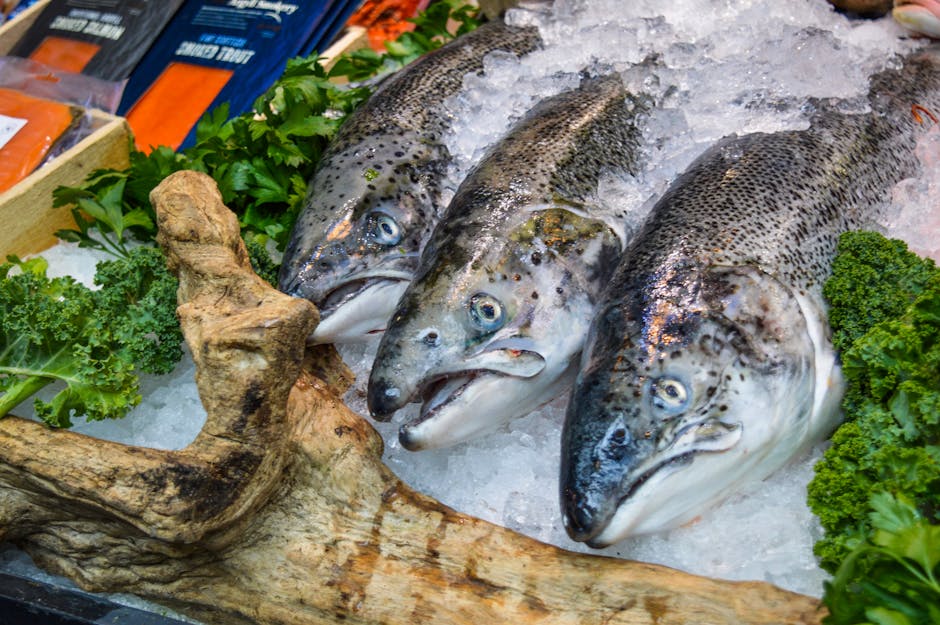 Keep a spread of hardware and bait options ready. What works changes by the hour depending on water clarity and how fresh the fish are.
Tackle Box Snapshot (Copy This Setup)
- River drift fishing: 8'6" to 9'6" medium-heavy rod, spinning reel, 20 lb mainline, 12-15 lb fluorocarbon leader, pencil lead or slinky weight, size 1/0 to 3/0 octopus hooks, cured eggs or sand shrimp
- River float fishing: 9' to 10'6" float rod, centerpin or spinning reel, 15 lb mainline, 10-12 lb fluorocarbon leader, slip float, split shot string, size 1 to 2/0 hooks, roe bags or shrimp
- Great Lakes trolling: 8'6" to 10' trolling rod, levelwind reel with line counter, 20-30 lb mono or braid, flasher/dodger combos, spoons (Luhr-Jensen Nordic, Moonshine), downriggers at 40-120 feet
- Ocean mooching: 8' to 9' mooching rod, levelwind reel, 25-30 lb mainline, 20 lb fluorocarbon leader, 2-6 oz mooching weight, cut-plug herring on tandem hooks
If you need help picking the right rod for the job, our fishing rod selection guide breaks it all down.
River Fishing: Four Proven Methods
Drift Fishing
The workhorse river technique. Cast upstream at a 45-degree angle with a pencil lead bouncing along the bottom while your bait drifts through holding water at the speed of the current. The key is staying in contact with the bottom without dragging. You should feel the weight tick-tick-ticking along the rocks.
Rig a sliding weight above a barrel swivel with 24 to 36 inches of fluorocarbon leader. Tip with cured eggs, sand shrimp or a Corky and yarn combo. When you feel a grab that stops the ticking, drop your rod tip and swing into the fish. This technique catches more river salmon than anything else in the Pacific Northwest. For more on placing your drifts, check out our guide on how to read water.
Float Fishing
Float fishing lets you present bait at a precise depth while covering a long drift. Set your slip float so your offering rides 6 to 18 inches off the bottom. This method shines in slower pools and tailouts where fish are stacked. Centerpin reels are the gold standard because they allow drag-free drifts of 100 feet or more. A quality spinning reel works fine if you are getting started.
Fly Fishing for Salmon
Swinging flies on a two-handed Spey rod is about as pure as salmon fishing gets. Throw egg patterns on a dead drift through holding water or swing intruder-style flies on a sink-tip line. Kings eat big flies in sizes 1/0 to 4/0. Coho hit streamers stripped fast through current seams. Pinks and chum slam bright patterns in pink and chartreuse.
Plunking
Set up on a gravel bar, cast a heavy pyramid sinker (3 to 8 oz) with a spin-n-glo or Kwikfish rig into the main current and wait. The current activates the lure while the weight holds everything in place. Plunking works on big rivers like the Columbia where drift fishing from shore is impractical.
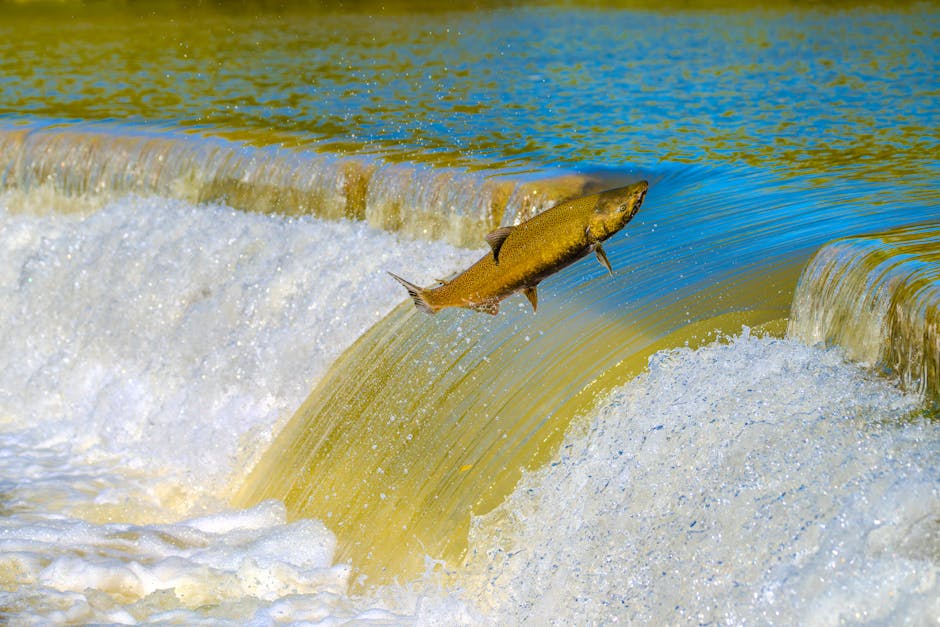 Position yourself at the head of a tailout where faster water transitions to slower holding water. Salmon stack in these seams waiting to push upstream.
Great Lakes Trolling
The Great Lakes hold enormous populations of stocked king and coho that grow fat on alewife and smelt. Run a spread of rods on downriggers at staggered depths between 40 and 120 feet. Use your fish finder to locate bait schools and temperature breaks. Great Lakes salmon relate heavily to the thermocline between 45 and 55 degrees.
Spoons like the Luhr-Jensen Nordic, Moonshine and Michigan Stinger are deadly on riggers or dipsy divers. Stickbaits like the Rapala J-13 trolled on lead-core reach intermediate depths. Trolling speed matters. Kings prefer 2.2 to 2.8 mph. Coho like it faster at 2.5 to 3.2 mph. Use GPS for true speed over ground.
Ocean Fishing: Mooching and Downriggers
Mooching
Mooching is controlled drifting with a herring rig. Cut-plug a herring so it spins in a tight roll, rig it on tandem hooks with a mooching weight and lower it to where fish are holding. Retrieve with long sweeps of the rod followed by a drop-back. This technique is deadly in Puget Sound and along the Oregon coast. Bait quality matters. Use bright, firm herring kept on ice.
Downrigger Trolling
Clip your line into a downrigger release, set the ball at the depth your sonar shows fish and troll at 1.8 to 2.5 mph. When a fish hits, the line pops free and you fight on a clean line with no weight. Run flasher and hoochie combos, cut-plug herring behind a flasher or Tomic plugs. Stagger depths across multiple rods.
Best Lures and Baits for Salmon
- Cured salmon eggs: The number one river bait. Home-cured with Pro-Cure or Pautzke is better than store-bought
- Sand shrimp: Outstanding for kings in coastal rivers. Hook through the tail on a drift rig
- Herring: The ocean standard. Whole for trolling, cut-plug for mooching. Pautzke brines keep them firm
- Spinners: Blue Fox Vibrax and Mepps Aglia in sizes 4 to 6 for coho and pinks. Cast upstream and retrieve just fast enough to feel the blade turn
- Spoons: Pixee, Cleo and Krocodile for rivers. Luhr-Jensen Nordic and Moonshine for trolling. For a full breakdown, read our spoon fishing guide
- Plugs: Kwikfish and FlatFish wrapped with sardine fillets are devastating for kings. Mag Lip and Brad's Wiggler are other proven models
- Corky and yarn: A Corky drift bobber tipped with Pro-Cure scent catches kings when nothing else will
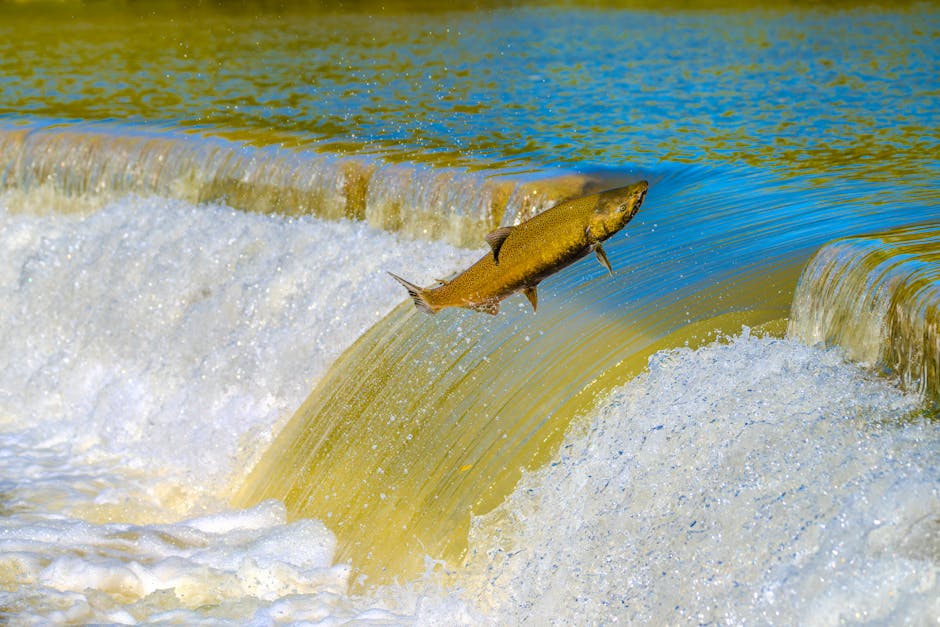 Downrigger trolling lets you control depth precisely. Stagger your rods at different depths to find where fish are holding in the water column.
Reading River Runs and Holding Water
Salmon hold in specific water types to rest before pushing through rapids and falls.
- Tailouts: The shallow flat water at the bottom of a pool where it speeds up into the next riffle. Prime drift fishing water
- Seams: Where fast current meets slow current. Fish hold on the slow side facing into the flow
- Bucket holes: Deep depressions where current slows. Fish stack here during low water and heavy runs
- Current breaks: Behind boulders, logjams and bridge pilings. Any object creating slower water behind it holds salmon
- Walking speed current: Salmon prefer water moving at the speed of a slow walk. Find those zones and focus there
Seasonal Runs and Timing
Spring (April through June): Spring chinook are the first major run in most Pacific Northwest rivers. Great Lakes kings start pushing into tributaries.
Summer (July through August): Summer kings hit Alaska hard. Sockeye runs peak in Bristol Bay. Great Lakes salmon move offshore along the thermocline.
Fall (September through November): The big show. Fall chinook, coho and chum flood rivers from Alaska to California. Peak season for river anglers.
Winter (December through March): Limited salmon fishing. Late chum runs in Washington. Time to cure eggs, tie flies and maintain gear.
Mistakes That Kill Your Salmon Fishing
-
Fishing too high in the water column. Salmon hug the bottom in rivers. If your drift isn't ticking rocks, you are fishing over their heads.
-
Using old bait. Stale eggs and freezer-burned herring catch fewer fish. Cure your own eggs and keep everything on ice.
-
Setting the hook too fast on a float bite. Let the float go all the way under before swinging. Salmon inhale bait and turn.
-
Ignoring water conditions. High dirty water calls for bright colors and scent. Low clear water means downsizing leaders.
-
Trolling at the wrong speed. A quarter mph off can shut down your spread. Use GPS for true speed.
-
Not checking your hooks. River fishing beats up hooks on rocks. A dull hook bounces off a salmon's hard mouth.
-
Fishing dead water. If you are not seeing fish roll or finding scales on rocks, move until you find the school.
Track Your Salmon Sessions
Salmon runs vary by days and even hours. The Tackle app lets you log every session with conditions and catch data so you can spot patterns across seasons. When the run comes back next year, you will know exactly when and where to be.
FAQs
What is the best bait for salmon in rivers?
Cured salmon eggs are the top producer for kings and coho. Sand shrimp run a close second in coastal rivers. For coho and pinks, small spinners like the Blue Fox Vibrax in sizes 4 to 6 work just as well as bait.
What pound test line should I use for salmon?
For river fishing, 15-20 lb mainline with a 10-15 lb fluorocarbon leader handles most situations. For trolling, 25-40 lb mainline depending on species. Always go lighter on leaders than mainline.
Can you catch salmon from shore?
Yes. Plunking from shore on big rivers works for kings. Casting spinners and spoons on smaller rivers works for coho, pinks and chum. On the Great Lakes, pier fishing with spawn bags during the fall run is extremely productive.
What time of day is best for salmon fishing?
First light and the last hour before dark produce the most consistent action on rivers. For trolling, the dawn bite is typically best. Overcast days tend to fish better than bright sunshine.
How do I know if salmon are in the river?
Look for fish rolling on the surface at first light. Check gravel bars for shed scales. Watch for dark shapes in tailouts and behind boulders. Local tackle shops always know when fish are pushing through.
1-Minute Action Plan
- Rig to tie on: Drift rig with pencil lead, barrel swivel, 30 inches of 12 lb fluorocarbon and a size 2/0 octopus hook tipped with cured eggs
- 2 places to try first: The tailout at the bottom of the deepest pool and the seam where the main current meets slower water along the bank
- First retrieve cadence: Cast upstream at 45 degrees, keep your rod tip up, follow the drift and feel for the tick-tick of the weight bouncing bottom
- One adjustment if no bites: Switch from eggs to a Corky and yarn combo or downsize your leader to 10 lb fluorocarbon
What to Read Next
- If you want to learn spoon techniques for salmon, read How to Use Fishing Spoons
- If you are new to fishing, check out Fishing Tips for Beginners
- If you want to get better at finding where fish hold, see How to Read Water for Fishing
- If you need help matching a rod to your salmon method, read our Fishing Rod Selection Guide
Ready to track your salmon fishing and build patterns? Download Tackle free.
Sources
- Washington Department of Fish and Wildlife - Salmon Fishing
- Alaska Department of Fish and Game - Sport Fishing
- Great Lakes Fishery Commission
- Oregon Department of Fish and Wildlife
Regulations vary by state, species and river system. Always check current local regulations before fishing.

Tackle Team
The Tackle Fishing Team is a collective of anglers, data scientists, and fishing enthusiasts dedicated to making fishing more accessible and successful for everyone.
View profileSources Consulted
The following sources were consulted in creating this guide:
- Washington Department of Fish and Wildlife – wdfw.wa.gov (retrieved Mar 2026)
- Alaska Department of Fish and Game – www.adfg.alaska.gov (retrieved Mar 2026)
- Great Lakes Fishery Commission – www.glfc.org (retrieved Mar 2026)
- Oregon Department of Fish and Wildlife – www.dfw.state.or.us (retrieved Mar 2026)
Note: Information is summarized and explained in our own words. Always verify current regulations with official sources.
Frequently Asked Questions
What is the best bait for salmon in rivers?
Cured salmon eggs are the top producer across the Pacific Northwest for kings and coho. Sand shrimp run a close second, especially in coastal rivers. For coho and pinks, small spinners like the Blue Fox Vibrax in sizes 4 to 6 work just as well as bait and cover more water.
What pound test line should I use for salmon?
For river fishing, 15-20 lb mainline with a 10-15 lb fluorocarbon leader handles most situations. For trolling in the Great Lakes or ocean, 25-40 lb mainline depending on the species and whether you are running braid or monofilament. Always go lighter on leaders than mainline.
Can you catch salmon from shore?
Yes. Plunking from shore on big rivers is a proven technique for kings. Casting spinners and spoons from shore on smaller rivers works for coho, pinks and chum. On the Great Lakes, pier fishing with spawn bags and spoons during the fall run is extremely productive.
What time of day is best for salmon fishing?
First light and the last hour before dark produce the most consistent action on rivers. Salmon are more active in low-light conditions. For trolling, the dawn bite is typically best, but ocean fishing can produce all day depending on tides and bait movement.
How do I know if salmon are in the river?
Look for fish rolling on the surface, especially at first light. Check gravel bars for shed scales. Watch for dark shapes holding in tailouts and behind boulders. Talk to other anglers and check local fishing reports. Tackle shops near popular rivers always know when fish are pushing through.
Plan Your Next Fishing Trip
Download Tackle to compare tide charts, wind conditions, and practical fishing guidance for your location before you go.
✓ Real-time tide charts • ✓ Wind & weather forecasts • ✓ AI fish identification
See local regulations — Find regulations for your area
Want weekly fishing windows delivered to your inbox?
Get personalized fishing forecasts based on weather, tides, and moon phases.
RELATED CONTENT
KEEP READING