

Crawfish are an important food source for bass in many North American waters, especially around rock, wood, and other bottom cover. If you learn one bottom-forage match, make it the crawfish.
This guide covers every crawfish lure fishing presentation from soft plastic craws to crawfish-pattern crankbaits. You will learn which models to buy, how to rig them, what colors to throw each season and how to work them so bass think a real crawdad just made a fatal mistake.
Best for: Beginner to Intermediate anglers targeting largemouth and smallmouth bass.
What you need: Medium-heavy rod, fluorocarbon line (12 to 17 pound), soft plastic craws and a handful of 3/8 to 1/2 oz jigs.
Do this first: Tie on a Strike King Rage Craw in green pumpkin on a Texas rig with a 3/16 oz tungsten weight. Cast it to the nearest rock pile or chunk rock bank and drag it slowly across the bottom. That one setup catches bass everywhere crawfish live.
Why Crawfish Matter as Bass Forage
Bass eat crawfish year-round. Shad schools move and disappear. Bluegill scatter in open water. But crawfish stay put on the bottom near rocks and wood where bass already live. A bass just tips its nose down and inhales one off a rock.
Crawfish are packed with protein and fat. A single large crawfish delivers more calories per bite than a threadfin shad half its length. That caloric payoff is why bass actively seek them out, especially in spring before the spawn and in fall when they pack on weight for winter.
Here is the real advantage for anglers: crawfish move predictably. They scoot backward in short bursts when threatened and raise their claws when cornered. Every crawfish lure imitates one of those two behaviors. Match the movement and bass eat it without hesitation.
Get Personalized Fishing Advice
Want real-time conditions for your exact location? Tackle provides live tide data, wind forecasts, and AI-powered fishing advice tailored to where you fish.
✓ Real-time tide charts • ✓ Wind & weather forecasts • ✓ AI fish identification
Quick Setup Summary
- Best all-around bait: Strike King Rage Craw in green pumpkin
- Best jig trailer: NetBait Paca Craw in green pumpkin orange
- Best crankbait: Rapala DT-6 in Dark Brown Crawdad
- Best finesse craw: Berkley Pit Boss in green pumpkin
- Universal rig: Texas rig with 3/16 to 3/8 oz tungsten weight
- Rod: 7-foot medium-heavy baitcaster with moderate-fast action
- Line: 12 to 17 pound fluorocarbon
- Target structure: Rock piles, gravel banks, chunk rock shorelines, bridge riprap
Types of Crawfish Lures and the Best Models
Crawfish lures fall into four main categories. Each one shines in different conditions. Carrying at least one bait from each category means you can match crawfish in any situation bass encounter them.
Soft Plastic Craws
Soft plastic craws are the backbone of crawfish lure fishing. They have a compact body with two oversized pincers that flap and vibrate on the fall. The pincers trap air bubbles that make them float off the bottom, mimicking a defensive crawfish with claws raised.
Best models:
- Strike King Rage Craw: The standard. Flange-design claws create intense vibration that bass feel through their lateral line. Works on a Texas rig or as a jig trailer.
- Zoom Ultra Vibe Speed Craw: Smaller and faster-falling. The ribbed body and thin claws produce a subtle action that works better in clear water and pressured lakes.
- Berkley Pit Boss: A hybrid creature-craw with multiple appendages. MaxScent formula makes bass hold on longer. Outstanding around scattered rock.
- NetBait Paca Craw: The go-to jig trailer for tournament anglers. Compact body threads onto jig hooks cleanly and the twin pincers flutter on the fall.
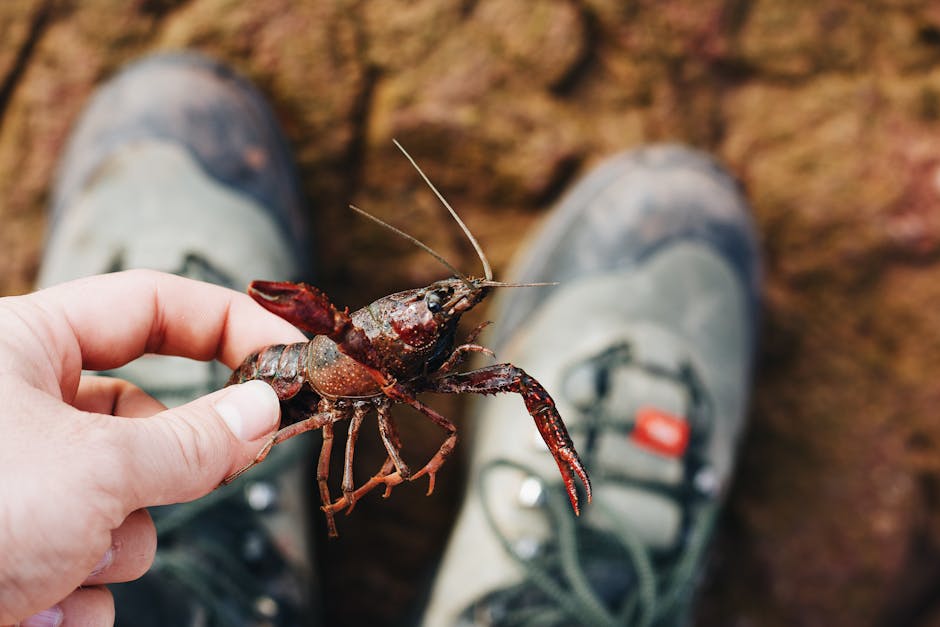 These four crawfish baits cover every situation from heavy cover flipping to finesse dragging on light line. Green pumpkin and green pumpkin orange are the two must-have colors.
Craw Jig Trailers
A bass jig without a craw trailer is only doing half its job. Thread a soft plastic craw onto the jig hook so the pincers extend past the skirt and wave freely as the jig hops along the bottom. The trailer adds bulk and action that turns a plain jig into a convincing crawfish.
Best trailer combos:
- 3/8 oz football jig + NetBait Paca Craw for dragging rock
- 1/2 oz flipping jig + Strike King Rage Craw for punching grass and wood
- 1/4 oz finesse jig + Berkley Pit Boss for smallmouth on light line
Crawfish Pattern Crankbaits
Crankbaits in crawfish colors are deadly over hard bottoms. The wide wobble imitates the erratic escape burst of a fleeing crawfish. When the bait deflects off a rock, that random direction change triggers reaction strikes from bass that would ignore a steady retrieve.
Best models:
- Rapala DT-6: The DT series in Dark Brown Crawdad or Demon runs true out of the box. The balsa body gives it a wider wobble than plastic crankbaits.
- Strike King KVD 1.5 Square Bill: In crawfish red or DB Craw. The square lip deflects off cover instead of digging in. Perfect for shallow rock banks.
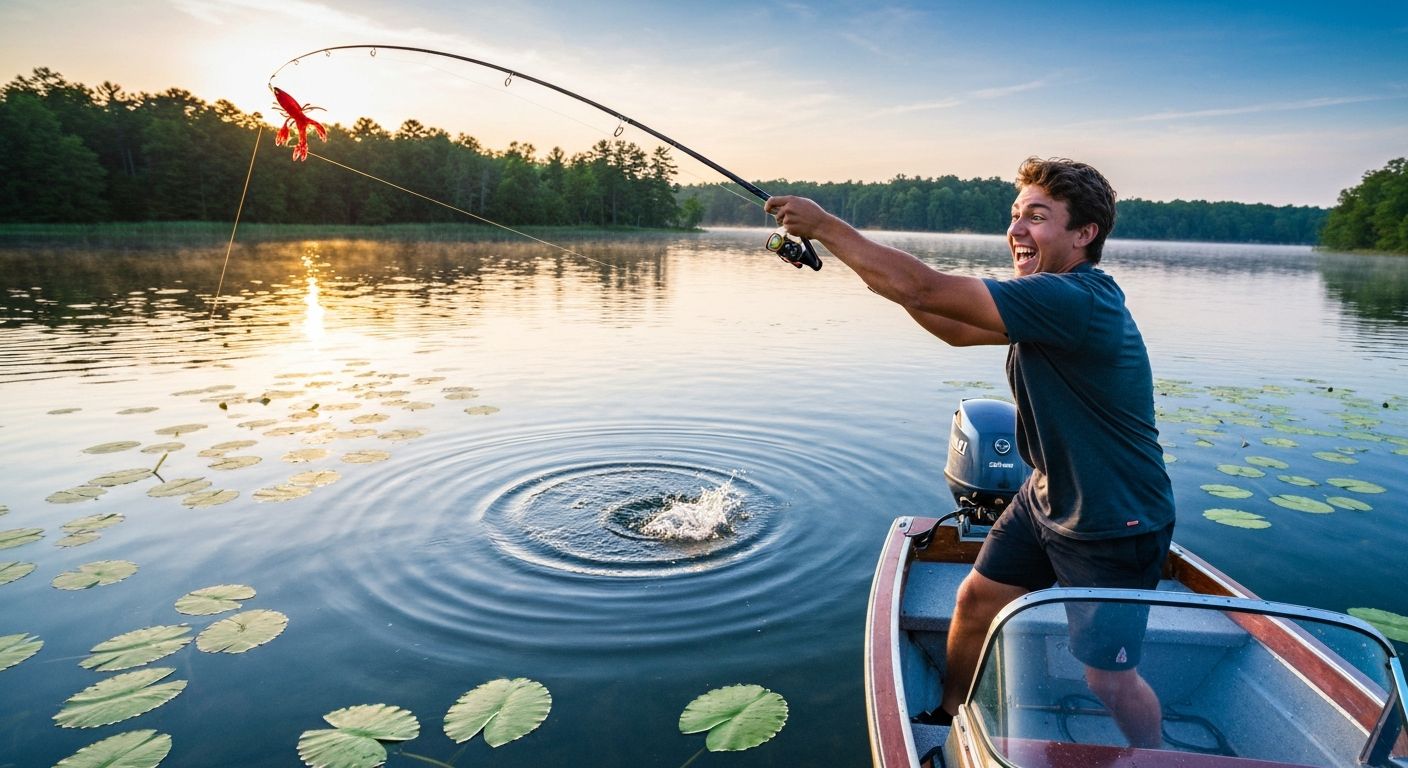 Crawfish-pattern crankbaits work best when you bang them off rocks. The deflection imitates a crawfish flushing from cover and triggers reaction strikes.
Jigs with Craw Skirts
A skirted bass jig is already one of the best crawfish imitators in your tackle box. The rubber strands flare and pulse like crawfish legs. Pair a brown or green pumpkin jig with a matching craw trailer and you have the most realistic crawfish presentation money can buy. Jigs catch the biggest bass in any body of water because the profile matches a large crawfish defending itself on the bottom.
Color Matching by Season and Water Clarity
Crawfish change color throughout the year as they molt. Match your lure color to the current molt stage and you will get more bites. Bass select crawfish by color, preferring prey that blends with the current seasonal palette.
Spring (pre-spawn through spawn): Crawfish are molting from dark winter shells into brighter colors. Use green pumpkin with orange tips or brown and orange combos. Baits like the Rage Craw in Delta Bug or green pumpkin orange match this transition perfectly.
Summer: Crawfish are in their hardshell phase with dark brown and olive tones. Use green pumpkin, watermelon red flake and dark brown. In clear water, go natural. In stained water, add chartreuse or orange.
Fall: Crawfish begin their second annual molt. Red and orange tones intensify. This is when crawfish-red crankbaits and PB&J jigs shine. Bass are feeding aggressively before winter and they key on the bright molt-stage crawfish.
Winter: Crawfish turn dark. Brown, black and blue and dark green pumpkin work best. Fish extremely slowly because crawfish are sluggish in cold water.
Water clarity rule: Clear water demands natural tones with subtle flake. Stained water calls for bolder oranges and reds. Muddy water means black and blue or dark brown because bass rely on silhouette and vibration, not color detail.
Rigging Methods for Crawfish Lures
Here are the four rigs that account for 90 percent of crawfish lure fishing success.
Texas Rig: The most versatile option. Thread your craw onto a 3/0 to 4/0 offset hook with a tungsten bullet weight pegged above it. Use 3/16 oz for shallow rock and 3/8 oz for deeper structure. Drag it across the bottom with slow pulls of the rod tip.
Football Jig: A jig head shaped like a football that rocks side to side as it crawls over rocks. Thread a Paca Craw or Rage Craw onto the hook as a trailer. The rocking action is the most convincing crawfish imitation for dragging deep rock transitions.
Flipping Jig: A compact jig with a fiber weedguard for heavy cover. Pair with a bulky craw trailer and pitch it into laydowns, brush piles and grass mats. Most bites come on the initial drop.
Carolina Rig: A heavy sinker (3/4 to 1 oz) separated from the bait by a 2 to 3 foot fluorocarbon leader. The craw floats off the bottom and drifts naturally behind the weight. Covers water faster than a Texas rig over long gravel flats and shell beds.
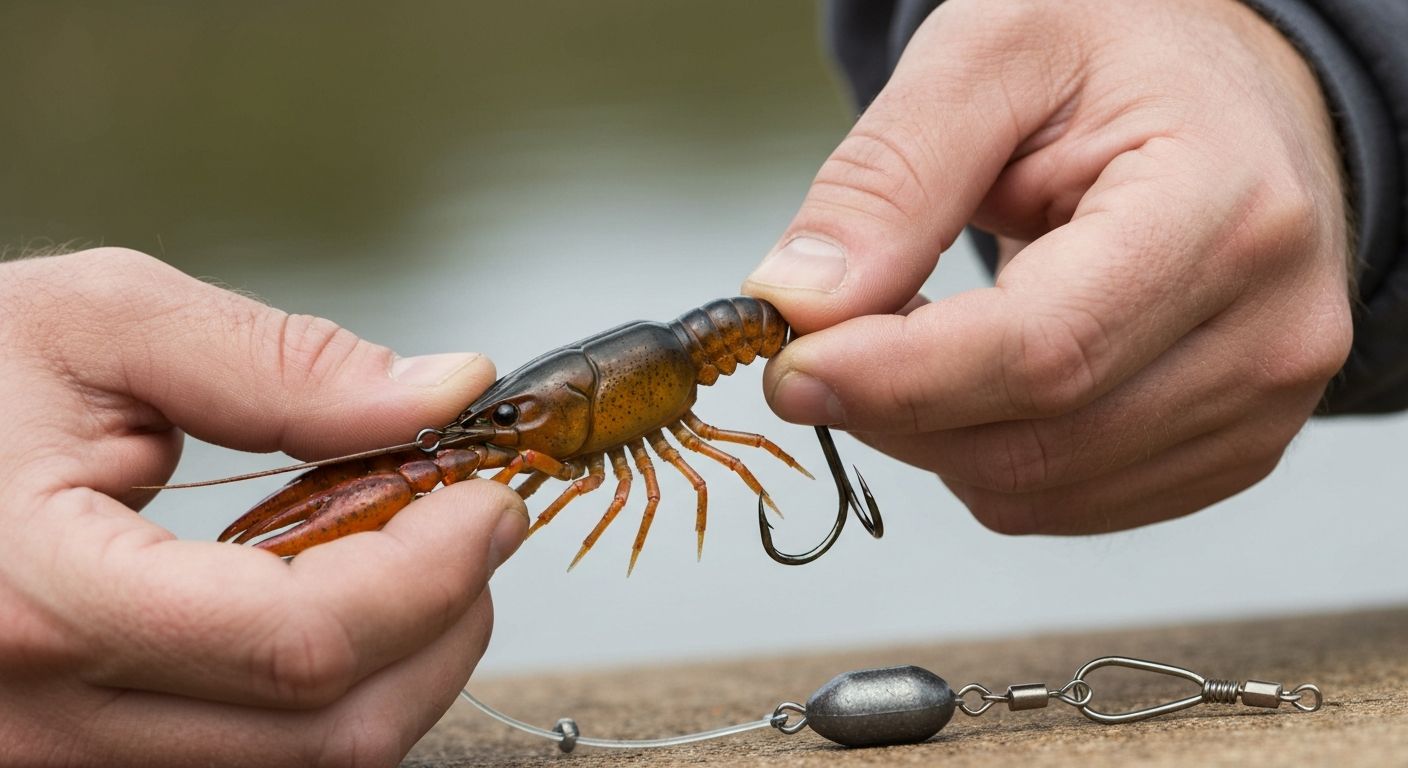 Target transitions where rock meets mud or gravel meets sand. Crawfish concentrate along those edges because they need hard substrate for shelter but forage in the softer bottom nearby.
Retrieval Techniques That Trigger Strikes
Crawfish do not swim. They scoot, hop and crawl. Your retrieve needs to match those movements.
The Slow Drag: Lay your rod tip at 9 o'clock and pull the bait 6 to 12 inches along the bottom with a smooth sweep. Reel up slack. Repeat. This is the bread-and-butter retrieve for a Texas-rigged craw or football jig on rock. The bait kicks up small puffs of sediment like a real crawfish rooting around.
The Hop and Pause: Pop the rod tip up 6 to 10 inches with a short snap, then let the bait fall back on a semi-tight line. Pause for 3 to 5 seconds. Most strikes happen during the pause or the instant the bait touches down. This imitates a crawfish making a short escape burst then freezing.
The Swim and Kill: Swim your craw jig 6 to 12 inches off the bottom with a steady slow retrieve, then kill the rod and let the bait fall. The claws flare on the drop. Works well over submerged grass where you need to stay above the vegetation.
The Dead Stick: Cast a Texas-rigged craw to a specific piece of cover and let it sit motionless for 10 to 30 seconds. The buoyant pincers wave in the current. Bass locked on cover will eat a motionless craw sitting in their strike zone. A cold water and post-frontal technique that produces when nothing else works.
Seasonal Crawfish Patterns and Where to Fish Them
Early Spring (water 48 to 55 degrees): Crawfish emerge from deep rock crevices and move toward shallow warming flats. Fish a Texas-rigged craw or football jig along the first rock ledge where deep water meets the flat shelf. Slow drag. Bass are sluggish but already keying on crawfish. For a full breakdown of spring tactics, check the largemouth bass guide.
Late Spring (55 to 68 degrees): Crawfish are everywhere in the shallows. Bass are on beds and staging nearby. Flip a jig with a craw trailer to isolated rock and spawning flats with pea gravel bottoms. Prime time for crawfish lure fishing because both bass and crawfish occupy the same shallow zones.
Summer (70 degrees and up): Crawfish hold tight to deeper rock during the day and move shallow at night. Fish a football jig or deep crawfish crankbait along offshore rock piles and ledges during the day. At dawn and dusk, move shallow with a Texas-rigged craw on riprap.
Fall (60 to 70 degrees): Bass follow crawfish onto secondary points and creek channel swings as both move toward deeper winter haunts. A Carolina-rigged craw along gravel transitions is deadly. Crawfish-red crankbaits burned over rock flats produce reaction strikes.
Winter (below 50 degrees): Everything slows down. Crawfish barely move. Fish a finesse jig with a small craw trailer on steep rock banks and bluff walls. Dead-stick it for long pauses. Smallmouth bass are especially vulnerable to this approach in winter because they stage on deep rock where crawfish hibernate.
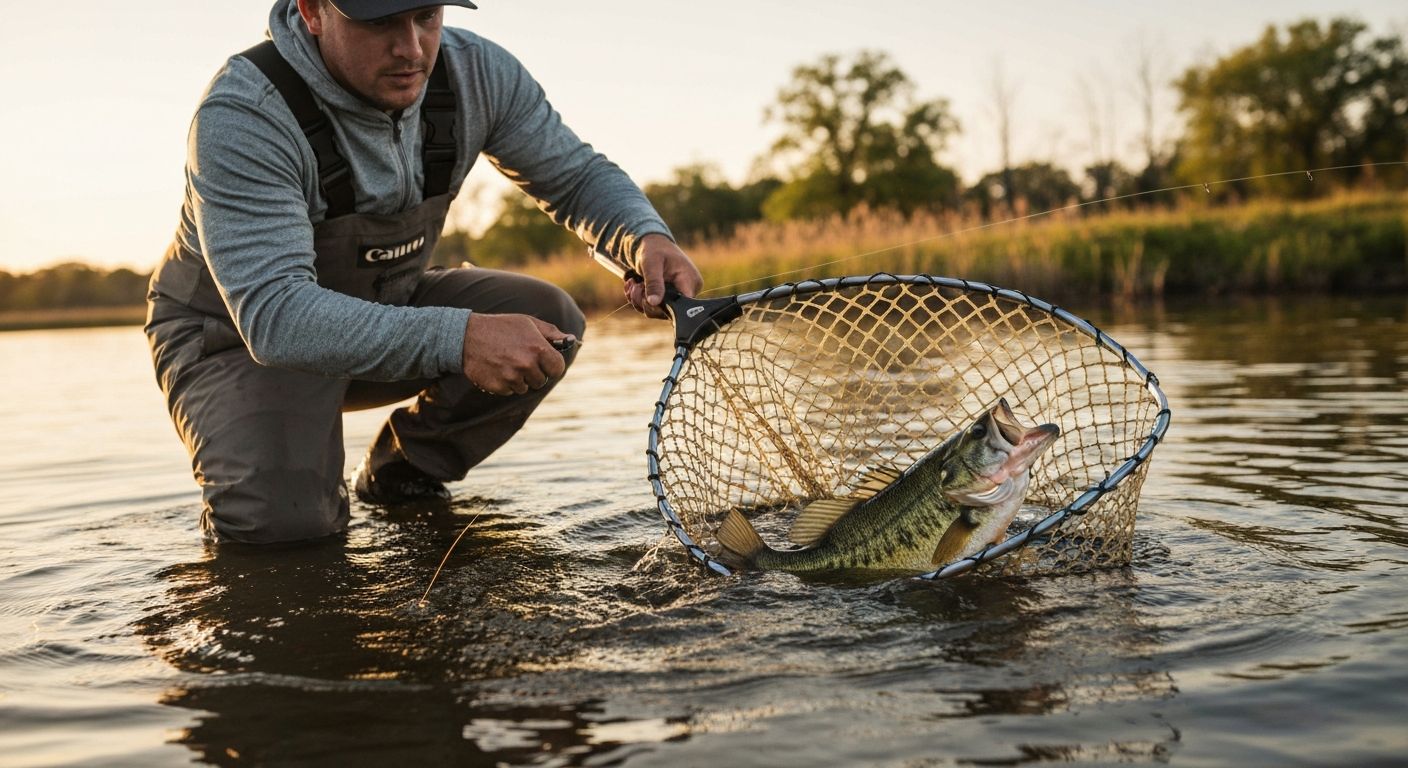 A football jig with a Paca Craw trailer sitting on rocky bottom. The pincers float up in a natural defensive posture that bass cannot resist.
Mistakes That Kill the Crawfish Bite
- Moving too fast. Crawfish do not sprint. Slow down. Then slow down again. A real crawfish covers a few inches per second at most.
- Fishing over mud. Crawfish need hard substrate. If the bottom is all mud or silt, there are no crawfish there. Focus on rock, gravel and hard clay.
- Using the wrong size. Match the local crawfish. In most lakes that means 3 to 4 inch craws. A 5-inch craw in a lake full of 2-inch crawfish looks wrong to bass.
- Ignoring the pincers. If the claw tips are torn or flattened, the bait loses its action. Replace your craw after every few fish.
- Skipping the pause. Bass pick up crawfish baits during the pause, not during the drag. If you never stop moving, you never give bass a chance to eat.
- Wrong color for the season. A bright red craw in winter or a dark brown craw during the spring molt looks unnatural. Match the seasonal molt cycle.
- Fishing too high. Crawfish live on the bottom. Your bait should be on the bottom or within 6 inches of it at all times.
- Using mono instead of fluorocarbon. Fluorocarbon sinks and has less stretch, giving you better bottom contact and sensitivity for subtle bites.
FAQs
What is the best crawfish lure for bass?
The Strike King Rage Craw on a Texas rig is the most versatile crawfish lure you can own. It works in every type of water, around every kind of cover and catches both largemouth and smallmouth. If you want one bait, buy a bag of Rage Craws in green pumpkin.
What color crawfish lure should I use?
Match the molt cycle. Green pumpkin with orange in spring. Dark brown and watermelon in summer. Red and orange in fall. Black and blue or dark brown in winter. When in doubt, green pumpkin works in any season and any water clarity.
Do crawfish lures work for smallmouth bass?
Absolutely. Smallmouth bass eat more crawfish per body weight than largemouth do. A Berkley Pit Boss or Zoom Ultra Vibe Speed Craw on a finesse jig dragged across rock is one of the deadliest smallmouth presentations in existence.
When is the best time to fish a crawfish lure?
Spring is the peak. Crawfish are active in the shallows and bass are feeding heavily before and after the spawn. But crawfish lures produce year-round because bass eat crawfish in every season. Slow your presentation in cold water and speed it up when the water warms past 60 degrees.
Should I use a crawfish lure on a jig or a Texas rig?
Both work. A Texas rig gives you a lighter and more finesse presentation that works well in clear water and on pressured lakes. A jig with a craw trailer gives you a bigger profile with more vibration, which works better in stained water and heavy cover. Carry both and let the conditions decide.
Build Your Crawfish Playbook
Crawfish lure fishing rewards anglers who track the details. Which craw color works on that one rocky point. Which retrieve produces when the water drops below 55 degrees. The Tackle app helps you log those details after every trip so you build a personal crawfish playbook based on real catches instead of guesswork.
Ready to track your crawfish catches and find the seasonal patterns? Download Tackle free.
Sources
- Wired2Fish - Crawfish Lure Fishing Guide
- Bass Resource - Crawfish Techniques
- In-Fisherman - Matching Crawfish Forage
Regulations change. Always check local rules before fishing.

Tackle Team
The Tackle Fishing Team is a collective of anglers, data scientists, and fishing enthusiasts dedicated to making fishing more accessible and successful for everyone.
View profileSources Consulted
The following sources were consulted in creating this guide:
- Wired2Fish – www.wired2fish.com (retrieved Mar 2026)
- Bass Resource – www.bassresource.com (retrieved Mar 2026)
- In-Fisherman – www.in-fisherman.com (retrieved Mar 2026)
Note: Information is summarized and explained in our own words. Always verify current regulations with official sources.
Frequently Asked Questions
What is the best crawfish lure for bass?
The Strike King Rage Craw on a Texas rig is the most versatile crawfish lure you can own. It works in every type of water, around every kind of cover and catches both largemouth and smallmouth. If you want one bait, buy a bag of Rage Craws in green pumpkin.
What color crawfish lure should I use?
Match the molt cycle. Green pumpkin with orange in spring. Dark brown and watermelon in summer. Red and orange in fall. Black and blue or dark brown in winter. When in doubt, green pumpkin works in any season and any water clarity.
Do crawfish lures work for smallmouth bass?
Absolutely. Smallmouth bass eat more crawfish per body weight than largemouth do. A Berkley Pit Boss or Zoom Ultra Vibe Speed Craw on a finesse jig dragged across rock is one of the deadliest smallmouth presentations in existence.
When is the best time to fish a crawfish lure?
Spring is the peak. Crawfish are active in the shallows and bass are feeding heavily before and after the spawn. But crawfish lures produce year-round because bass eat crawfish in every season. Slow your presentation in cold water and speed it up when the water warms past 60 degrees.
Should I use a crawfish lure on a jig or a Texas rig?
Both work. A Texas rig gives you a lighter and more finesse presentation that works well in clear water and on pressured lakes. A jig with a craw trailer gives you a bigger profile with more vibration, which works better in stained water and heavy cover. Carry both and let the conditions decide.
Plan Your Next Fishing Trip
Download Tackle to compare tide charts, wind conditions, and practical fishing guidance for your location before you go.
✓ Real-time tide charts • ✓ Wind & weather forecasts • ✓ AI fish identification
See local regulations — Find regulations for your area
Want weekly fishing windows delivered to your inbox?
Get personalized fishing forecasts based on weather, tides, and moon phases.
RELATED CONTENT
KEEP READING