

A jig head is the simplest tool in your tackle box and the most versatile. Thread a soft plastic onto a weighted hook, cast it out and catch fish. Yet the difference between a good day and a blank one comes down to head shape, weight and how you move it through the water.
Best for: Beginner to Advanced | Every freshwater species
What you need: Jig heads (1/16 to 3/8 oz), soft plastics (2 to 5 inches), spinning rod, 6-10 lb fluorocarbon
Do this first: Tie on a 1/4 oz round head jig with a 3-inch Keitech Swing Impact FAT in ayu color. Cast it to a rocky bank and swim it back with a slow steady retrieve. You will catch something.
Why Jig Head Fishing Works Everywhere
- Control depth, speed and action with one piece of tackle
- Exposed hooks give better hookup ratios than weedless rigs
- Match any forage by swapping the soft plastic trailer
- Works from 1 foot to 40 feet depending on weight
- Cheapest way to fish soft plastics. Heads cost pennies and last for dozens of fish
- Every freshwater species from panfish to trophy walleye eats them
If you already fish soft plastic lures, adding jig heads will open up water you cannot reach with weightless rigs alone.
Get Personalized Fishing Advice
Want real-time conditions for your exact location? Tackle provides live tide data, wind forecasts, and AI-powered fishing advice tailored to where you fish.
✓ Real-time tide charts • ✓ Wind & weather forecasts • ✓ AI fish identification
Tackle Box Snapshot (Copy This Setup)
- Jig heads: 1/8 oz and 1/4 oz round heads (Owner Ultrahead or Gamakatsu Round 26), sizes 1/0 and 2/0
- Soft plastics: Keitech Swing Impact FAT 3.3" (ayu, bluegill flash), Z-Man Finesse TRD 2.75" (green pumpkin)
- Rod: 6'6" to 7' spinning rod, medium power, fast action
- Reel: 2500 size spinning reel
- Line: 8 lb fluorocarbon straight, or 10 lb braid to 6 lb fluoro leader
- Target depth: 2 to 20 feet
- Retrieve: Slow swim, hop or drag depending on species
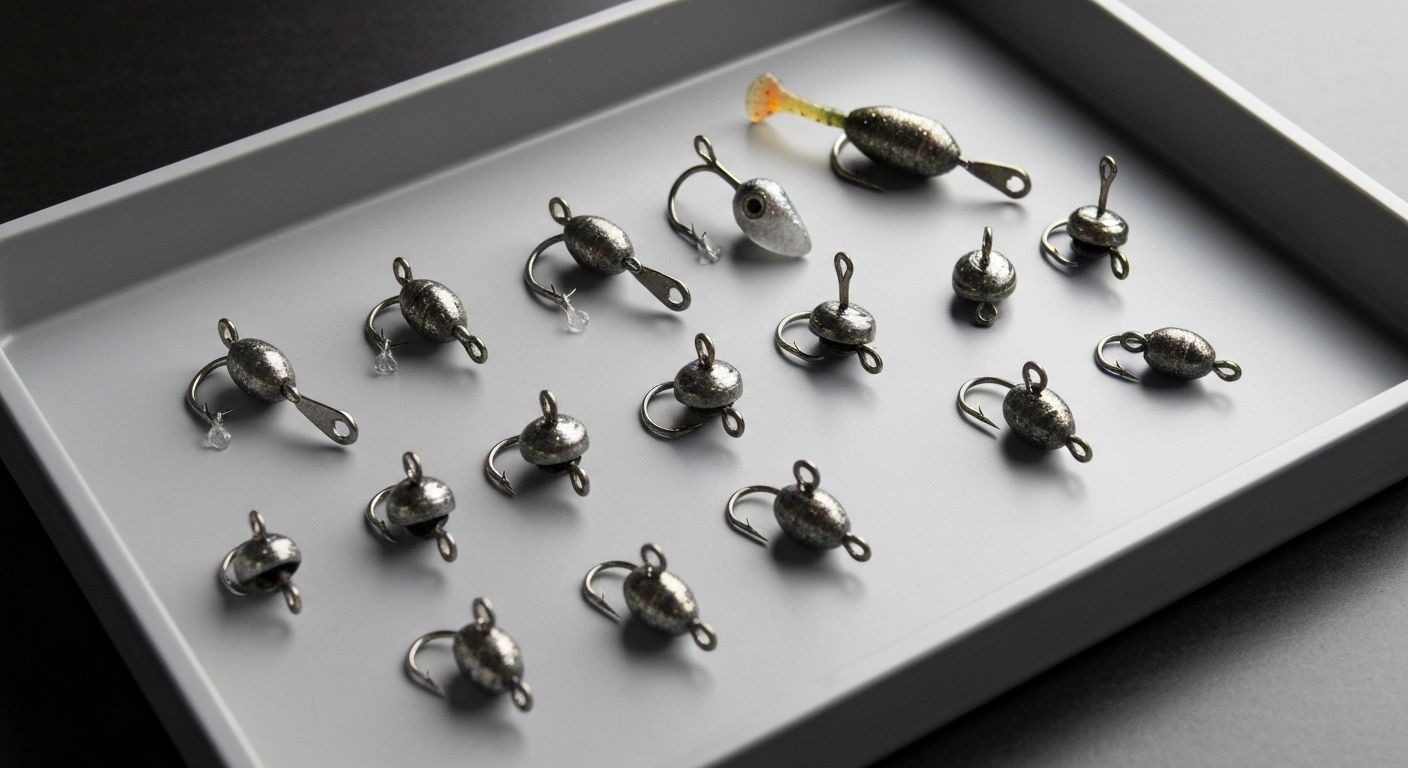 Keep three weights on hand at all times. A 1/8, 1/4 and 3/8 oz set covers everything from shallow ponds to deep river channels.
Jig Head Shapes and When to Use Each
The head shape is not just cosmetic. It changes how the bait moves, how it falls and what kind of bottom it handles best.
Round Head
The standard. Rolls over rocks without snagging, falls straight and works with every soft plastic style. If you only own one shape, make it round. Bass and walleye love a round head dragged across chunk rock. Top picks: Gamakatsu Round 26, VMC Neon Moon Eye, Owner Ultrahead Round.
Football Head
Wider and flatter. Resists rolling so the bait stays upright and the hook point stays on top. Kicks up sediment on hard bottom. Best for ledge fishing, deep rock piles and summer bass on offshore structure. Fish it like a swimbait trailer that crawls the bottom. Top picks: VMC Football Jig Head, Strike King Tour Grade Football.
Darter / Torpedo Head
A pointed head that cuts through current and falls faster than a round head of the same weight. Best for river fishing and current seams. Walleye anglers swear by darter heads. Top picks: VMC Hover Jig, Northland Fireball.
Mushroom / Ned Head
Flat-bottomed head that stands the bait upright on the bottom. The signature shape behind the Ned rig. Bass eat baits that sit motionless on a mushroom head when they refuse everything else. Best for finesse fishing and pressured water. Top picks: Z-Man Finesse ShroomZ, VMC Ned Rig Jig.
Swimbait Head
Designed for paddle tail swimbaits with a keeper barb that prevents the plastic from sliding down. Many have a belly-weighted keel for straight tracking. Cast and retrieve like a swimbait at a slow pace. Top picks: Owner Ultrahead Swimbait, Keitech Tungsten Super Round, Z-Man Trout Eye Jig Head.
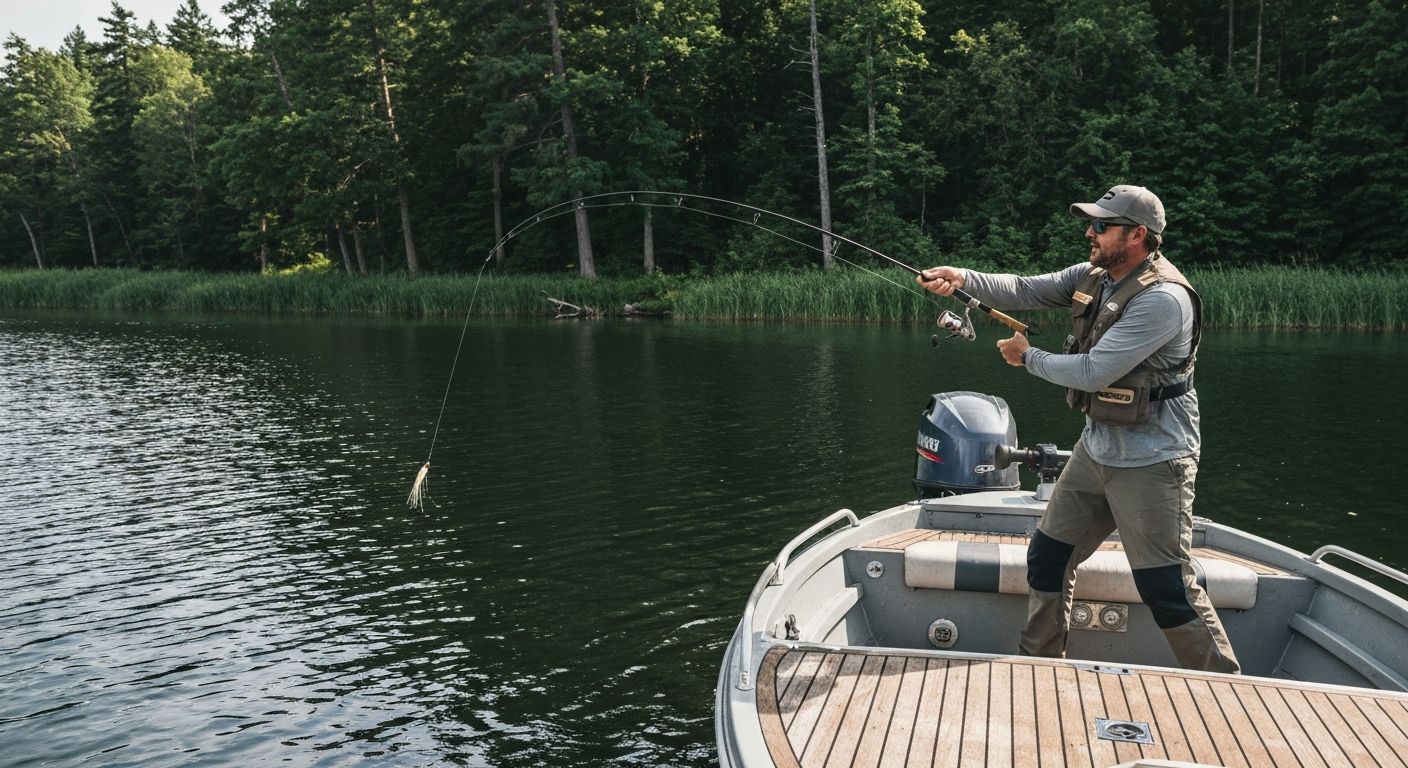 Head shape changes the fall rate, bottom contact and action of the bait. Match the shape to your structure and current.
Weight Selection by Depth and Current
Getting the weight right is the single biggest factor in jig head fishing. Too heavy and the bait drags unnaturally. Too light and you lose bottom contact and sensitivity.
The baseline rule: Use the lightest jig head that lets you stay in contact with the bottom or maintain your target depth.
Weight Chart
- 1/32 oz: Ultra-shallow (1-3 feet), no current, crappie and trout in still ponds
- 1/16 oz: Shallow (2-6 feet), light current, panfish and finesse bass
- 1/8 oz: Medium depth (4-10 feet), moderate current, all-around bass weight
- 1/4 oz: Deeper water (8-18 feet), moderate to strong current, walleye rivers
- 3/8 oz: Deep water (15-25 feet), strong current, heavy wind
Adjusting for Current and Wind
Moving water demands more weight. Bump up one or two sizes when fishing current. Your bait should tick bottom on every third or fourth rod twitch. If it drags nonstop, go lighter. If you cannot feel bottom, go heavier.
Wind creates line bow that kills sensitivity. Go one size heavier on windy days and use fluorocarbon. Fluoro sinks and cuts through wind better than braid or monofilament.
Best Soft Plastic Pairings
The jig head is the engine. The soft plastic is the personality.
Paddle Tail Swimbaits + Round or Swimbait Head: The most popular combo in freshwater fishing. Cast and reel. The paddle tail wobbles like a baitfish. Keitech Swing Impact FAT 3.3", Z-Man MinnowZ 3" and Strike King Rage Swimmer all catch bass, walleye and trout.
Finesse Worms + Mushroom Head: A do-nothing presentation where the straight tail quivers while the mushroom head holds the bait upright. Pair with the Ned rig technique. Z-Man TRD and Z-Man Finesse TRD are the standards for pressured bass.
Curly Tail Grubs + Round Head: Old school and still deadly. A 3-inch white grub on a 1/8 oz jig head is one of the most effective crappie fishing setups ever invented. Bobby Garland, Mister Twister and Zoom Fat Albert all produce.
Tube Baits + Internal Tube Head: The bait spirals on the fall like a dying baitfish. Smallmouth bass cannot resist a Gitzit Original Tube on a tube jig head.
Shad Bodies + Darter Head: Slender minnow-shaped plastics on a darter head are the go-to for walleye fishing in rivers. Berkley PowerBait Ripple Shad and Z-Man Slim SwimZ are top picks.
Step-by-Step: Fishing a Jig Head
-
Thread the plastic straight. Push the hook through the nose and thread up the shank. A crooked bait spins and catches nothing.
-
Cast to structure. Points, rock piles, drop-offs, current seams and dock pilings. Let the bait sink on a semi-tight line while feeling for bites on the fall.
-
Count it down. Note how long the bait takes to hit bottom. This lets you repeat the exact depth on every cast.
-
Work the bait. Swim it, hop it or drag it depending on what fish want. Keep your rod tip between 9 and 10 o'clock.
-
Set the hook on anything different. A tap, heaviness, slack line or sideways movement. Reel down and sweep firmly. Exposed hooks mean you do not need to hammer the hookset.
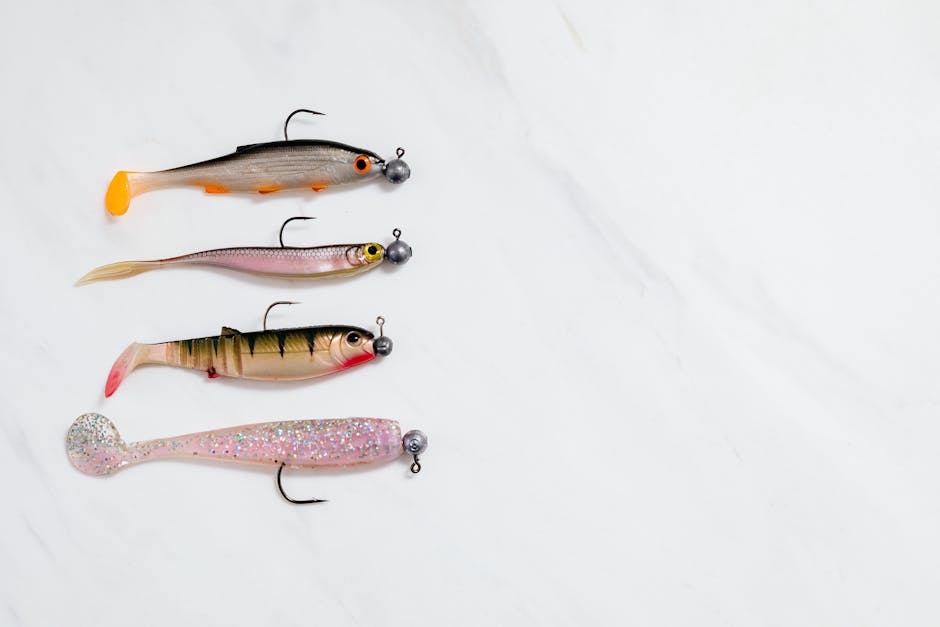 Keep your rod tip low during the retrieve. Most jig head bites feel like slight heaviness or a subtle tick, not a hard slam.
Retrieval Techniques That Catch Fish
Start with a steady swim and adjust based on what the fish tell you.
Steady Swim: Cast and reel at a slow pace. The paddle tail does all the work. Best for warm water and covering new water.
Hop and Drop: Pop the bait 6 to 12 inches off bottom with the rod tip, then let it fall on semi-slack line. Most bites come on the drop. Best for bass on rocky bottoms.
Slow Drag: Drag 6 to 12 inches, pause 3 to 5 seconds, repeat. Best for cold water and pressured fish.
Vertical Jigging: Drop straight down over structure. Lift and drop with 6-inch rod movements. Best for deep crappie on brush piles and walleye on river ledges.
Shake in Place: Tiny wrist vibrations that quiver the tail without moving the head. Best for fish spotted on electronics that will not chase.
Species-Specific Setups
Different fish want different presentations.
Bass (Largemouth and Smallmouth)
1/8 to 1/4 oz round or football head with a Keitech Swing Impact FAT 3.3" on 8-10 lb fluorocarbon. Swim for largemouth near cover. Drag or shake for smallmouth on rock and gravel.
Crappie
1/32 to 1/16 oz round head with a 2-inch curly tail grub on 4-6 lb line. Vertical jig over brush piles or slow swim under a slip float. Crappie suspend at specific depths so dial in the exact level. Our crappie fishing guide covers this in detail.
Walleye
1/8 to 3/8 oz darter head with a 3-inch shad body on 8-10 lb fluorocarbon. Drag along bottom in current or vertical jig on river ledges. Keep the bait ticking the substrate. If you are not occasionally snagging, you are too high. See our walleye guide for full river tactics.
Trout
1/32 to 1/8 oz round head with a 2-inch paddle tail in white or chartreuse on 4-6 lb fluorocarbon. Cast upstream and swim back at the speed of the current. Use the lightest head and thinnest line you can get away with.
Decision Tree: Match the Conditions
- Clear water -> Natural colors (ayu, green pumpkin), lighter head, fluorocarbon
- Stained water -> Bright colors (chartreuse, firetiger), same or one size heavier
- Cold water (below 55 F) -> Lightest head possible, drag or shake, long pauses
- Warm water (above 65 F) -> Steady swim, heavier head to cover water faster
- Current -> Darter head, one or two sizes heavier, cast upstream
- Wind -> Heavier head, fluorocarbon to cut line bow
- Deep (15+ feet) -> 1/4 to 3/8 oz, vertical jigging
- Shallow (under 5 feet) -> 1/16 to 1/8 oz, slow swim or hop
Common Mistakes That Kill the Bite
-
Threading the plastic crooked. A bait that hangs at an angle spins instead of swimming. If it looks crooked, pull it off and redo it.
-
Using too heavy a jig head. A heavy head falls too fast and drags unnaturally. Start light and add weight only when you need it.
-
Reeling too fast. A slow steady retrieve produces more fish than a fast one in nearly every situation. Cut your speed in half.
-
Ignoring the fall. Most jig head bites happen while the bait is sinking. Watch your line for twitches, jumps or slack during every fall.
-
Mismatching hook size to plastic. A tiny hook on a big swimbait gives terrible hookup ratios. A giant hook on a small grub kills the action. Match the hook gap to the plastic width.
-
Fishing the wrong depth. If you are not getting bit, change depth before you change baits. Most anglers do it backward.
-
Skipping fluorocarbon. Mono stretches too much for sensitivity. Braid is visible in clear water. Fluoro gives you the best of both.
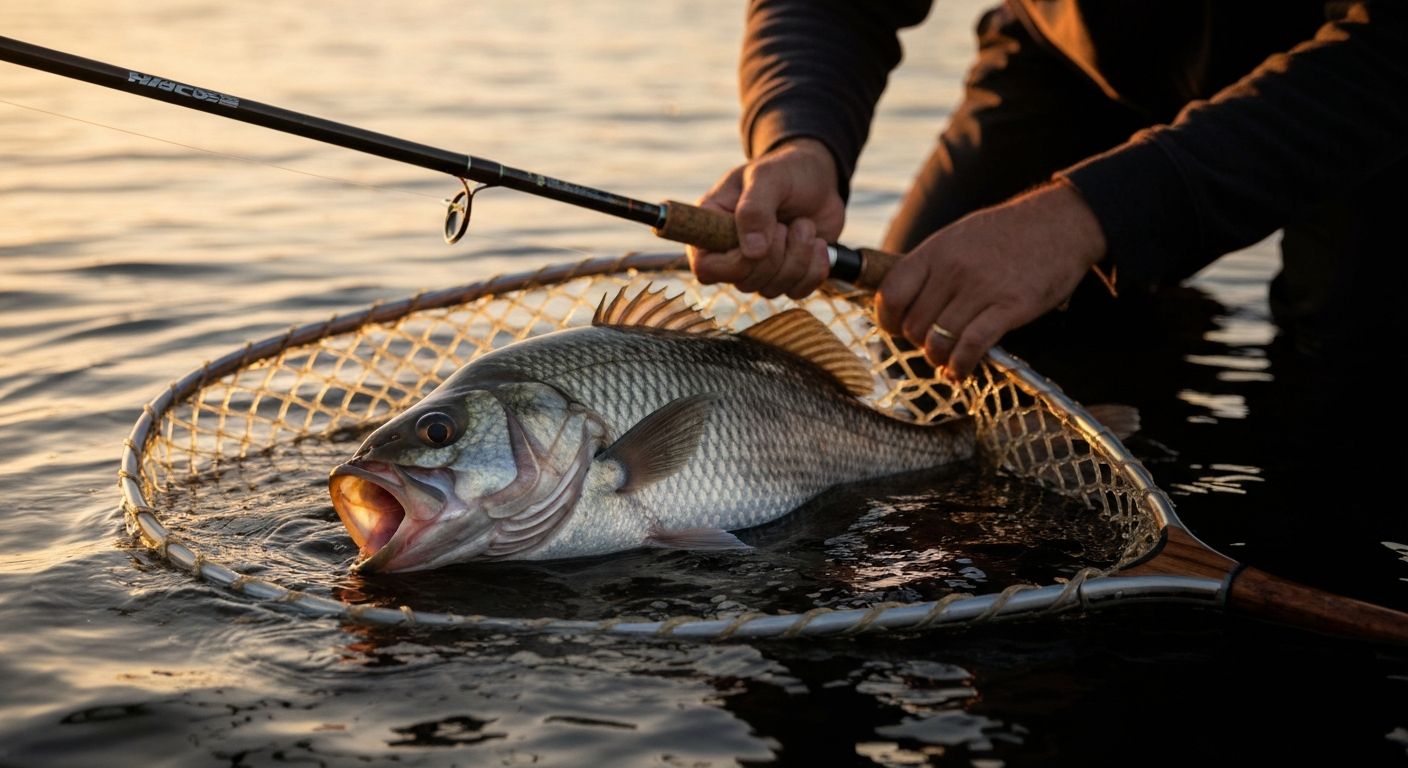 A properly rigged jig head puts the hook in the roof of the mouth nearly every time. Exposed hooks give you a better hookup ratio than weedless setups.
Track Your Jig Head Patterns
Which weight worked on that windy point? What color produced in the stained creek arm? Log your jig head catches with conditions in the Tackle app so you stop guessing and start repeating what works.
1-Minute Action Plan
- Tie on a 1/4 oz round jig head with a 3.3-inch Keitech Swing Impact FAT in ayu
- Find a rocky point or current seam in 5 to 15 feet
- Cast past the target and swim back with a slow steady retrieve
- No bites after 10 casts? Switch to hop and drop
- Still nothing? Go lighter and slow everything down
- Watch your line on every fall. Bites are subtle
Next Steps
- If you want to pair jig heads with paddle tails, see our swimbait guide
- If you want the finesse version of jig head fishing, learn how to fish a Ned rig
- If you are targeting crappie specifically, read our crappie fishing guide
- If walleye is your target, check our walleye guide
- For a full breakdown of every soft plastic type and rigging method, start with how to use soft plastic lures
FAQs
What is the best jig head weight for bass?
A 1/4 oz round head covers the widest range of bass fishing situations. It casts well on spinning gear, sinks at a natural rate in 5 to 15 feet of water and works with most 3 to 4 inch soft plastics. Go lighter (1/8 oz) for finesse presentations in shallow or clear water. Go heavier (3/8 oz) for deep structure or strong wind.
What is the difference between a jig head and a bass jig?
A jig head is a bare weighted hook that you pair with a soft plastic trailer. A bass jig (also called a flipping jig or casting jig) has a weedguard, a silicone or rubber skirt and a larger head designed for fishing heavy cover. Jig heads are simpler, cheaper and better for open water. Bass jigs are built for brush piles, grass and wood.
Can you fish a jig head in heavy cover?
Not well. Jig heads have exposed hooks that snag on wood, grass and rock. They work best around open structure like gravel banks, rock points, docks and current seams. For heavy cover, use a Texas rig or a bass jig with a weedguard instead.
What colors work best for jig head fishing?
Start with natural baitfish colors (ayu, silver, white) in clear water and bright colors (chartreuse, firetiger) in stained water. Green pumpkin is the universal backup that works in almost every condition. Match the color of the local forage if you can see what the fish are eating.
Do you need a special rod for jig head fishing?
A 6'6" to 7' medium power spinning rod with a fast action tip handles 90% of jig head presentations. The fast tip gives you sensitivity to feel bites and the medium power provides enough backbone to fight fish without straightening light wire jig hooks. Pair it with a 2500 size spinning reel and 8 lb fluorocarbon.
Sources
- Wired2Fish - Jig Head Fishing Guide
- Bass Resource - Jig Head Techniques
- In-Fisherman - Jig Head Selection
Regulations change. Always check local rules before fishing.

Tackle Team
The Tackle Fishing Team is a collective of anglers, data scientists, and fishing enthusiasts dedicated to making fishing more accessible and successful for everyone.
View profileSources Consulted
The following sources were consulted in creating this guide:
- Wired2Fish – www.wired2fish.com (retrieved Mar 2026)
- Bass Resource – www.bassresource.com (retrieved Mar 2026)
- In-Fisherman – www.in-fisherman.com (retrieved Mar 2026)
Note: Information is summarized and explained in our own words. Always verify current regulations with official sources.
Frequently Asked Questions
What is the best jig head weight for bass?
A 1/4 oz round head covers the widest range of bass fishing situations. It casts well on spinning gear, sinks at a natural rate in 5 to 15 feet of water and works with most 3 to 4 inch soft plastics. Go lighter (1/8 oz) for finesse presentations in shallow or clear water. Go heavier (3/8 oz) for deep structure or strong wind.
What is the difference between a jig head and a bass jig?
A jig head is a bare weighted hook that you pair with a soft plastic trailer. A bass jig has a weedguard, a silicone or rubber skirt and a larger head designed for fishing heavy cover. Jig heads are simpler, cheaper and better for open water. Bass jigs are built for brush piles, grass and wood.
Can you fish a jig head in heavy cover?
Not well. Jig heads have exposed hooks that snag on wood, grass and rock. They work best around open structure like gravel banks, rock points, docks and current seams. For heavy cover, use a Texas rig or a bass jig with a weedguard instead.
What colors work best for jig head fishing?
Start with natural baitfish colors (ayu, silver, white) in clear water and bright colors (chartreuse, firetiger) in stained water. Green pumpkin is the universal backup that works in almost every condition. Match the color of the local forage if you can see what the fish are eating.
Do you need a special rod for jig head fishing?
A 6'6" to 7' medium power spinning rod with a fast action tip handles 90% of jig head presentations. The fast tip gives you sensitivity to feel bites and the medium power provides enough backbone to fight fish without straightening light wire jig hooks. Pair it with a 2500 size spinning reel and 8 lb fluorocarbon.
Plan Your Next Fishing Trip
Download Tackle to compare tide charts, wind conditions, and practical fishing guidance for your location before you go.
✓ Real-time tide charts • ✓ Wind & weather forecasts • ✓ AI fish identification
See local regulations — Find regulations for your area
Want weekly fishing windows delivered to your inbox?
Get personalized fishing forecasts based on weather, tides, and moon phases.
RELATED CONTENT
KEEP READING