

The Worden's Rooster Tail is one of the most effective inline spinners ever made. It catches trout in mountain streams, panfish in farm ponds and smallmouth bass in rocky rivers. If you have never thrown one, you are missing out on a lure that has been putting fish in nets since 1958.
Best for: Beginners to intermediate anglers
What you need: Ultralight to light spinning rod, 4 to 6 pound line, a handful of Rooster Tails in 1/16 to 1/4 oz, snap swivels
Do this first: Tie on a 1/8 oz Rooster Tail in white or rainbow trout pattern. Cast it upstream at a 45-degree angle and reel just fast enough to feel the blade spin. That single approach catches more trout than most anglers realize.
Quick Answer: How to Fish a Rooster Tail Spinner
- Use 1/16 to 1/8 oz sizes for streams and small creeks. Go up to 1/4 oz for lakes and deeper rivers
- Cast upstream and retrieve with the current for the most natural presentation
- Reel slow. The blade should barely turn. If you feel heavy vibration you are reeling too fast for trout
- Target current seams, pool tail-outs and shaded banks where trout hold
- Use a snap swivel to prevent line twist. Inline spinners spin your line every cast without one
- Match blade color to conditions: gold for stained water, silver for clear water, black for low light
Get Personalized Fishing Advice
Want real-time conditions for your exact location? Tackle provides live tide data, wind forecasts, and AI-powered fishing advice tailored to where you fish.
✓ Real-time tide charts • ✓ Wind & weather forecasts • ✓ AI fish identification
What Makes a Rooster Tail Spinner Work
A metal blade spins around a straight wire shaft, creating flash and vibration. Behind the blade sits a weighted body that controls depth and casting distance. Trailing behind the body is a hackle tail made from real rooster feathers (or synthetic material on newer models) that pulses and breathes in the water.
That hackle tail is what separates a Rooster Tail from every other inline spinner. The Mepps Aglia uses a bare treble hook. The Blue Fox Classic Vibrax relies on a painted body and a bell housing that adds sound. The Panther Martin uses a convex/concave blade mounted directly on the shaft. All of them catch fish. But the Rooster Tail's feathered tail adds lifelike movement that triggers strikes from fish that ignore plain hardware.
The blade also creates a pressure wave that fish detect through their lateral line. In stained water, trout find the lure by feel before they see it. In clear water, the spinning blade mimics a fleeing baitfish. This combination of vibration, flash and a pulsing tail is why Rooster Tails catch everything from 6-inch brook trout to 4-pound smallmouth bass.
If you want to understand how inline spinners compare to safety-pin style lures, check out our spinnerbait guide for a side-by-side breakdown.
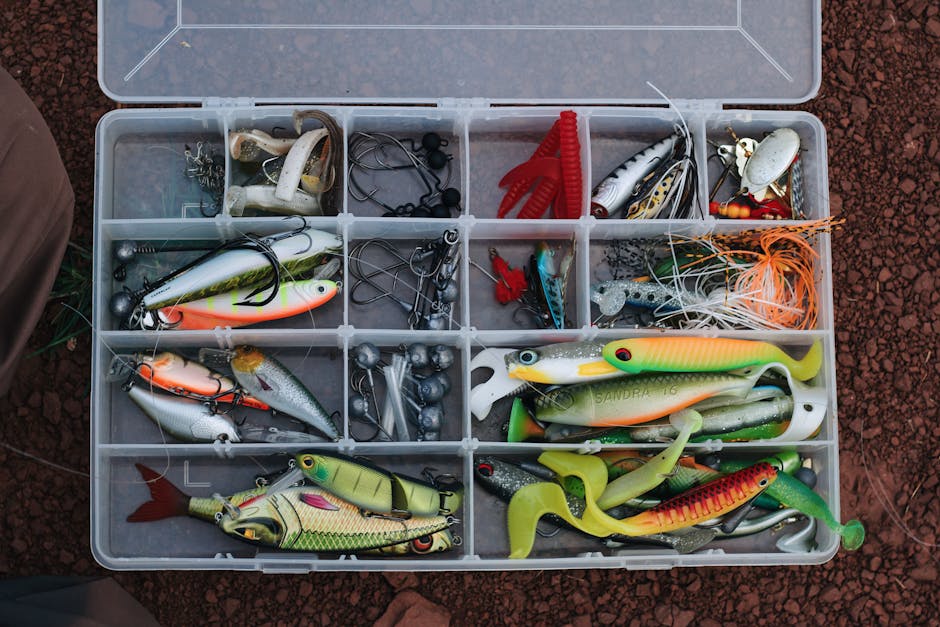 The hackle tail gives the Rooster Tail its signature action. White and rainbow trout patterns cover most trout situations.
Size and Color Selection
Picking the right size and color is half the battle with inline spinners. Get it wrong and you will cast all day without a touch.
Size Guide
1/32 oz (size 0): Ultralight specialist. Tiny creeks and heavily pressured stocked trout. Hard to cast without a 1 to 4 pound setup. Niche use.
1/16 oz (size 1): The go-to for small streams and creeks. Perfect for brook trout, stocked rainbows and panfish. Casts well on ultralight gear with 2 to 4 pound line.
1/8 oz (size 2): The most versatile size. Works in streams, rivers, ponds and small lakes. Handles 4 to 6 pound line. This is the one to buy first if you only get one.
1/6 oz (size 3): Good for larger rivers and lakes. Casts farther and runs a bit deeper. Works well for bigger trout and aggressive panfish like crappie.
1/4 oz (size 4): Lake fishing and deeper river pools. Gets down in the water column where bigger fish hold. Also effective for smallmouth bass in current.
Color Strategy
Clear water + sunny: Silver blade, white or rainbow trout body. Natural colors that do not spook wary fish.
Clear water + cloudy: Silver blade, black body with yellow spots. A little extra contrast without going too bright.
Stained water: Gold blade, chartreuse or firetiger body. Gold flash cuts through tinted water better than silver.
Muddy or high water: Gold blade, solid black or solid chartreuse body. Maximum contrast. These conditions call for the loudest presentation you can get.
Low light (dawn, dusk, shade): Black blade, dark body. Creates a strong silhouette against the sky from a trout's perspective looking up.
Stream and River Fishing Techniques
Moving water is where the Rooster Tail spinner really shines. The current does half the work for you.
The Upstream Cast and Retrieve
This is the foundation. Stand downstream of your target, cast upstream past it and reel back toward you. The current pushes the lure downstream while you reel, so you need very little speed from the reel. Trout face upstream waiting for food, so your lure arrives from the direction they expect it. Natural.
Key detail: Reel just fast enough to keep the blade spinning. Too fast and the lure rises over the fish. Too slow and the blade stalls, tumbling along the bottom and snagging rocks.
The Cross-Stream Swing
Cast at a 45-degree angle across the current and let the lure swing downstream in an arc. The lure sweeps across the stream like a baitfish struggling against the flow. This covers a lot of water quickly.
Mend your line upstream at the start of the swing to keep the lure from skating on the surface. Once it hangs straight downstream below you, let it flutter in the current for a few seconds before reeling in. Trout often follow and strike at that pause.
Pocket Water Fishing
In boulder-strewn streams, drop your Rooster Tail into the calm pockets behind large rocks. You only get one or two casts before the fish eats or spooks. Cast past the pocket and bring the lure through on the first retrieve. Short, precise casts matter more than distance.
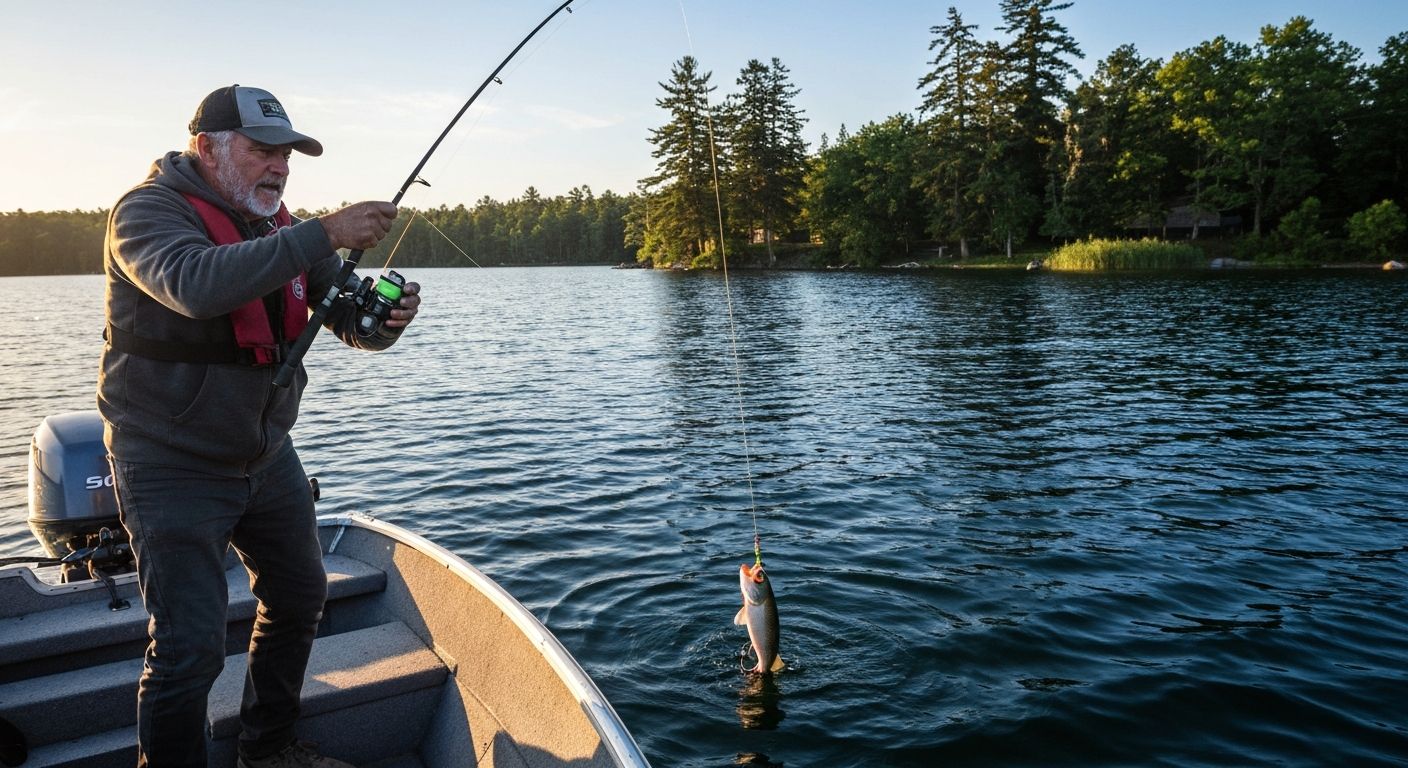 Cast past the target and bring the lure through pockets behind boulders. Trout sitting in calm water behind rocks strike on the first good pass.
Reading the Water
Look for these spots first:
- Current seams: Where fast water meets slow water. Trout sit on the slow side picking off drifting food.
- Pool tail-outs: The smooth, shallow water at the downstream end of a deep pool. Trout feed here actively at dawn and dusk.
- Undercut banks: Where the water has eroded under the bank creating a shadow. Big trout hide here during bright conditions.
- Riffle heads: The top of a riffle where water starts to speed up. Trout stage here waiting for insects.
For a deeper breakdown of how to read water and find holding areas, our trout fishing guide covers it in detail.
Lake and Pond Techniques
Rooster Tails work in still water too. The approach is different from streams because there is no current to help you.
Fan Casting from Shore
Stand at one spot and cast in a fan pattern covering 180 degrees of water. Start with casts parallel to the shoreline and work outward. Retrieve at a steady, slow speed.
Control depth by counting down after the cast. Let the lure sink 2 seconds and retrieve. Then 4 seconds. Then 6. Find the depth where fish hold and repeat.
The Slow Crawl
For cold water or sluggish fish, reel as slow as you possibly can while still keeping the blade spinning. This is slower than you think. The blade on a Rooster Tail starts turning at very low speeds, which is one reason it outperforms many other inline spinners in cold conditions.
Target Structure
Inlets and outlets: Moving water brings food and oxygen. Fish stack up near these in lakes and ponds.
Weed edges: Cast parallel to weed lines and bring the Rooster Tail along the outside edge. Bluegill and crappie hold in the weeds and dart out to grab a passing spinner.
Drop-offs: Where a shallow flat meets deeper water. Count the lure down to the ledge and slow-roll it along the break.
Docks and shade: Cast past docks and bring the Rooster Tail through the shaded area. Fish hiding from the sun will chase a spinner that enters their zone.
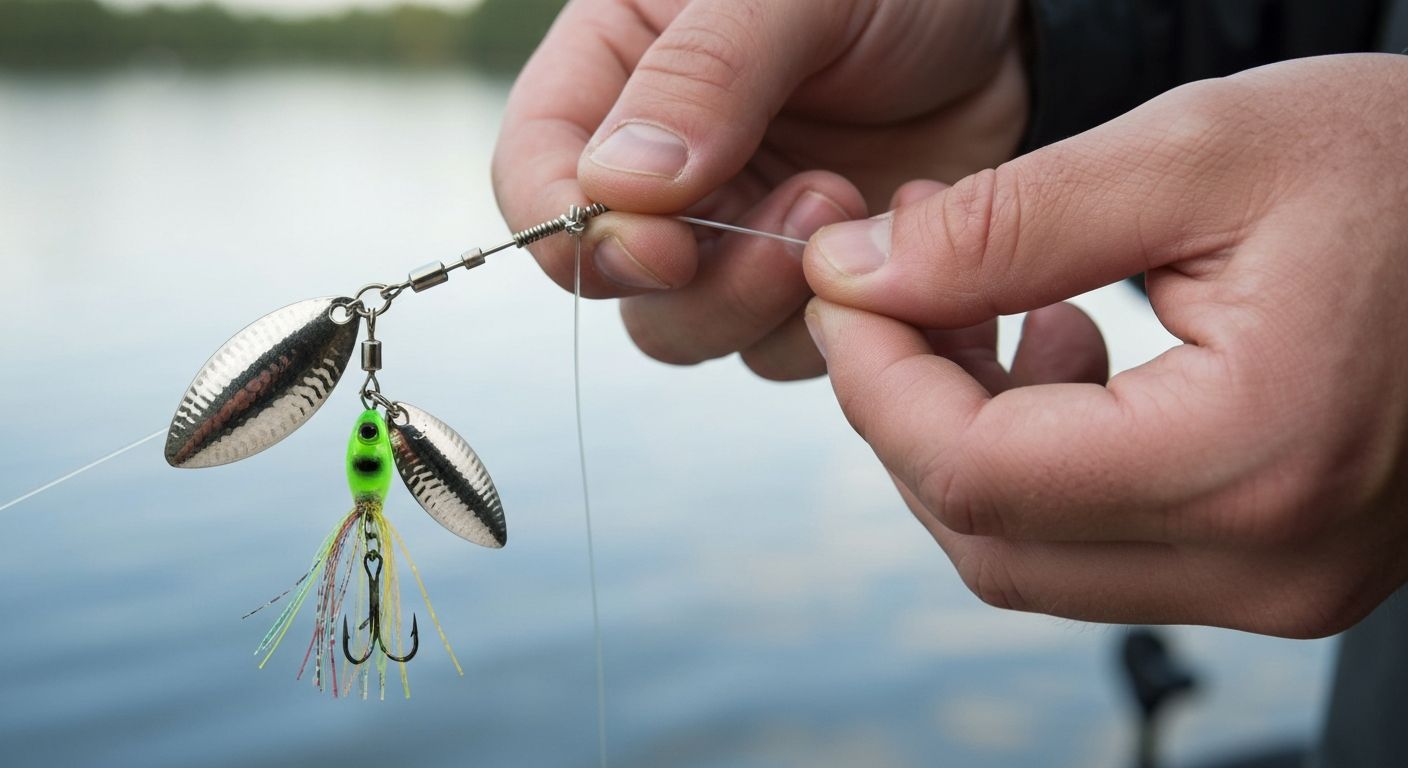 In still water, count the lure down to find the right depth. A slow retrieve along weed edges puts you in the strike zone for panfish and bass.
Species-Specific Tips
Trout (Rainbow, Brown, Brook)
Trout are the Rooster Tail's bread and butter. Use 1/16 to 1/8 oz in streams and 1/8 to 1/4 oz in lakes. Silver and gold blades in natural colors work best. Retrieve slowly.
For stocked trout, bright colors like chartreuse and pink outperform natural patterns. Stocked fish respond to visibility over realism. Our rainbow trout guide covers more tactics for both wild and stocked fish.
Panfish (Crappie, Bluegill, Perch)
Downsize. A 1/32 or 1/16 oz Rooster Tail with a white or yellow body is a panfish magnet. Retrieve just fast enough to turn the blade. Fish near structure: brush piles, docks, weed edges and fallen trees. Replace the stock treble with a single hook if you want cleaner releases on small fish.
Smallmouth Bass
Smallmouth love inline spinners. Use 1/8 to 1/4 oz with a gold blade and brown or crayfish-colored body. Target rocky points, current breaks and gravel bars.
Largemouth Bass
A 1/4 oz Rooster Tail worked along grass edges catches fish. Gold blade, chartreuse body. Retrieve faster than you would for trout.
Gear Setup for Rooster Tail Fishing
Rod: 5 to 6.5 foot ultralight to light power spinning rod with a fast tip. Longer rods help with casting distance on lakes. Shorter rods give better accuracy in tight streams.
Reel: Size 1000 to 2500 spinning reel with a smooth drag. A $30 Shimano Sienna or Pflueger Trion handles everything.
Line: 4 to 6 pound monofilament for most situations. The stretch acts as a shock absorber and prevents small treble hooks from pulling out of soft trout mouths. Fluorocarbon leaders (2 to 4 pound, 18 inches) help in clear water.
Snap swivels: Non-negotiable. Inline spinners twist your line every cast. A small barrel swivel or snap swivel between your main line and the lure prevents coiled line that ruins your day.
Mistakes That Kill the Bite
-
Reeling too fast. This is the most common mistake with Rooster Tails. The blade should barely turn. If you can hear the vibration or feel heavy throbbing through the rod, slow down.
-
Skipping the snap swivel. After 20 casts without a swivel, your line will be a twisted mess. It takes 10 seconds to tie one on and saves you from re-spooling.
-
Using line that is too heavy. Eight-pound line kills the action on a 1/16 oz Rooster Tail. The lure can not spin properly against the drag of thick line. Match your line weight to the lure size.
-
Standing on top of the fish. In clear streams, trout see you long before you see them. Stay low, stay back and make longer casts. Move slowly along the bank.
-
Casting downstream in current. A Rooster Tail retrieved against the current has to be reeled fast to get the blade spinning. That rips it through the strike zone too quickly. Cast upstream or across and let the current work for you.
-
Fishing only one depth. If the surface retrieve is not producing, count the lure down before reeling. Fish move through the water column throughout the day.
-
Not checking the hook point. Dragging treble hooks across rocky stream bottoms dulls them fast. Carry a small hook file or swap to a fresh hook when the point rounds over.
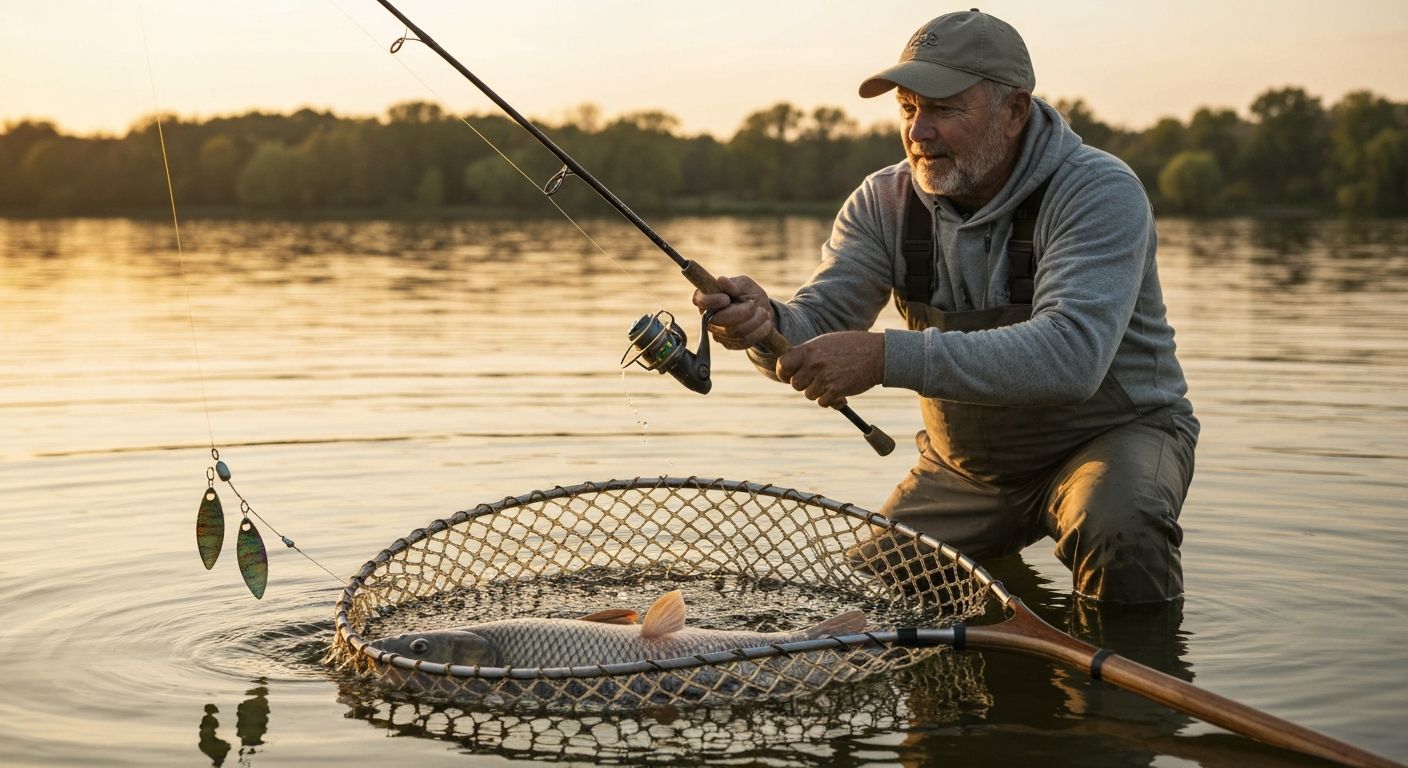 Check your hook point after every few snags on rocks. A dull treble hook costs you fish that would have stuck on a sharp one.
Track What Works
The Tackle app lets you log catches by lure color, size and retrieve speed at each spot. After a few trips, you will know exactly which Rooster Tail combination produces at your local water instead of guessing every time you tie one on.
FAQs
What is the best Rooster Tail color for trout?
White and rainbow trout patterns with a silver blade cover most situations in clear water. Switch to gold blade and chartreuse body in stained or muddy water. For stocked trout, bright pink and orange patterns outperform natural colors.
What size Rooster Tail should I use for trout?
Start with 1/8 oz for general trout fishing. Drop to 1/16 oz for small creeks and pressured fish. Go up to 1/4 oz for lake fishing and bigger rivers where you need casting distance and depth.
Do Rooster Tails work for bass?
Yes. Smallmouth bass hit Rooster Tails aggressively, especially in rivers. Use 1/8 to 1/4 oz with gold blades. Largemouth will eat them too, but a larger inline spinner or a spinnerbait is usually a better choice for largemouth around heavy cover.
How do I stop line twist with inline spinners?
Always use a snap swivel or barrel swivel between your line and the lure. If your line is already twisted, let it out behind a boat or in current without a lure attached and reel it back in. The water pressure untwists it.
Are Rooster Tails better than Mepps spinners?
Both catch fish. The Rooster Tail's hackle tail gives it an edge in slow-moving or still water where the feathers add subtle action. The Mepps Aglia's blade has a wider rotation that produces more vibration, which can be better in muddy water or faster current. Carry both.
1-Minute Action Plan
- Rig to tie on: 1/8 oz Worden's Rooster Tail, white or rainbow trout pattern, with a small snap swivel
- Two places to try first: A current seam behind a large rock and the tail-out of the nearest deep pool
- First retrieve: Cast upstream at 45 degrees, reel just fast enough to feel the blade turn
- If no bites after 10 casts: Switch to a gold blade, count the lure down 3 seconds before retrieving and slow your reel speed
What to Read Next
- Targeting stocked or wild rainbows? Our rainbow trout guide covers habitat, seasonal patterns and bait selection
- Want to expand your panfish game? Read how to catch crappie and how to catch bluegill for structure-specific tactics
- Curious about other blade baits? The spinnerbait guide breaks down safety-pin style lures for bass
- New to trout fishing altogether? Start with our complete trout guide for a full breakdown of gear, bait and technique
Sources
- Trout Unlimited - Trout Fishing Resources
- In-Fisherman - Inline Spinner Tactics
- Field & Stream - Best Trout Lures
Regulations change. Always check local rules before fishing.

Tackle Team
The Tackle Fishing Team is a collective of anglers, data scientists, and fishing enthusiasts dedicated to making fishing more accessible and successful for everyone.
View profileSources Consulted
The following sources were consulted in creating this guide:
- Trout Unlimited – www.tu.org (retrieved Mar 2026)
- In-Fisherman – www.in-fisherman.com (retrieved Mar 2026)
- Field & Stream – www.fieldandstream.com (retrieved Mar 2026)
Note: Information is summarized and explained in our own words. Always verify current regulations with official sources.
Frequently Asked Questions
What is the best Rooster Tail color for trout?
White and rainbow trout patterns with a silver blade cover most situations in clear water. Switch to gold blade and chartreuse body in stained or muddy water. For stocked trout, bright pink and orange patterns outperform natural colors.
What size Rooster Tail should I use for trout?
Start with 1/8 oz for general trout fishing. Drop to 1/16 oz for small creeks and pressured fish. Go up to 1/4 oz for lake fishing and bigger rivers where you need casting distance and depth.
Do Rooster Tails work for bass?
Yes. Smallmouth bass hit Rooster Tails aggressively, especially in rivers. Use 1/8 to 1/4 oz with gold blades. Largemouth will eat them too, but a larger inline spinner or a spinnerbait is usually a better choice for largemouth around heavy cover.
How do I stop line twist with inline spinners?
Always use a snap swivel or barrel swivel between your line and the lure. If your line is already twisted, let it out behind a boat or in current without a lure attached and reel it back in. The water pressure untwists it.
Are Rooster Tails better than Mepps spinners?
Both catch fish. The Rooster Tail's hackle tail gives it an edge in slow-moving or still water where the feathers add subtle action. The Mepps Aglia's blade has a wider rotation that produces more vibration, which can be better in muddy water or faster current. Carry both.
Plan Your Next Fishing Trip
Download Tackle to compare tide charts, wind conditions, and practical fishing guidance for your location before you go.
✓ Real-time tide charts • ✓ Wind & weather forecasts • ✓ AI fish identification
See local regulations — Find regulations for your area
Want weekly fishing windows delivered to your inbox?
Get personalized fishing forecasts based on weather, tides, and moon phases.
RELATED CONTENT
KEEP READING